
Garis Panduan CDM Edisi 2026
Demolition: Surveys, Isolation and Safe Sequence
CDM 2026 · 30 of 52
Regulation 22 guidance for surveys, utility isolation, stability, exclusion zones and written arrangements.
Six-slide briefing
The guideline at a glance
Slide 1 / 6
CDM 2026
Regulation 22
Plan before demolition
Prevent danger or reduce it to the lowest practicable level.
- Risk assessment
- CPP
- Written arrangements
The document must exist before work starts.
Use the buttons, dots or left/right arrow keys. This briefing summarises the guideline; the article and official source remain the detailed references.
Demolition is not “knock it down first, clear it later”. Regulation 22 requires the construction work contractor (CWC) to ensure that any demolition or dismantling of a structure is planned and carried out in a manner that prevents danger or, where prevention is not practicable, reduces danger to the lowest practicable level. The arrangements must be recorded in writing before work begins.
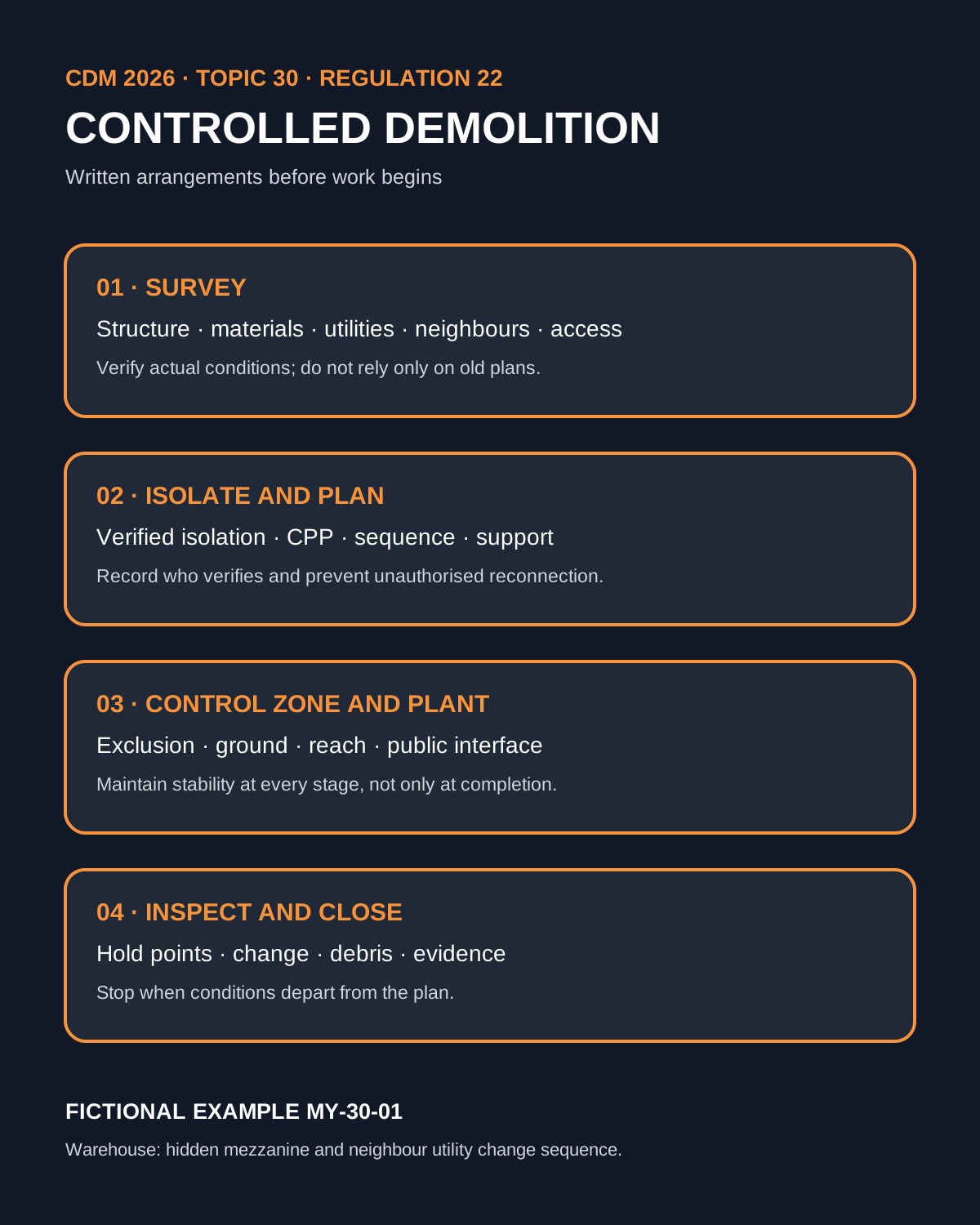
*Topic 30 infographic — verify conditions, isolate energy and utilities, establish the exclusion zone, then execute a controlled sequence.*
What Regulation 22 means in practice
Paragraphs 167–170 of the DOSH Guidelines explain that the CWC should consider the risk assessment, refer to the construction phase plan (CPP), assess the structure, identify potential hazards and plan safety measures. Planning should cover the work sequence, equipment and control measures. DOSH also identifies MS 2318:2012 *Demolition of buildings — Code of practice (First revision)* or an equivalent recognised standard as a reference.
The written document must be more than a generic method statement. It must address the actual structure, site, neighbours, utilities, materials and plant. A change to sequence, machinery, structural condition or safe distance can change the whole risk profile.
Survey before deciding the sequence
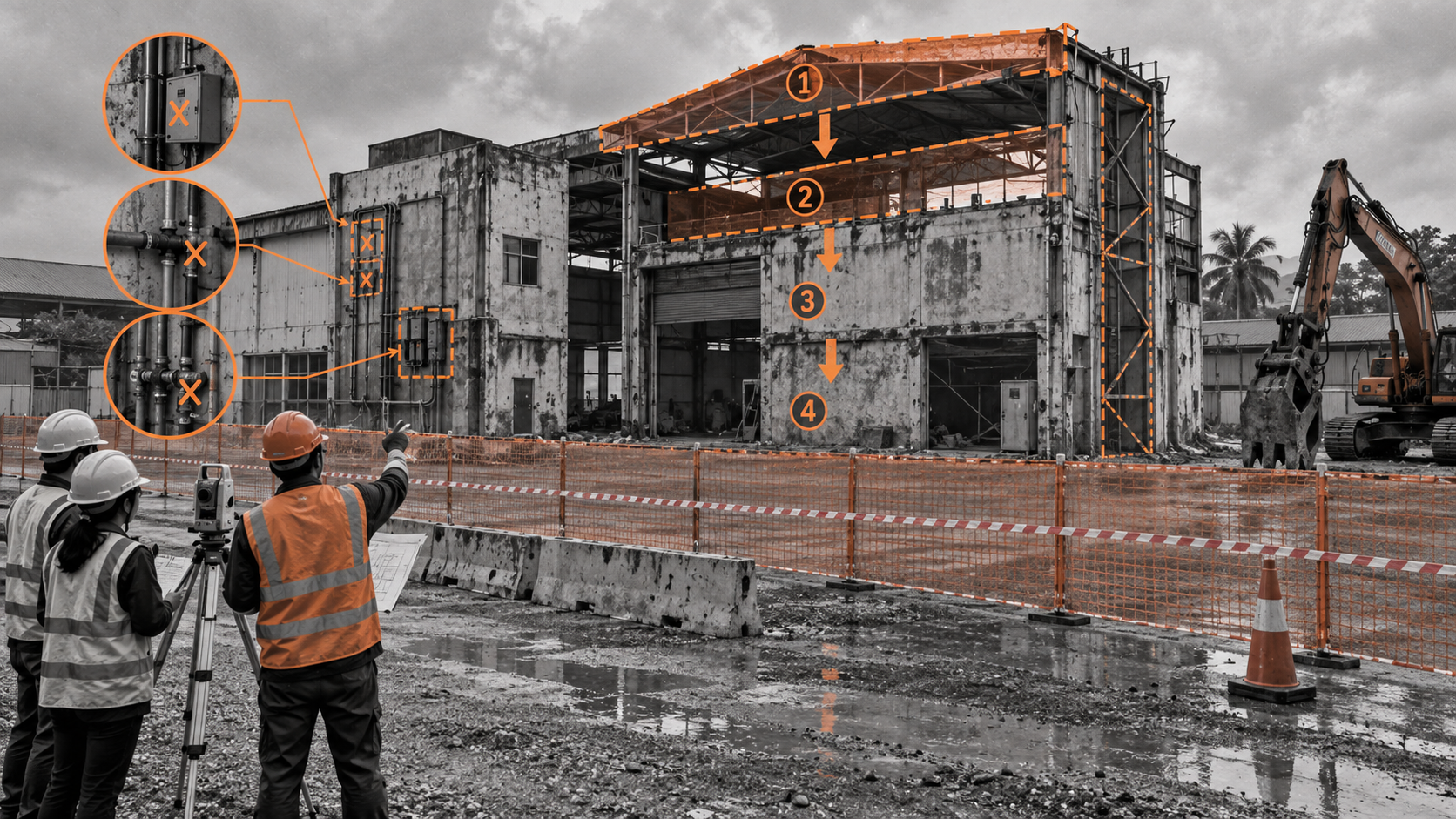
Start with a structural and site survey by people with suitable knowledge and experience. Record the structural form, load-bearing system, connections, lateral stability, extensions, damage, historic fire exposure, corrosion, cracks, undocumented alteration and potentially unstable areas. Identify adjacent structures, party walls, public routes, overhead lines, basements, slopes and access constraints.
The materials survey should identify asbestos or other hazardous material through suitable information and assessment. Never assume an older building is asbestos-free because the material is not visible. Identify tanks, pipes, process residue, dust, glass, flammable material and contamination that can change the work or disposal method.
Compare utility drawings with physical conditions. Electricity, gas, water, telecommunications, sewerage, fire systems and process supplies may remain live or share connections with other premises. Use field verification rather than relying solely on old plans.
Isolation and proof of safe condition
Identify, isolate and verify each energy or material source before releasing the relevant zone. Define who can request, carry out and confirm isolation. Label isolation points, prevent unauthorised reconnection and retain certificates, permits or utility-provider confirmation where applicable.
Electrical isolation is not proof that a gas line is depressurised. Closing a valve is not proof that a tank is clean. Apply a verification method appropriate to the hazard and record the result. Where a live service must remain for neighbours or another operation, mark its route, protect it physically and incorporate the restriction into the demolition sequence.
Control stability and sequence
The sequence must follow how the structure transfers load. Controlled mechanical work may commonly progress top-down, but that is not a universal rule replacing engineering assessment. Do not remove a wall, brace, slab or column that stabilises the part still standing. Determine temporary support, installation and removal requirements.
Select plant for reach, capacity, attachment, ground conditions and safe distance. The working platform must support the plant, with clear operating and retreat space. Keep workers out of the fall zone while machinery operates. If the planned method changes, stop the affected work, reassess stability and approve the change in writing.
Exclusion zones, the public and debris
Set the exclusion zone for the form, height and possible fall direction, plant capability and projected debris—not merely the available portable fence. Use suitable barriers, signs, access control and communication between operator and supervisor. Coordinate deliveries, outgoing vehicles and people so they do not cross the demolition operation.
Control dust, noise, vibration and debris for actual site conditions and neighbours. Water suppression must not create contaminated runoff or conceal hazards. Debris piles must not overload slabs or block routes. Segregate material in a controlled manner and manage waste under applicable requirements.
Fictional worked example MY-30-01
Fictional example — not a real incident, statistic or legal conclusion. A single-storey warehouse in Selangor is scheduled for redevelopment. The survey finds a steel mezzanine missing from old drawings, a side wall contributing to roof stability, and an electrical supply serving a neighbour through part of the site.
The CWC postpones excavator mobilisation. The team confirms utility isolation with the asset owner, marks the cable that must remain, obtains a structural assessment and revises the CPP. The written sequence requires suitable hazardous-material removal, internal clearance, controlled roof removal, then frame and walls in an order that preserves stability. The exclusion zone accounts for excavator reach and truck movement. Each phase has a supervisor hold point. The example shows that the programme date does not override actual conditions or isolation evidence.
Compliance actions
- Appoint competent functions for surveys, planning, supervision and plant operation.
- Complete the risk assessment and align arrangements with the CPP.
- Identify structures, materials, utilities, neighbours and site constraints.
- Verify isolation and prevent unauthorised reconnection.
- Write the sequence, exclusion zones, temporary support and hold points.
- Select plant and attachments for capacity and ground conditions.
- Brief workers in a language and form they understand.
- Inspect after each stage and following change or severe weather.
- Stop when conditions depart from the plan and reassess.
Evidence to retain
Retain structural and materials surveys; drawings and condition photographs; utility plans and confirmations; isolation certificates; risk assessments; CPP; written demolition arrangements; temporary-support calculations or design; exclusion-zone plan; competence records; plant inspections; briefings; permits; hold-point records; change instructions; dust, noise or vibration monitoring where relevant; waste records; and proof that defects were closed.
Common failures
- Starting from an external observation without an internal survey or drawing review.
- Assuming every service is dead after one switch is opened.
- Changing sequence for speed without reassessing stability.
- Operating an excavator beyond reach or on an unverified platform.
- Allowing workers into the fall zone while plant operates.
- Stockpiling debris on a slab without checking loading.
- Keeping a generic method statement that does not match the structure.
- Failing to revise the exclusion zone after a method or condition change.
Supervisor checklist
- Are the structural, materials and utilities surveys complete and current?
- Are written arrangements available before work starts?
- Are isolations verified, labelled and controlled?
- Does the sequence maintain stability at every stage?
- Is temporary support designed and installed where needed?
- Are plant, ground and operating distances suitable?
- Is the exclusion zone clear and controlled?
- Are the public and adjacent premises protected?
- Does change trigger reassessment and fresh approval?
- Are inspections and hold points recorded?
Primary JKKP/DOSH references
Refer to Regulation 22 of the Occupational Safety and Health (Construction Work) (Design and Management) Regulations 2024, P.U. (A) 147, together with the *Guidelines for those Regulations, First Edition 2026*, paragraphs 167–170. This article does not replace a site assessment, competent planning or project-specific professional advice.
Related articles
Garis Panduan CDM Edisi 2026
CDM 2026 · 33 of 52
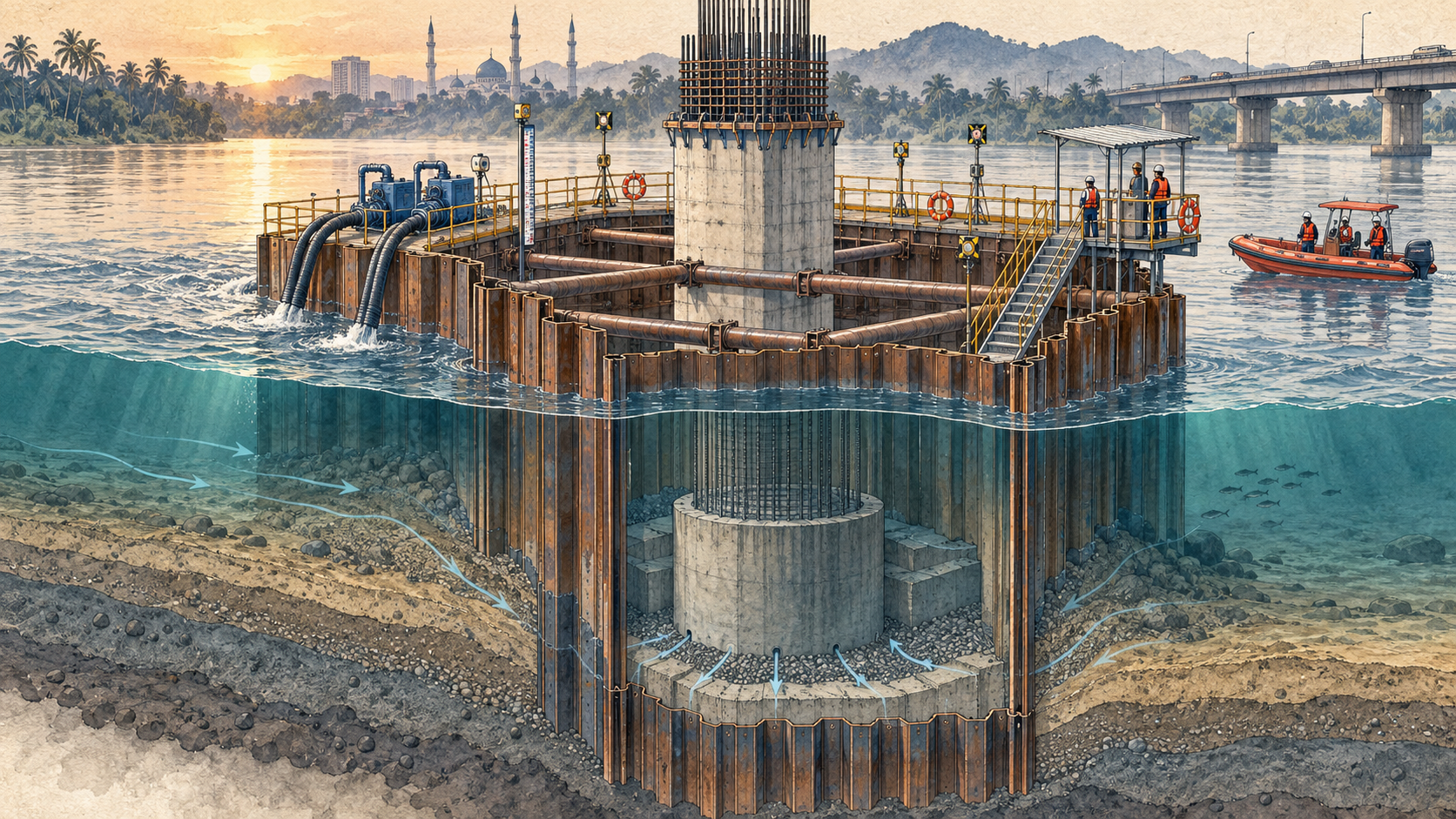
Empangan Kekotak dan Kaison: Reka Bentuk, Air dan Penyelamatan
Panduan Peraturan 25 untuk reka bentuk PEPC, pemantauan air, pam, akses, pemeriksaan dan penyelamatan.
Ir. Ts. Dr. Mohamad Syamir bin Senin.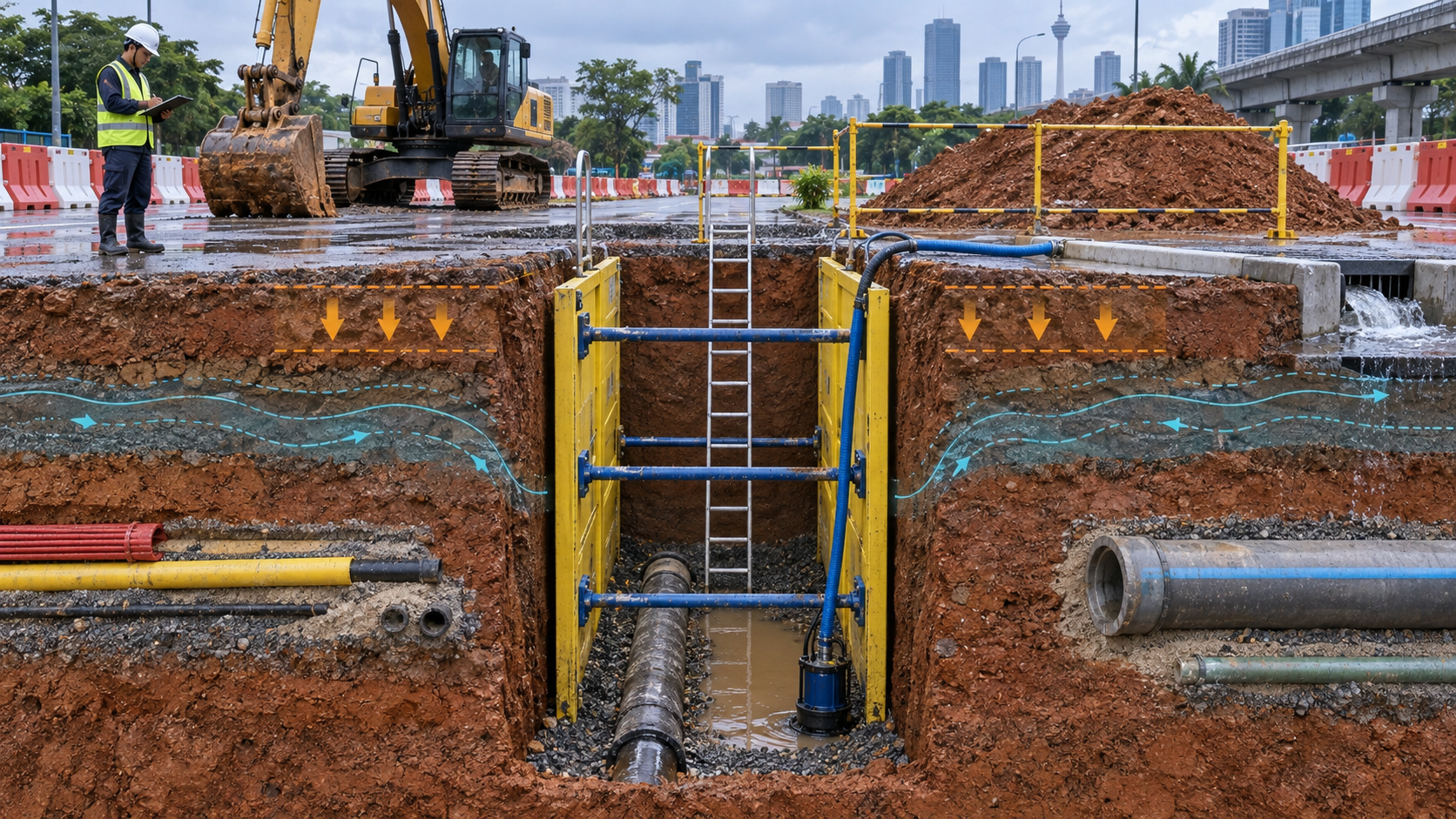
Garis Panduan CDM Edisi 2026
CDM 2026 · 32 of 52
Pengorekan: Cegah Runtuhan, Air dan Kerosakan Utiliti
Panduan Peraturan 24 untuk utiliti, sokongan, air, beban tepi, akses dan pemeriksaan sebelum masuk.
Ir. Ts. Dr. Mohamad Syamir bin Senin.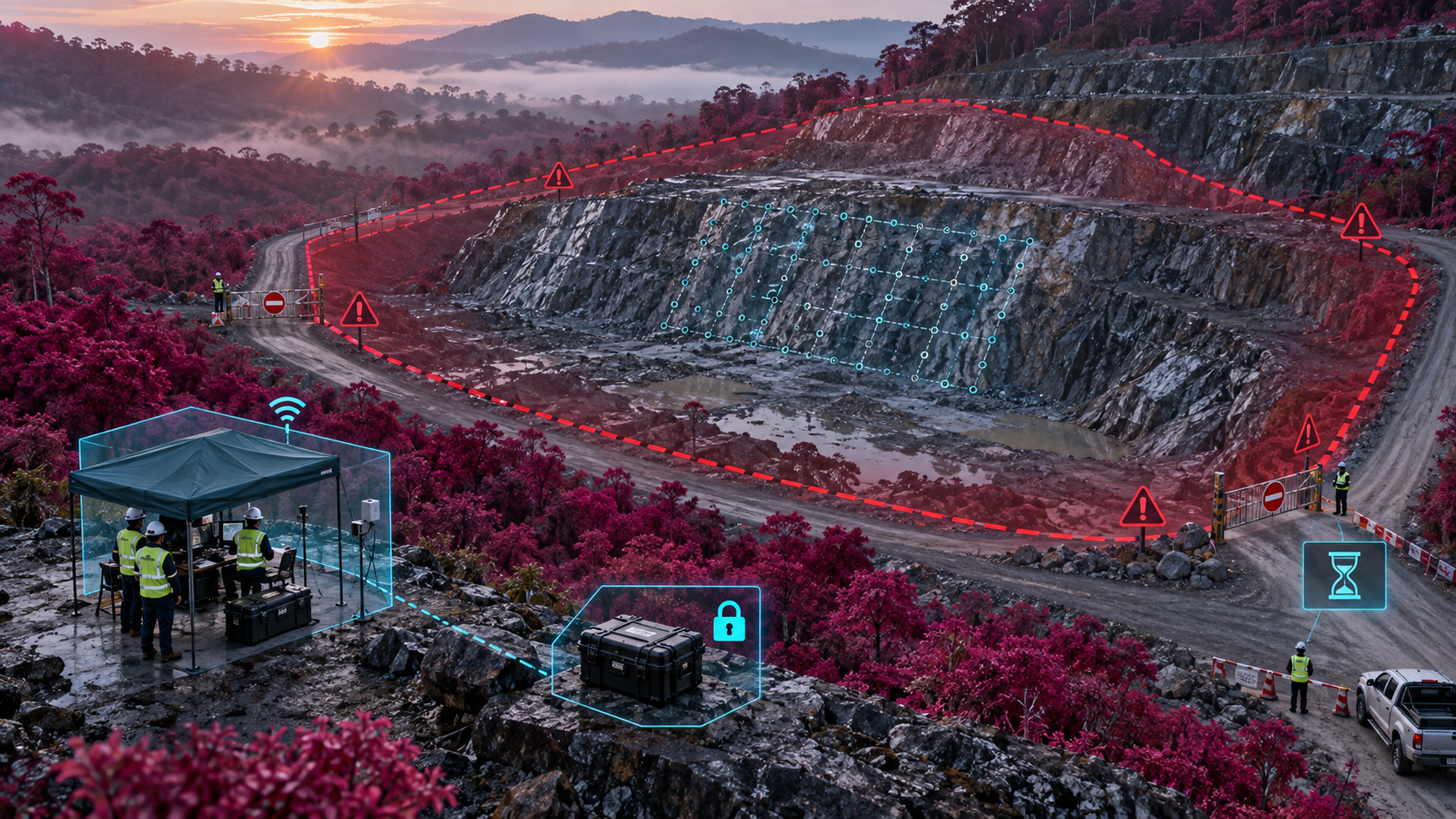
Garis Panduan CDM Edisi 2026
CDM 2026 · 31 of 52
Bahan Letupan: Kawalan Daripada Stor Hingga Misfire
Panduan Peraturan 23 untuk kuasa, inventori, pengangkutan, perimeter, firing, pelepasan dan misfire.
Ir. Ts. Dr. Mohamad Syamir bin Senin.