
Garis Panduan CDM Edisi 2026
CDM Interpretation 3: Who Is the Client, Designer and Contractor?
CDM 2026 · 5 of 52
Practical guidance for mapping the client, CWD, PCWD, CWC and PCWC by actual function and control.

Six-slide briefing
The guideline at a glance
Slide 1 / 6
CDM 2026
Function
Roles follow actual control
A contract or job title does not override the function performed.
- Map decisions
- Map design
- Map work control
Assess what people do, not their labels.
Use the buttons, dots or left/right arrow keys. This briefing summarises the guideline; the article and official source remain the detailed references.
CDM 2026 Series — Topic 5 of 52. This is general industry guidance and should be read with current legislation and DOSH directions.
CDM roles follow actual function and control, not job titles or contract labels. Regulation 3 defines the client as the principal or person for whom a project is carried out; a construction work designer (CWD) as a person who prepares, modifies, arranges or instructs design in the course of business; and a construction work contractor (CWC) as a person who constructs, carries out, manages or controls construction work in the course of business.
The principal construction work designer (PCWD) and principal construction work contractor (PCWC) are the CWD and CWC appointed in writing by the client when more than one CWC is, or can reasonably be expected to be, involved at any time.
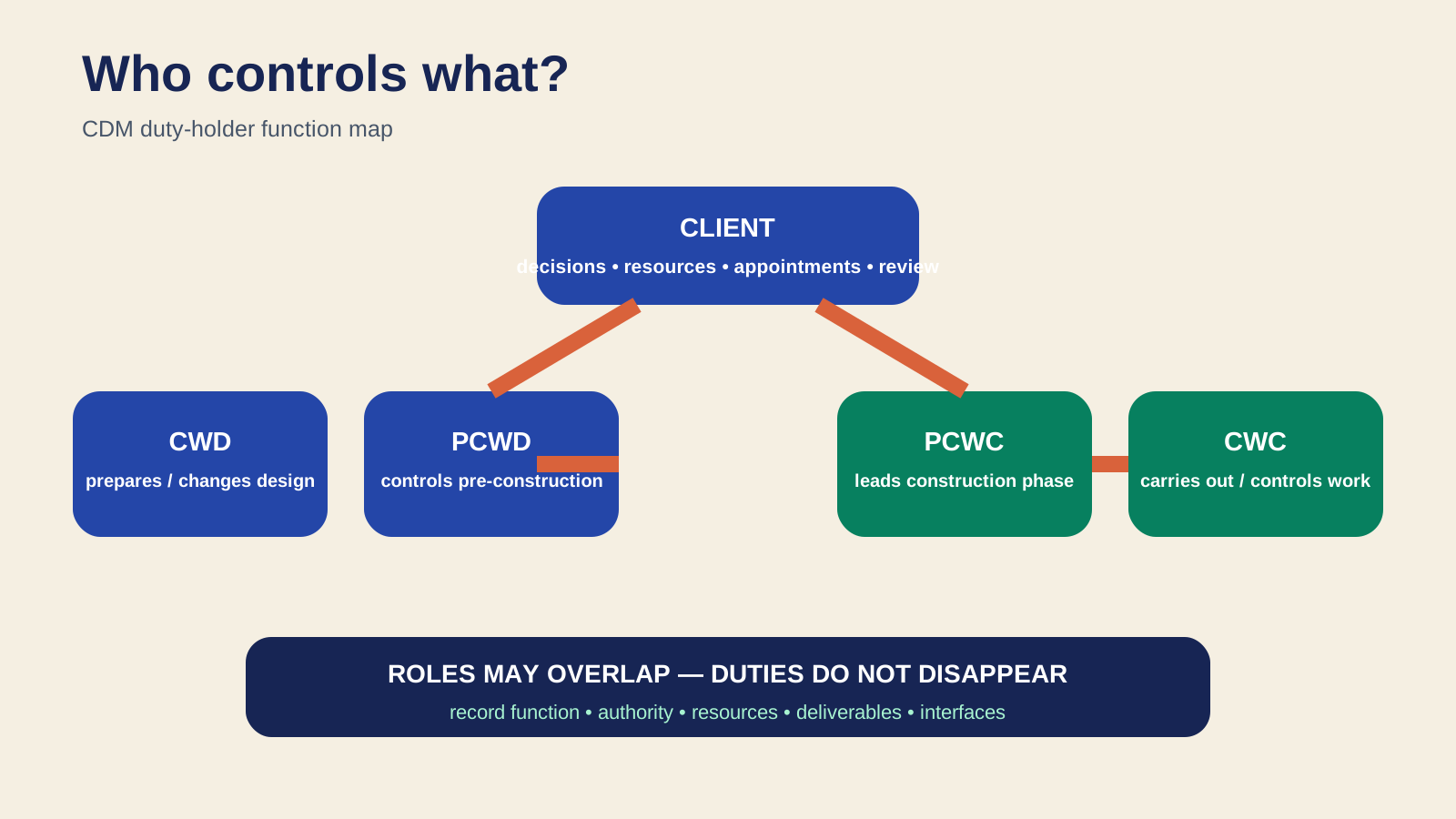
Five roles, five tests
- Client: Who decides what is built, where, when and by whom; commissions design/construction; leads procurement; and makes appointments?
- CWD: Who prepares or changes drawings, specifications, bills of quantities, plant/material specifications or calculations?
- PCWD: Which appointed CWD controls the pre-construction phase?
- CWC: Who constructs, carries out, manages or controls construction work?
- PCWC: Which appointed CWC leads the construction phase for a multi-contractor project?
One organisation may hold several roles. The duties do not merge or disappear; it must demonstrate the team, authority, resources and deliverables for each function.
When principal appointments are required
Where more than one CWC is involved or can reasonably be expected at any time, the client must appoint the PCWD and PCWC in writing as soon as practicable before the construction phase begins. Regulation 7 specifies consequences if the client fails to appoint. Test the supply chain and work packages during procurement rather than waiting for a second contractor to arrive.
Practical example — design-and-build contractor changes a steel connection
Illustrative example for guidance; not an actual incident report. A design-and-build contractor for a Johor warehouse proposes an alternative steel connection to accelerate erection. Although labelled a “contractor”, changing the specification and calculation makes it a CWD for that change as well as a CWC.
The client and PCWD record the overlap. The contractor names the responsible engineer, produces calculations and DRA, and gives erection assumptions and residual risks to the PCWD. The PCWD coordinates the main-structure interface; the PCWC updates the method statement, lifting sequence and briefing. Release follows review, approval and revision control.
Compliance actions
- List every organisation and actual activity.
- Map each function to Regulation 3.
- Identify overlaps and gaps; do not assume a contract transfers statutory duties.
- Make written appointments defining scope, duration, authority, resources, interfaces and deliverables.
- Create a RACI/interface matrix for PCI, DRA, CPP, design change and the S&H File.
- Review the role map when scope, supply chain or control changes.
Evidence to retain
- client brief and project organisation chart;
- function-based role matrix;
- written PCWD/PCWC appointments and acceptance;
- skills, knowledge, experience and organisational-capability assessment;
- terms of reference, decision authority and deliverables;
- coordination minutes, change logs and information handovers;
- client’s reasonable monitoring of PCWD and PCWC compliance.
Common failures
- using “consultant” or “subcontractor” to deny a CWD/CWC function;
- a contractor changes material or connections without recognising design duties;
- appointment letters omit control or deliverables;
- PCWD is appointed after construction begins;
- the client assumes appointment transfers all client duties;
- one organisation holds two roles but resources only one.
Checklist
- [ ] The real client is identified from decision-making and control.
- [ ] Everyone preparing or changing design is mapped as the relevant CWD.
- [ ] Everyone managing or controlling work is mapped as a CWC.
- [ ] The PCWD/PCWC requirement is tested during procurement.
- [ ] Written appointments define scope, authority and deliverables.
- [ ] Role overlaps and interfaces are recorded.
- [ ] The client continues reviewing performance and project arrangements.
Primary references
- DOSH — CDM Guidelines, 2026 Edition
- OSH (Construction Work) (Design and Management) Regulations 2024, Regulations 3, 4, 7 and 8
- Occupational Safety and Health Act 1994 (Act 514)
Consult current official texts. This article is general industry guidance, not legal advice.
Related articles

Garis Panduan CDM Edisi 2026
CDM 2026 · 29 of 52
Kestabilan Struktur: Kerja Sementara, Penyangga dan Urutan
Panduan Peraturan 21 untuk reka bentuk kerja sementara, laluan beban, pemeriksaan dan penanggalan terkawal.
Ir. Ts. Dr. Mohamad Syamir bin Senin.
Garis Panduan CDM Edisi 2026
CDM 2026 · 28 of 52
Aturan dan Sekuriti Tapak: Lindungi Pekerja dan Orang Awam
Panduan Peraturan 20 untuk kekemasan, kebersihan, pemagaran, penandaan serta kawalan antara muka awam.
Ir. Ts. Dr. Mohamad Syamir bin Senin.
Garis Panduan CDM Edisi 2026
CDM 2026 · 27 of 52
Tempat Kerja Pembinaan Yang Selamat: Akses, Tepi dan Bukaan
Panduan Peraturan 19 untuk mengawal akses, jalan keluar, tepi, bukaan lantai dan ruang kerja mengikut keadaan sebenar tapak.
Ir. Ts. Dr. Mohamad Syamir bin Senin.