
Garis Panduan CDM Edisi 2026
Client Duty 2: Maintaining and Reviewing Management Arrangements
CDM 2026 · 8 of 52
Practical guidance for keeping project-management arrangements alive and reviewing them after change.

Six-slide briefing
The guideline at a glance
Slide 1 / 6
CDM 2026
Regulation 4
Arrangements are a living system
They must be specific, proportionate, communicated, maintained and reviewed.
- Clear owner
- Controlled version
- Relevant throughout
A static document is insufficient.
Use the buttons, dots or left/right arrow keys. This briefing summarises the guideline; the article and official source remain the detailed references.
CDM 2026 Series — Topic 8 of 52. This is general industry guidance and should be read with current legislation and DOSH directions.
Regulation 4 does not ask the client to create a document and file it away. The client must ensure project-management arrangements are maintained and reviewed throughout the project. The CDM Guidelines 2026 explain that arrangements should be project-specific, proportionate to size and risk, communicated to duty holders and kept relevant as conditions change.
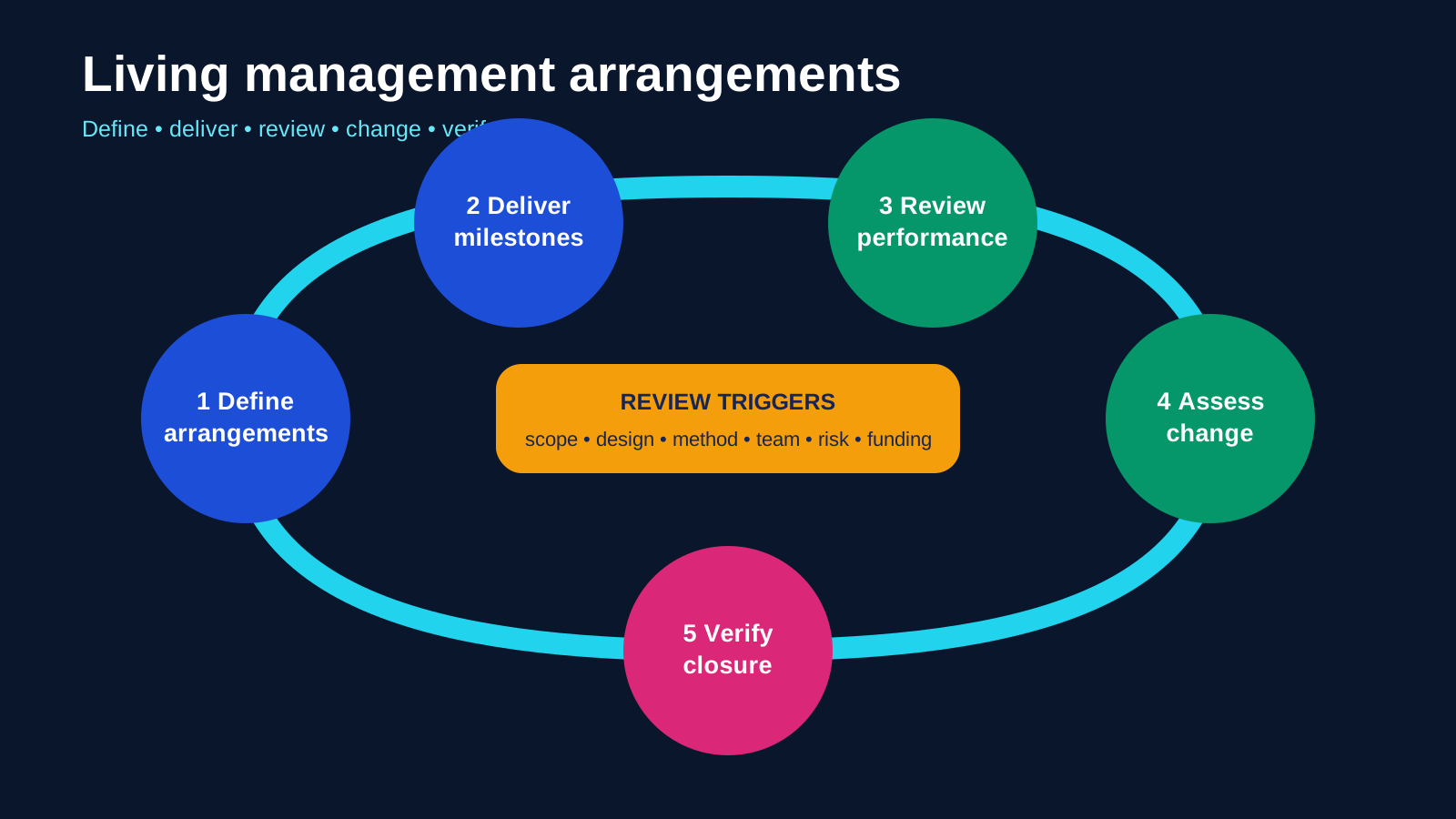
Usable minimum content
A client brief can be the main control point. It should state project purpose and operational requirements, OSH risk-management expectations, realistic programme and budget, design direction and the client organisation’s point of contact. Arrangements should also explain:
- how the team communicates, cooperates and coordinates;
- how the client checks PCWD and PCWC duties;
- assessment of appointees’ skills, knowledge, experience and organisational capability;
- milestones, deliverables, decision owners and escalation routes;
- commissioning and handover preparation.
Review triggers
Do not rely only on periodic review. Reopen arrangements after changes to scope, design, construction method, appointments, sequence, risk, site condition, dates, funding or operational requirements. Every trigger needs an owner, assessment date and reasoned decision.
Practical example — adopting IBS
Illustrative example for guidance; not an actual incident report. A Selangor residential project changes part of its structure from conventional construction to an Industrialised Building System (IBS). The change may benefit programme but introduces new interfaces for element weight, transport, storage, cranes, lifting points, installation sequence and temporary stability.
The client triggers a formal arrangements review. PCWD coordinates element design, connections, tolerances and residual risk; PCWC updates the CPP, lifting plan, logistics, exclusion zones and installation sequence. The client reviews mobilisation time, crane/storage budgets, installer competence and release milestones. Client brief, PCI, DRA and deliverables matrix are updated before the IBS package is released.
Compliance actions
- Issue a client brief with owner, version and effective date.
- Convert expectations into verifiable milestones and deliverables.
- Set periodic reviews and out-of-cycle change triggers.
- Require PCWD/PCWC reporting on status, gaps, changes and critical decisions.
- Record action, owner, due date and closure evidence.
- Confirm change reaches relevant PCI, DRA, CPP, method statements and S&H File.
Evidence to retain
- client brief and version history;
- communication, cooperation, role and deliverable matrices;
- milestone schedule and acceptance criteria;
- PCWD/PCWC reports, review minutes and site visits;
- change register with time, funding, resource and risk impacts;
- competence, decision, action and closure-verification records.
Common failures
- client brief remains unchanged after a major change;
- review becomes status reporting without decisions or actions;
- the client delegates all monitoring to a project manager;
- method change never reaches PCI, CPP or DRA;
- milestones lack acceptance criteria;
- actions close because a date expires rather than evidence being complete.
Checklist
- [ ] Arrangements are project-specific and proportionate to risk.
- [ ] Client brief, contact point and decision authority are clear.
- [ ] Milestones and deliverables have owners and acceptance criteria.
- [ ] Change triggers are defined.
- [ ] PCWD and PCWC are monitored through reasonable steps.
- [ ] Relevant documents are updated and distributed.
- [ ] Actions close only after evidence verification.
Primary references
- DOSH — CDM Guidelines 2026, paragraphs 30–36
- OSH (Construction Work) (Design and Management) Regulations 2024, Regulations 4 and 8
- Occupational Safety and Health Act 1994 (Act 514)
Consult current official texts. This article is general industry guidance, not legal advice.
Related articles

Garis Panduan CDM Edisi 2026
CDM 2026 · 29 of 52
Kestabilan Struktur: Kerja Sementara, Penyangga dan Urutan
Panduan Peraturan 21 untuk reka bentuk kerja sementara, laluan beban, pemeriksaan dan penanggalan terkawal.
Ir. Ts. Dr. Mohamad Syamir bin Senin.
Garis Panduan CDM Edisi 2026
CDM 2026 · 28 of 52
Aturan dan Sekuriti Tapak: Lindungi Pekerja dan Orang Awam
Panduan Peraturan 20 untuk kekemasan, kebersihan, pemagaran, penandaan serta kawalan antara muka awam.
Ir. Ts. Dr. Mohamad Syamir bin Senin.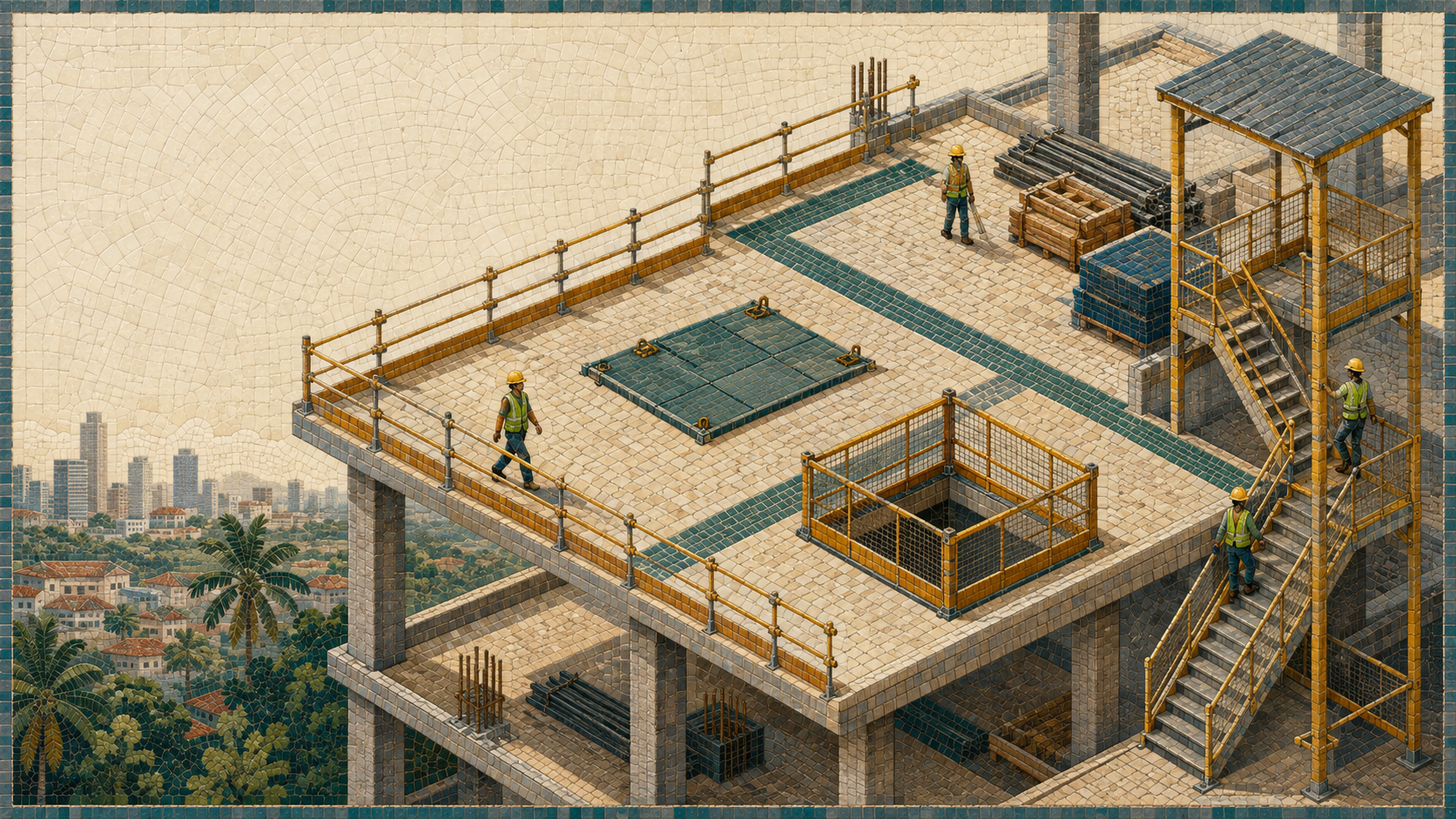
Garis Panduan CDM Edisi 2026
CDM 2026 · 27 of 52
Tempat Kerja Pembinaan Yang Selamat: Akses, Tepi dan Bukaan
Panduan Peraturan 19 untuk mengawal akses, jalan keluar, tepi, bukaan lantai dan ruang kerja mengikut keadaan sebenar tapak.
Ir. Ts. Dr. Mohamad Syamir bin Senin.