
Garis Panduan CDM Edisi 2026
Construction Phase Plan and Safety and Health File: The Client’s Responsibility
CDM 2026 · 10 of 52
Practical guidance for verifying a usable CPP before work and controlling Safety and Health File handover.

Six-slide briefing
The guideline at a glance
Slide 1 / 6
CDM 2026
Before start
CPP must be usable
CWC prepares it for one CWC; PCWC prepares it for a multi-CWC project.
- Before construction phase
- Based on PCI
- Risk-specific
A filename alone is insufficient.
Use the buttons, dots or left/right arrow keys. This briefing summarises the guideline; the article and official source remain the detailed references.
CDM 2026 Series — Topic 10 of 52. This is general industry guidance and should be read with current legislation and DOSH directions.
Before the construction phase begins, the client must ensure a construction phase plan (CPP) is drawn up by the CWC where there is one CWC, or by the PCWC for a project involving more than one CWC. The CPP explains how OSH risks and site arrangements will be planned, managed and controlled during construction.
The Safety and Health File is the project record for future work. The CDM Guidelines 2026 explain that the S&H File is required for projects involving more than one CWC and the client must ensure PCWD prepares, reviews, updates and returns it at project completion.
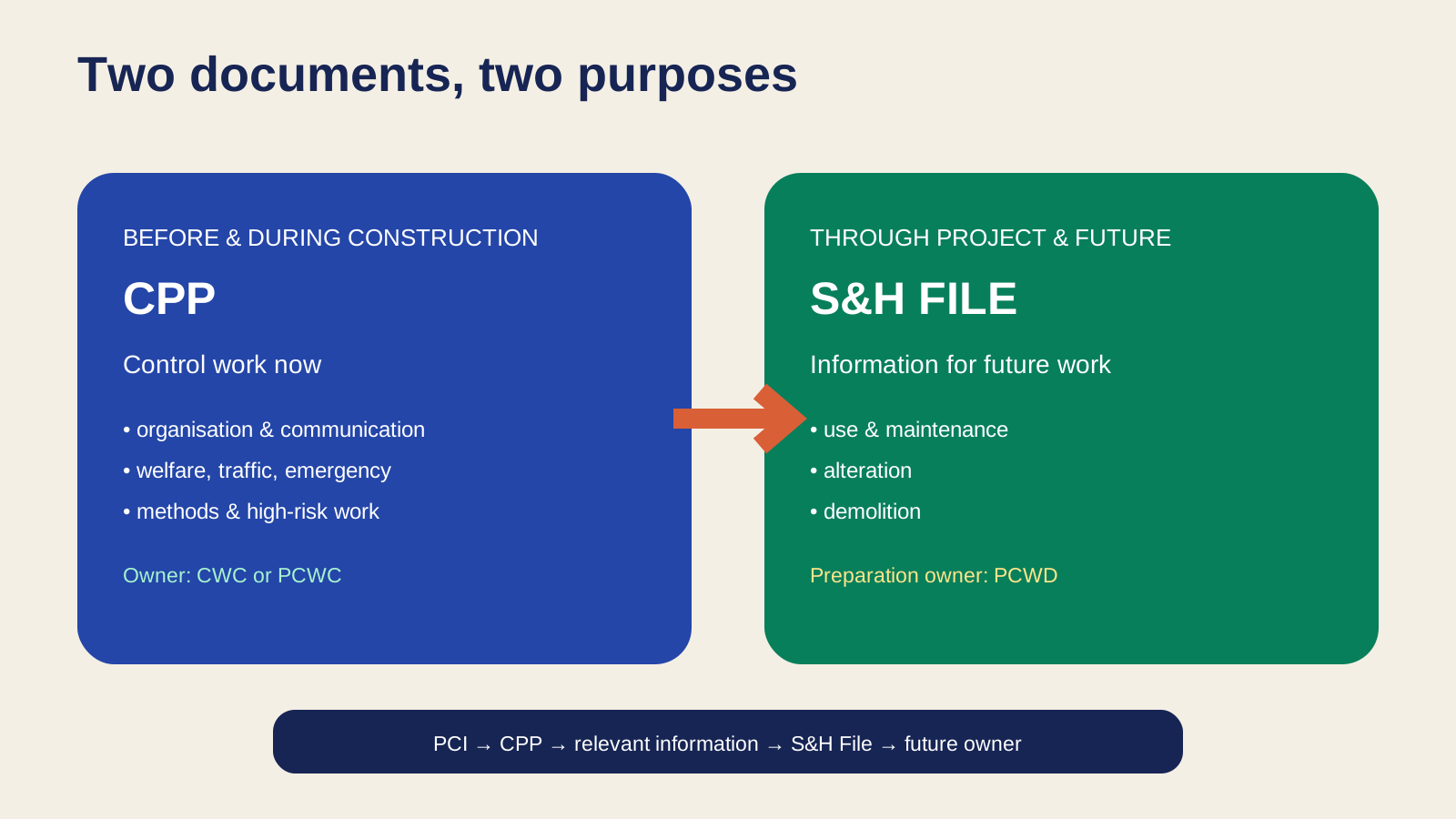
Two documents, two purposes
CPP before work begins must be specific enough for actual work and risk. It normally connects management arrangements, site organisation, welfare, traffic, emergency, communication, work methods and measures for particular-risk work.
S&H File throughout the project compiles information needed for safe future use, maintenance, alteration or demolition. It is not an archive of every project document; content should be relevant, clear, retrievable and version-controlled.
PCI feeds both streams: CWC/PCWC refers to PCI when preparing CPP, while relevant information from PCI, design, construction and CPP can form the S&H File.
The pre-start release gate
Start authorisation should not depend merely on a filename existing. The client should obtain evidence that CPP:
- covers current scope, sequence and risk;
- gives field controls and actions owners;
- provides welfare before workers need it;
- coordinates traffic, emergency, permits and interfaces;
- has reached those who will perform the work.
Practical example — start instruction withheld
Illustrative example for guidance; not an actual incident report. A Johor mixed development plans to start excavation. The initial CPP mentions excavation generally but lacks support design, lorry traffic diversion, complete welfare and emergency rescue.
The client withholds the excavation start and asks PCWC to close gaps with PCWD and relevant CWCs. CPP is updated with sequence, hold points, traffic plan, welfare, emergency communication and temporary-work design evidence. In parallel, PCWD defines S&H File structure, contribution owners, format, version code and handover milestones. Work is released after usable evidence is verified—not merely after signature.
Compliance actions
- Determine whether the project has one or multiple CWCs.
- Set CPP owner, acceptance criteria and pre-construction-phase deadline.
- Test CPP against scope, PCI, Fourth Schedule, welfare and site conditions.
- For multi-CWC projects, direct PCWD to start the S&H File early.
- Define file format, index, access, versioning, contributors and milestones.
- Monitor updates and plan handover to client/future owner.
Evidence to retain
- controlled CPP and review/acceptance record;
- gaps, actions, owners and hold-point matrix;
- distribution, briefing and pre-start inspection records;
- S&H File index, version protocol and contribution register;
- file-review minutes and new-information records;
- handover, receipt and storage-location confirmation.
Common failures
- generic CPP copied from another project;
- work begins before welfare or emergency controls are available;
- client checks signature rather than usability;
- S&H File starts in the final week;
- every project file is included without future relevance filtering;
- final version is not handed over or recipient does not understand its purpose.
Checklist
- [ ] CPP ownership follows the number of CWCs.
- [ ] CPP is usable before the construction phase begins.
- [ ] Welfare, traffic, emergency and high-risk work are addressed.
- [ ] Hold points and release evidence are recorded.
- [ ] PCWD starts the S&H File for a multi-CWC project.
- [ ] File format, version, contribution and access are controlled.
- [ ] Final handover and receipt are verified.
Primary references
- DOSH — CDM Guidelines 2026, paragraphs 42–44
- OSH (Construction Work) (Design and Management) Regulations 2024, Regulations 5, 13 and 14
- Occupational Safety and Health Act 1994 (Act 514)
Consult current official texts. This article is general industry guidance, not legal advice.
Related articles
Garis Panduan CDM Edisi 2026
CDM 2026 · 29 of 52
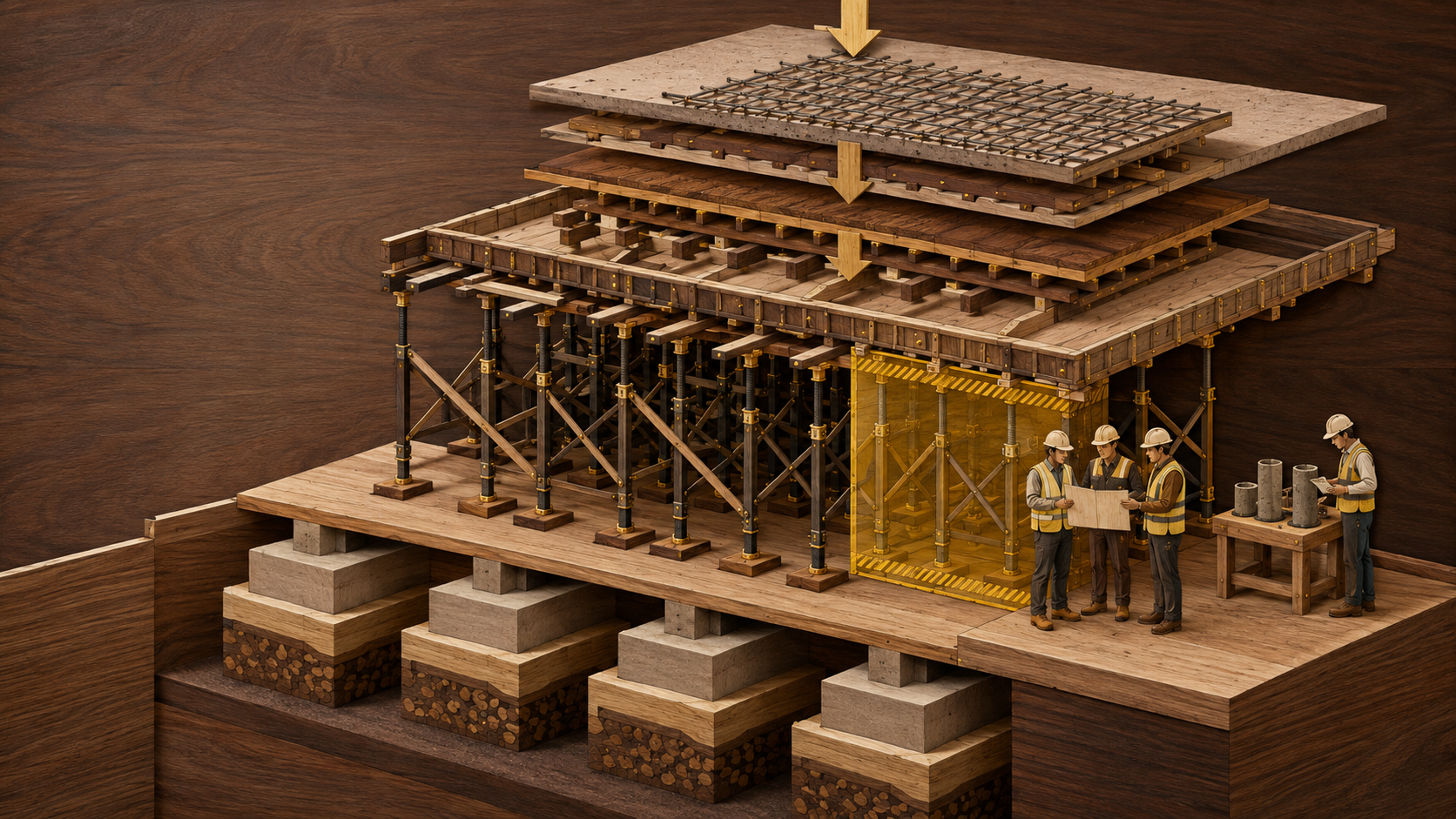
Kestabilan Struktur: Kerja Sementara, Penyangga dan Urutan
Panduan Peraturan 21 untuk reka bentuk kerja sementara, laluan beban, pemeriksaan dan penanggalan terkawal.
Ir. Ts. Dr. Mohamad Syamir bin Senin.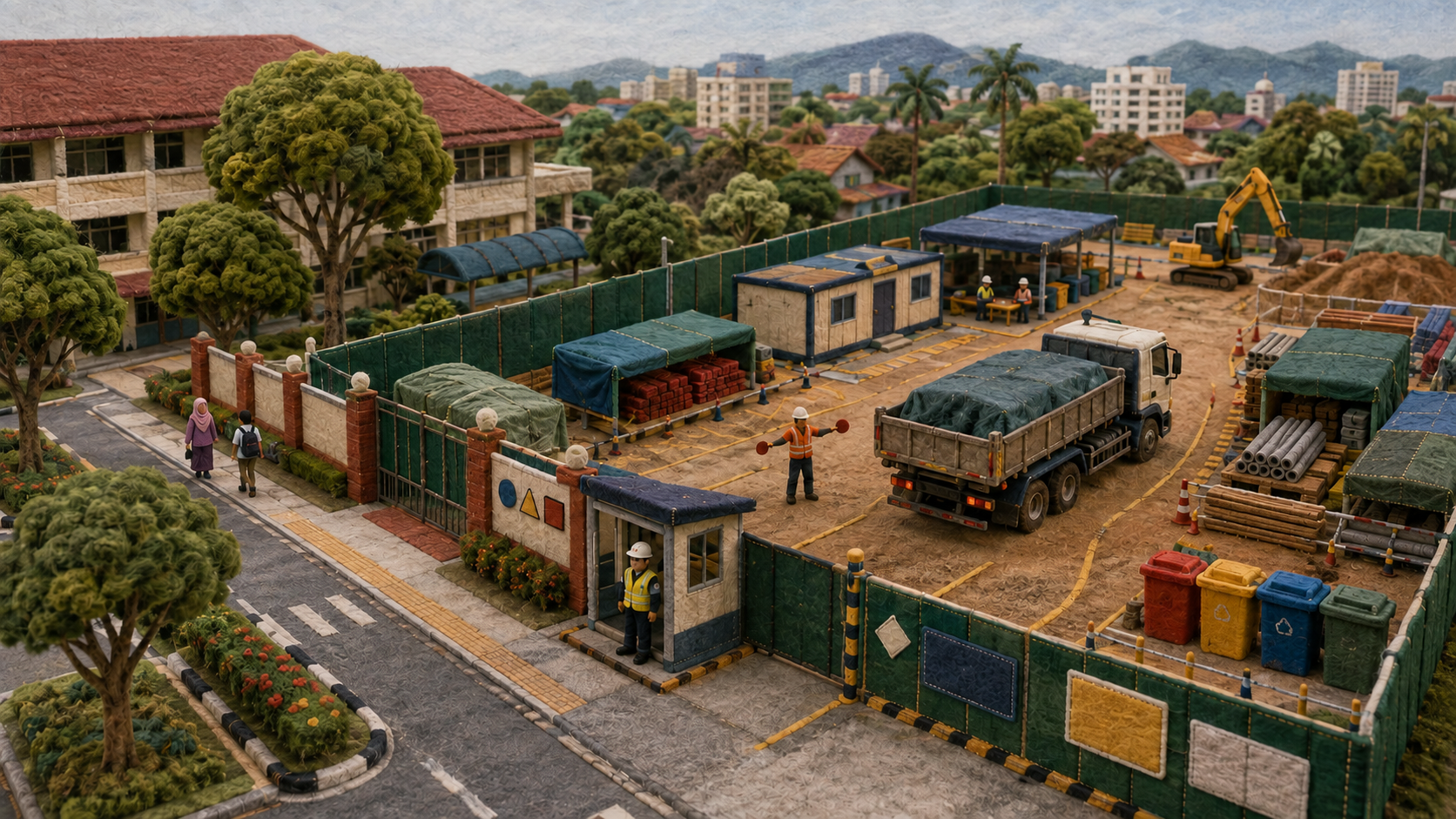
Garis Panduan CDM Edisi 2026
CDM 2026 · 28 of 52
Aturan dan Sekuriti Tapak: Lindungi Pekerja dan Orang Awam
Panduan Peraturan 20 untuk kekemasan, kebersihan, pemagaran, penandaan serta kawalan antara muka awam.
Ir. Ts. Dr. Mohamad Syamir bin Senin.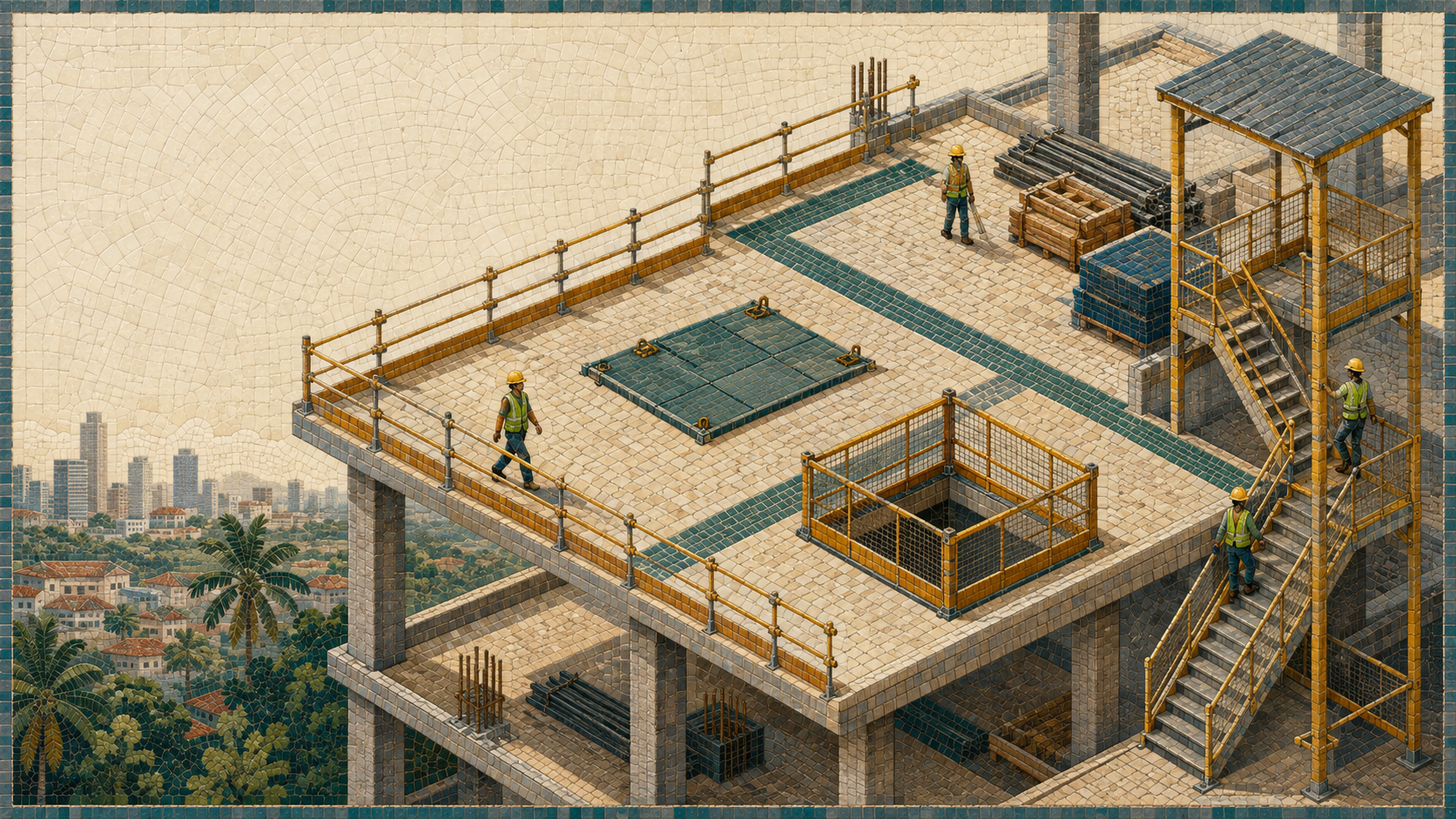
Garis Panduan CDM Edisi 2026
CDM 2026 · 27 of 52
Tempat Kerja Pembinaan Yang Selamat: Akses, Tepi dan Bukaan
Panduan Peraturan 19 untuk mengawal akses, jalan keluar, tepi, bukaan lantai dan ruang kerja mengikut keadaan sebenar tapak.
Ir. Ts. Dr. Mohamad Syamir bin Senin.