
Garis Panduan CDM Edisi 2026
How the Client Ensures PCWD and PCWC Compliance
CDM 2026 · 11 of 52
Practical guidance for taking reasonable steps to ensure PCWD and PCWC comply with their duties.

Six-slide briefing
The guideline at a glance
Slide 1 / 6
CDM 2026
Regulation 6
Appointment is not release
The client takes reasonable steps to ensure PCWD and PCWC compliance.
- Stay informed
- Review performance
- Intervene
The client keeps leading.
Use the buttons, dots or left/right arrow keys. This briefing summarises the guideline; the article and official source remain the detailed references.
CDM 2026 Series — Topic 11 of 52. This is general industry guidance and should be read with current legislation and DOSH directions.
Regulation 6 requires the client to take reasonable steps to ensure PCWD complies with duties under Regulations 12–14 and PCWC complies with duties under Regulations 13–16. Appointment does not end client leadership. The CDM Guidelines 2026 emphasise that the client remains informed about progress, incidents and key documents including CPP, PCI and the Safety and Health File.
What are “reasonable steps”?
DOSH examples include regular client–PCWD–PCWC meetings; OSHWA/OSHPA self-assessments; design-review meetings; site visits; and training. Selection and frequency should be proportionate to project complexity and risk.
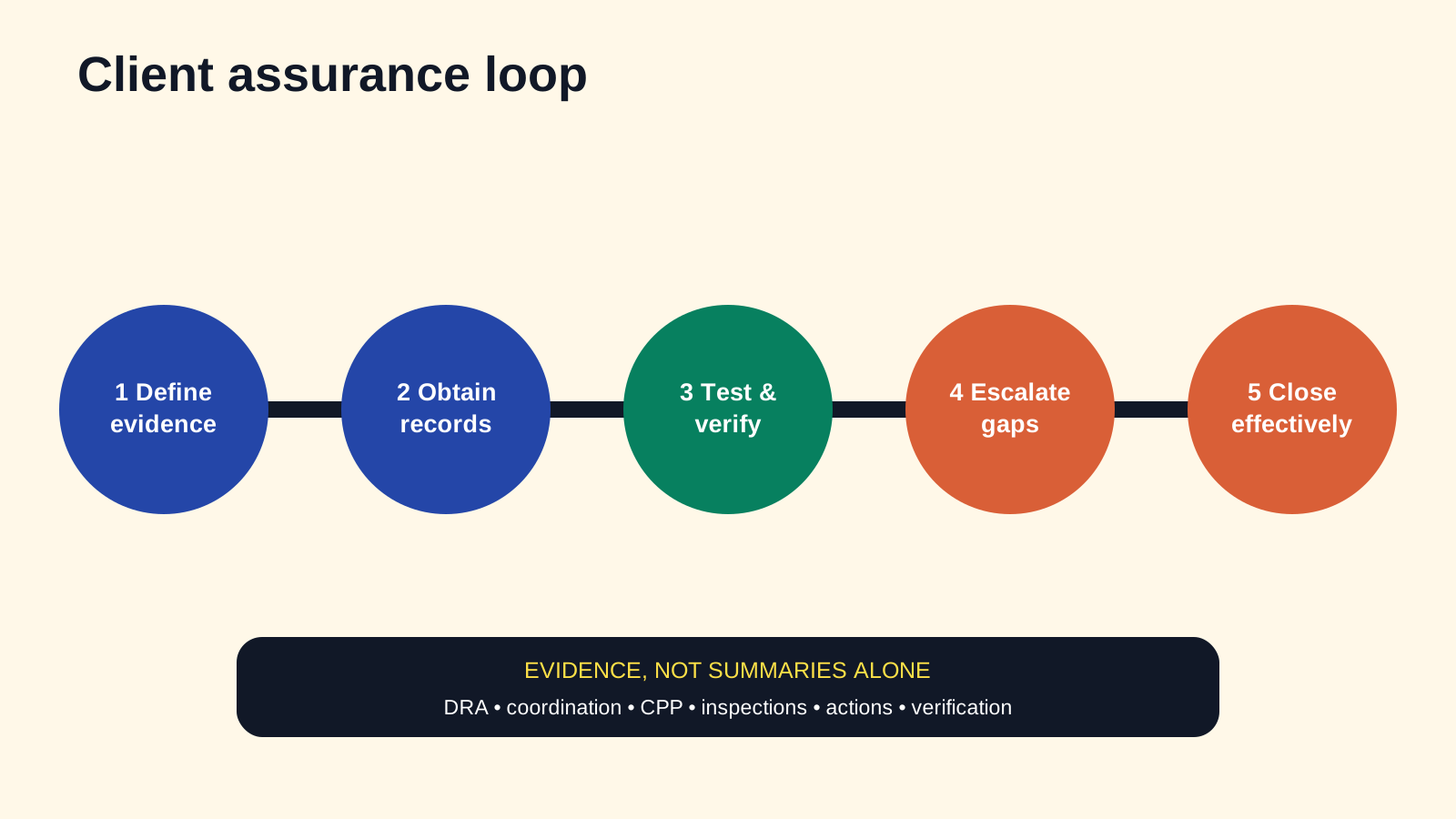
Reasonable steps do not replace PCWD or PCWC duties. They are the client’s system for obtaining reliable evidence, testing whether arrangements work, finding gaps and intervening where necessary.
Five assurance layers
- Set expectations: define duties, deliverables, acceptance criteria and reporting frequency.
- Obtain evidence: DRA, risk registers, coordination minutes, CPP, inspections, training and action closure.
- Test evidence: sample design decisions and verify workface controls; do not accept unsupported summaries.
- Escalate: where evidence is late, incomplete or controls fail, set correction, resources, dates and stop/release authority.
- Verify closure: close findings when evidence shows cause and risk are controlled, not after a promise.
Practical example — green report, open actions
Illustrative example for guidance; not an actual incident report. A Selangor hospital project’s monthly report shows overall “good” status. The client nevertheless asks for evidence on maintenance-access design-risk closure and pedestrian-traffic segregation at site.
Review finds the DRA states residual risk but records no recipient, while a site visit shows a temporary route differing from CPP. The client requires PCWD to complete design-information flow and PCWC to restore traffic controls, assigning owners and dates. Related work release is held until drawings, CPP, briefing and inspection are updated. Findings close after independent verification.
Compliance actions
- build a client assurance plan from duties and principal risks;
- define minimum evidence and samples to be tested;
- schedule design reviews, three-party meetings and site visits;
- maintain a findings register with priority, owner, date and escalation;
- connect repeat failures to resources, competence or arrangements;
- report material decisions and actions to client governance.
Evidence to retain
- assurance plan and duty–evidence matrix;
- PCWD/PCWC reports and supporting records;
- design-review and periodic-meeting minutes;
- visit, OSHWA/OSHPA or relevant assessment reports;
- findings, escalation, action and verification register;
- work hold/release decision records.
Common failures
- accepting dashboards without testing underlying evidence;
- audits only check document existence;
- findings close by the same party without verification;
- overdue actions are not escalated;
- client interferes with detail while ignoring system gaps;
- PCWD/PCWC performance is not reviewed after risk change.
Checklist
- [ ] Duties and expected evidence are mapped.
- [ ] Review frequency is proportionate to risk.
- [ ] Design risk and site controls are sampled.
- [ ] Findings have owners, dates and escalation routes.
- [ ] The client can hold release where necessary.
- [ ] Closure is verified with effectiveness evidence.
- [ ] Failure trends change project arrangements.
Primary references
- DOSH — CDM Guidelines 2026, paragraphs 45–46
- OSH (Construction Work) (Design and Management) Regulations 2024, Regulation 6 and Regulations 12–16
- Occupational Safety and Health Act 1994 (Act 514)
Consult current official texts. This article is general industry guidance, not legal advice.
Related articles
Garis Panduan CDM Edisi 2026
CDM 2026 · 29 of 52
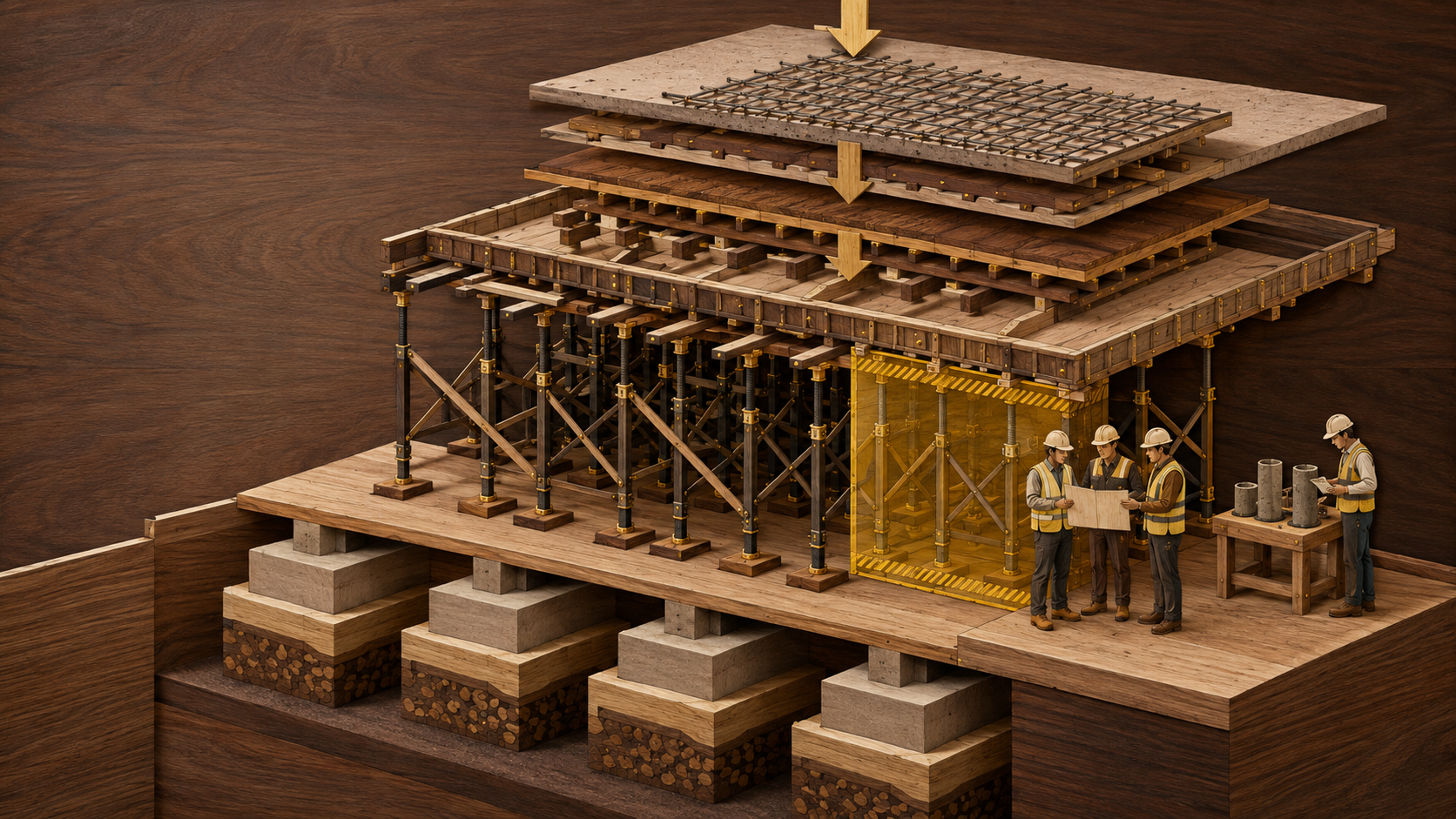
Kestabilan Struktur: Kerja Sementara, Penyangga dan Urutan
Panduan Peraturan 21 untuk reka bentuk kerja sementara, laluan beban, pemeriksaan dan penanggalan terkawal.
Ir. Ts. Dr. Mohamad Syamir bin Senin.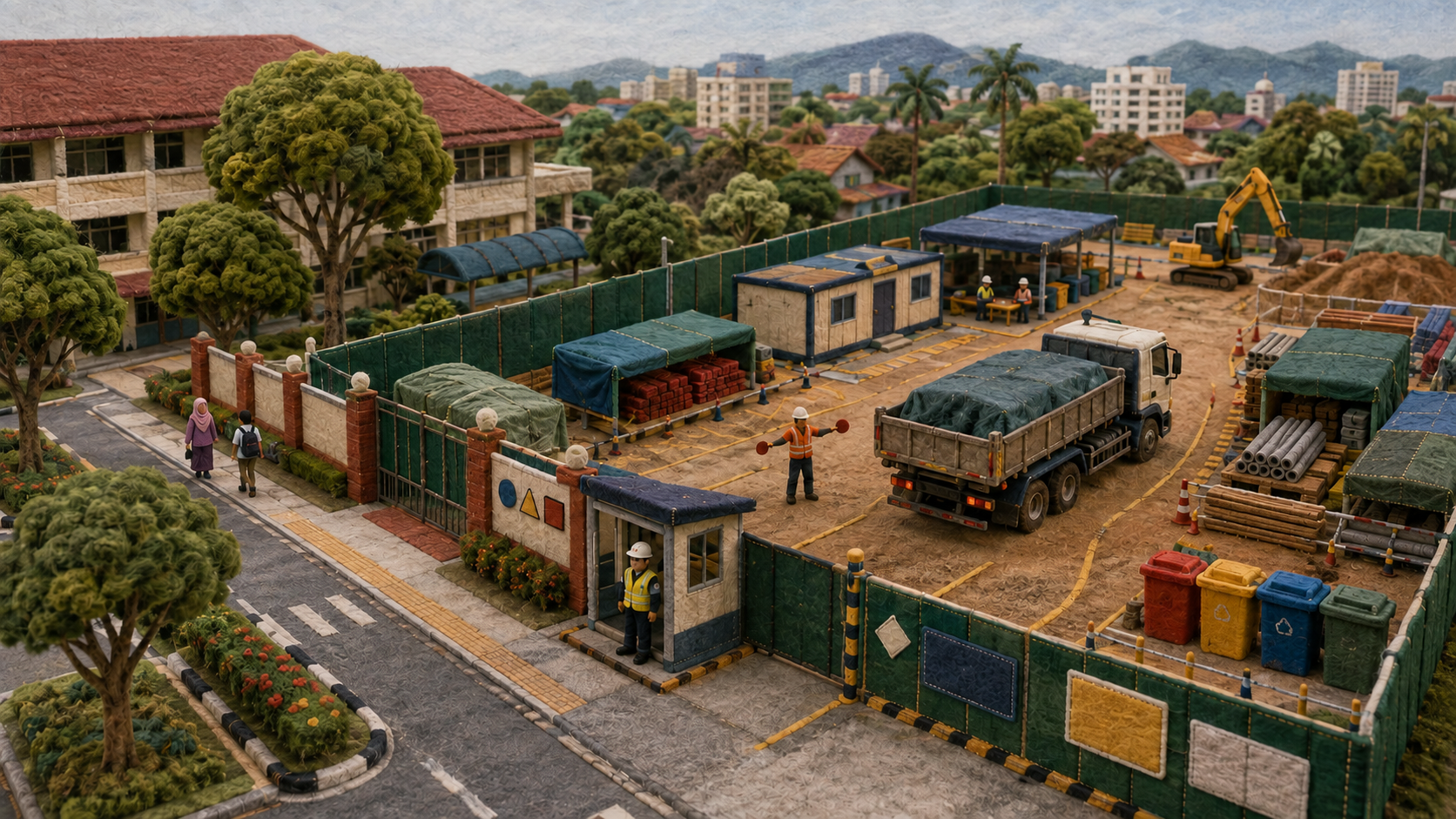
Garis Panduan CDM Edisi 2026
CDM 2026 · 28 of 52
Aturan dan Sekuriti Tapak: Lindungi Pekerja dan Orang Awam
Panduan Peraturan 20 untuk kekemasan, kebersihan, pemagaran, penandaan serta kawalan antara muka awam.
Ir. Ts. Dr. Mohamad Syamir bin Senin.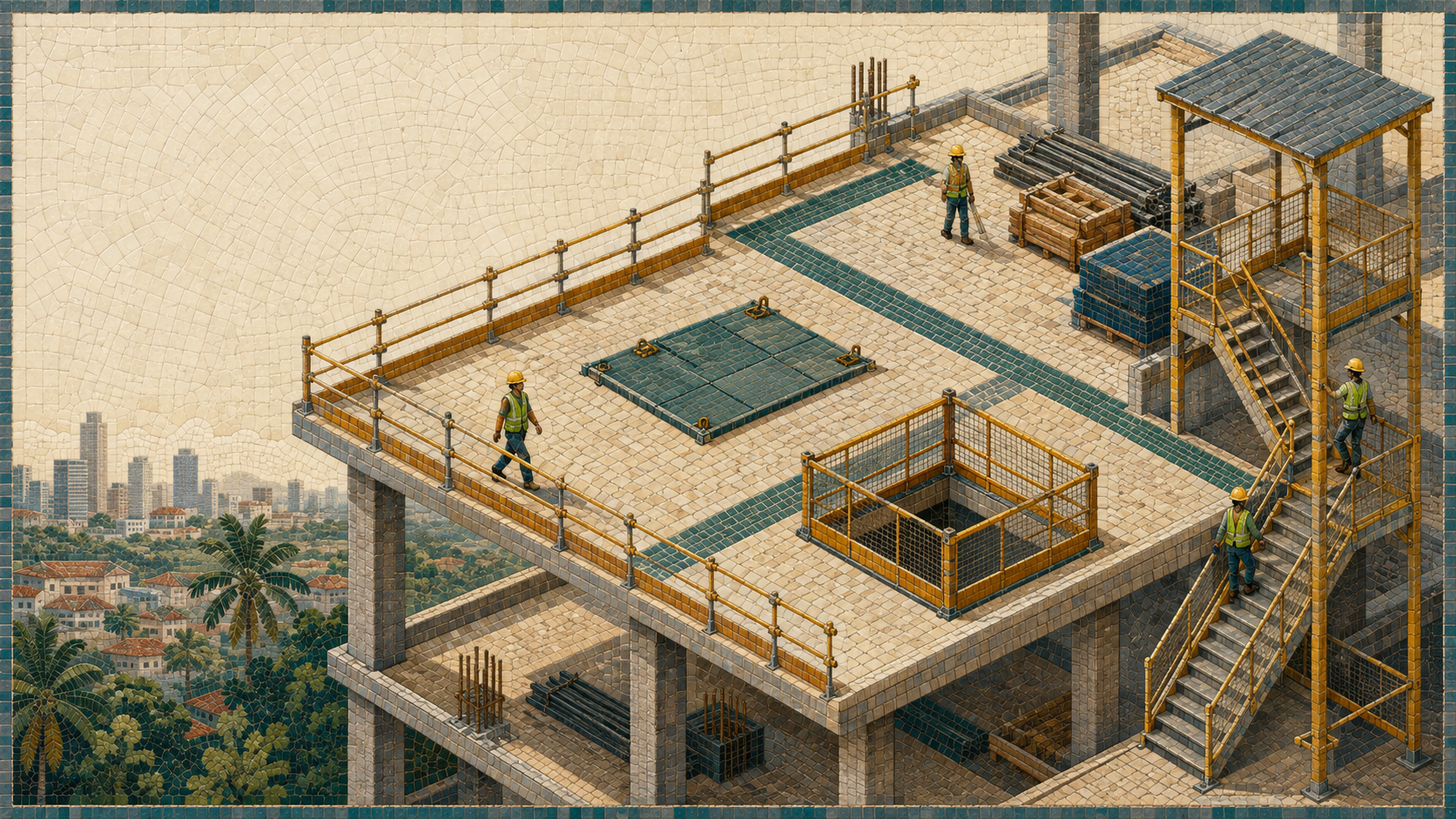
Garis Panduan CDM Edisi 2026
CDM 2026 · 27 of 52
Tempat Kerja Pembinaan Yang Selamat: Akses, Tepi dan Bukaan
Panduan Peraturan 19 untuk mengawal akses, jalan keluar, tepi, bukaan lantai dan ruang kerja mengikut keadaan sebenar tapak.
Ir. Ts. Dr. Mohamad Syamir bin Senin.