
Garis Panduan CDM Edisi 2026
Project Notification to DOSH: Thresholds, Particulars and Updates
CDM 2026 · 13 of 52
Practical guidance to test Regulation 8 thresholds, complete JKKP 12, display the certificate and update project particulars.

Six-slide briefing
The guideline at a glance
Slide 1 / 6
CDM 2026
Regulation 8
Test both thresholds separately
A project is notifiable when it exceeds 30 working days OR 500 person-days.
- Current programme
- Phased resource plan
- Recorded assumptions
Either threshold is sufficient.
Use the buttons, dots or left/right arrow keys. This briefing summarises the guideline; the article and official source remain the detailed references.
CDM 2026 Series — Topic 13 of 52. This is general industry guidance and should be read with current legislation and DOSH directions.
Notification is not merely a project-start form. It is a client control for confirming whether Regulation 8 thresholds are crossed, notifying the Director General of project particulars, and ensuring current information remains readable by the workforce.
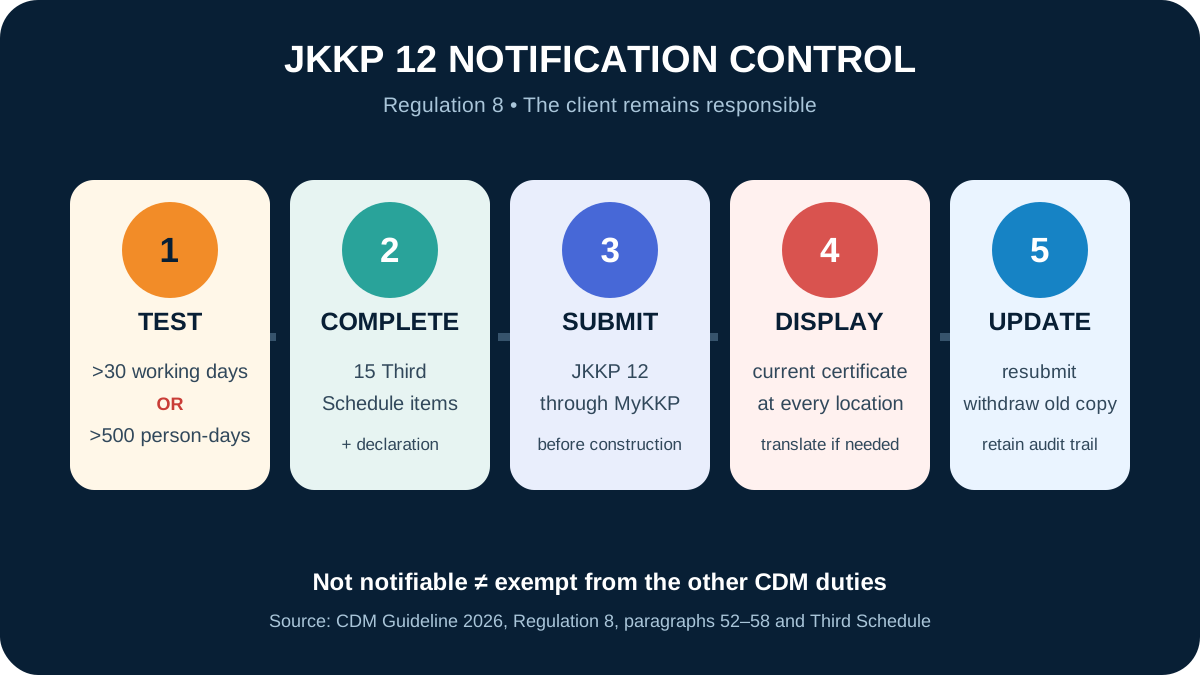
Threshold test: “or”, not “and”
Under Regulation 8(1), the client must notify the Director General in writing when construction work is scheduled to last longer than 30 working days or exceed 500 person-days. Either threshold is sufficient.
A “working day” is any day on which construction work takes place. A “person-day” is any day or part of a day when a person is expected to carry out construction work, whether or not that person performs physical work at the site. The estimate should therefore include relevant supervision, management and construction functions, not physical labour alone.
| Test | Practical method | Result |
|---|---|---|
| Duration | Count planned construction working days | More than 30 working days: notifiable |
| Person-days | Sum everyone expected for each day or part-day | More than 500 person-days: notifiable |
| Change | Recalculate after programme, scope or workforce changes | If a threshold is newly reached: notify as soon as practicable |
Practical example (fictional scenario)
A warehouse upgrade in Selangor is planned for 42 working days. Workforce levels vary by phase and total only 420 person-days. The project is still notifiable because its duration exceeds 30 working days.
The client completes JKKP 12 in MyKKP before the construction phase starts. During week two, the principal construction work contractor (PCWC) changes following contract termination. The client resubmits the updated particulars and replaces the old certificate at the site offices, welfare facilities and accommodation. This fictional example explains the workflow; it is not a real incident report or a legal conclusion for a particular project.
When and how to notify
The guideline directs users to submit JKKP 12 through MyKKP. Notification must be made as soon as practicable before the construction phase begins. Exact timing depends on project scope and complexity, but do not wait for mobilisation when the Third Schedule particulars are already known.
The client may ask another person to submit on its behalf, but the Regulation 8 duty remains with the client. The PCWD is not required to submit the notification or check that the client has done so.
Third Schedule particulars
Maintain a controlled dataset containing all 15 particulars:
- submission date, precise site location and local authority;
- brief project and construction-work description;
- contact particulars for the client, PCWD and PCWC;
- planned start, time allocated by the client and construction-phase duration;
- estimated maximum people on site and planned number of CWCs;
- names and addresses of appointed CWCs and CWDs; and
- a declaration signed by or on behalf of the client that the client knows its duties.
Display, language and updates
Clearly display the latest Construction Work Notification Certificate generated by MyKKP at every site office, welfare facility and accommodation so workers can read it. Where workers cannot read the national language, the guideline states that the certificate should be translated into their mother tongue.
Updating is not a one-off task. Resubmit changes to Third Schedule particulars, including appointed parties, programme or resources. If project ownership changes, JKKP 12 must be resubmitted to the Department.
Evidence to retain
- working-day and person-day calculations, assumptions and review dates;
- the client-approved Third Schedule dataset;
- MyKKP submission evidence and generated certificate;
- display-location records and readability/language checks;
- a change register showing trigger, owner, resubmission date and replacement certificate; and
- confirmation that superseded copies were withdrawn.
Common failures
- treating “30 days and 500 person-days” as a combined test;
- counting physical workers only or using an unsupported average;
- assuming another party has taken over the client’s duty;
- displaying the original certificate after PCWC, duration or workforce changes;
- omitting translation when workers cannot understand the national language; or
- assuming a non-notifiable project is exempt from the other CDM Regulations.
Client checklist
- Test both thresholds using the current programme and resource plan.
- Record assumptions, calculation owner and next review date.
- Complete all 15 Third Schedule particulars and the client declaration.
- Submit JKKP 12 through MyKKP as soon as practicable before construction.
- Display the current certificate at all stated locations and translate where needed.
- Define change triggers and the resubmission process.
- Retain every version’s audit trail and withdraw old copies.
Primary references
- DOSH, Guidelines for the Occupational Safety and Health (Construction Work) (Design and Management) Regulations 2024, 2026 Edition, Regulation 8, paragraphs 52-58 and the Third Schedule.
- Occupational Safety and Health (Construction Work) (Design and Management) Regulations 2024, P.U. (A) 147, Regulation 8 and Third Schedule.
- Occupational Safety and Health Act 1994 (Act 514).
Related articles
Garis Panduan CDM Edisi 2026
CDM 2026 · 29 of 52
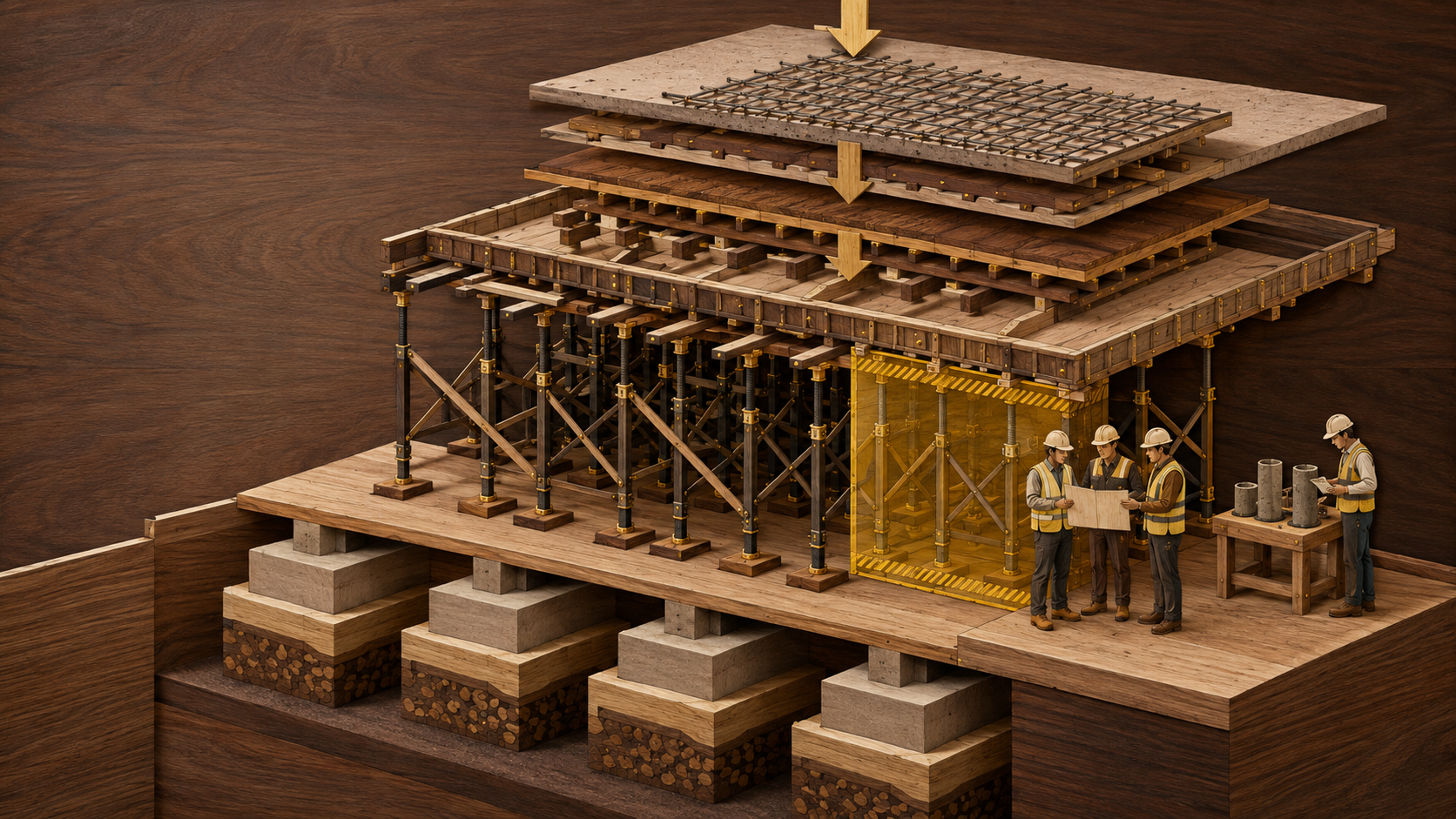
Kestabilan Struktur: Kerja Sementara, Penyangga dan Urutan
Panduan Peraturan 21 untuk reka bentuk kerja sementara, laluan beban, pemeriksaan dan penanggalan terkawal.
Ir. Ts. Dr. Mohamad Syamir bin Senin.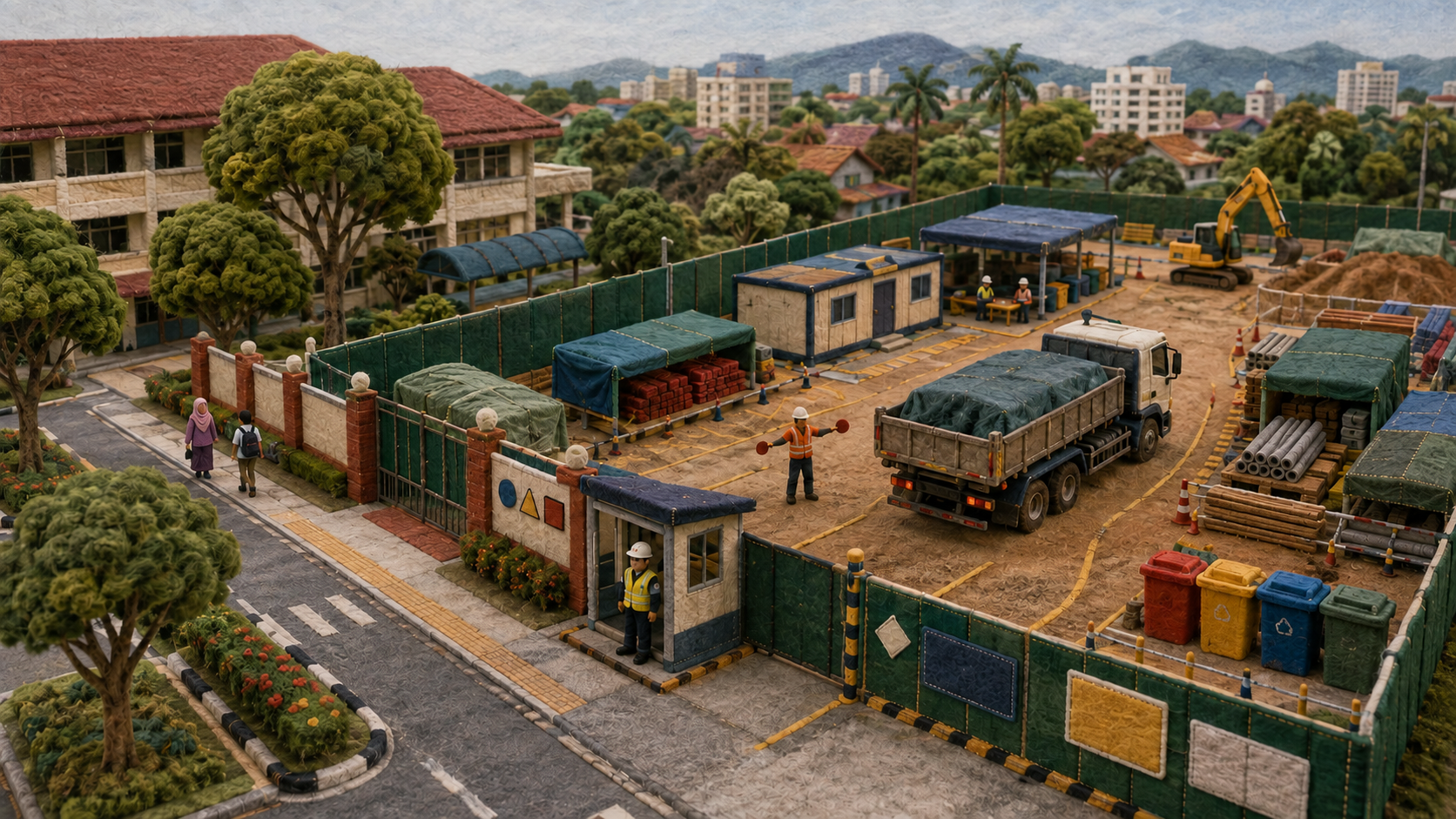
Garis Panduan CDM Edisi 2026
CDM 2026 · 28 of 52
Aturan dan Sekuriti Tapak: Lindungi Pekerja dan Orang Awam
Panduan Peraturan 20 untuk kekemasan, kebersihan, pemagaran, penandaan serta kawalan antara muka awam.
Ir. Ts. Dr. Mohamad Syamir bin Senin.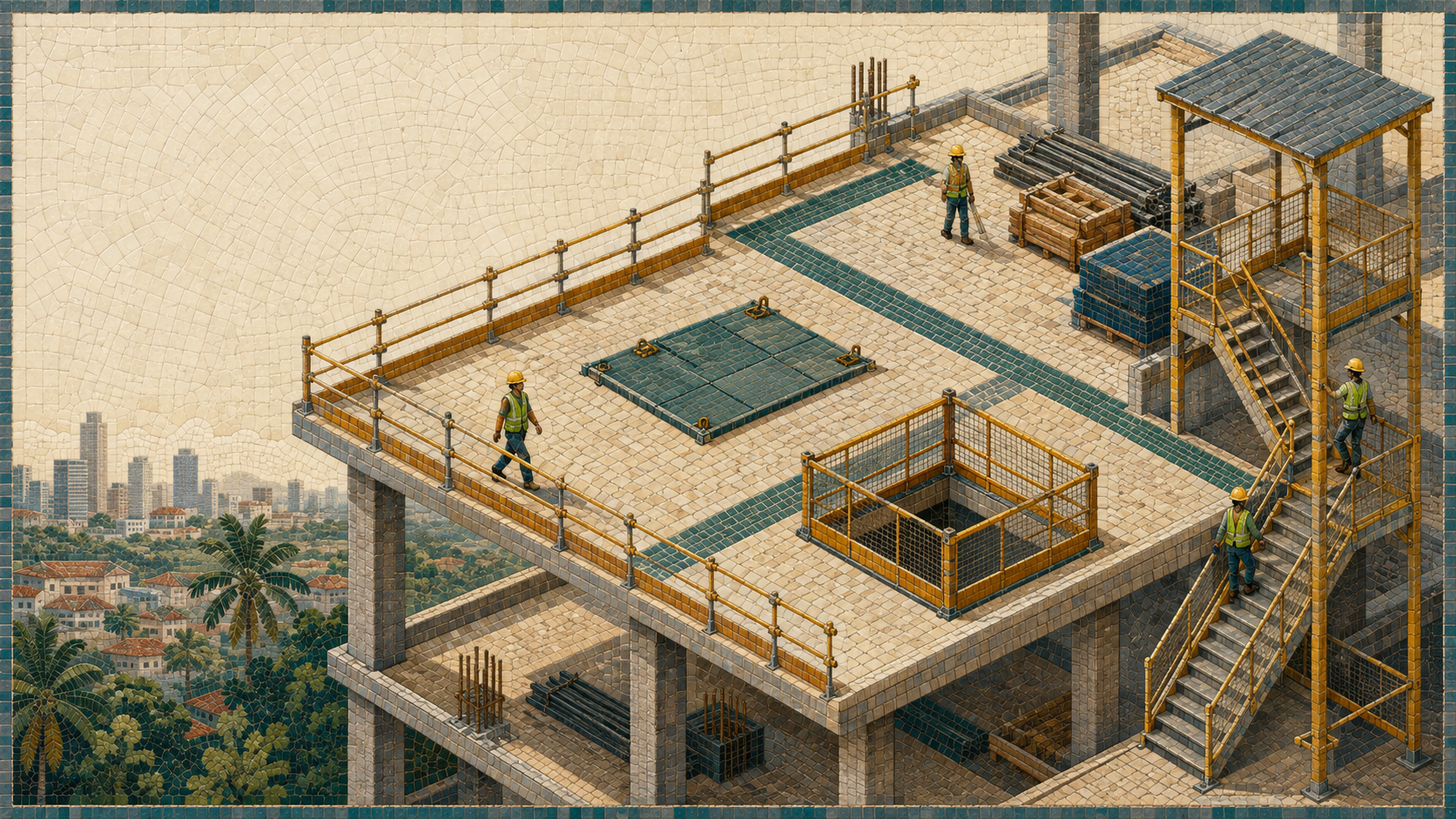
Garis Panduan CDM Edisi 2026
CDM 2026 · 27 of 52
Tempat Kerja Pembinaan Yang Selamat: Akses, Tepi dan Bukaan
Panduan Peraturan 19 untuk mengawal akses, jalan keluar, tepi, bukaan lantai dan ruang kerja mengikut keadaan sebenar tapak.
Ir. Ts. Dr. Mohamad Syamir bin Senin.