
Garis Panduan CDM Edisi 2026
Contractor 1: Planning and Controlling Your Own Work
CDM 2026 · 24 of 52
A CWC guide to planning, managing and monitoring its own package, coordinating interfaces and controlling change with evidence.
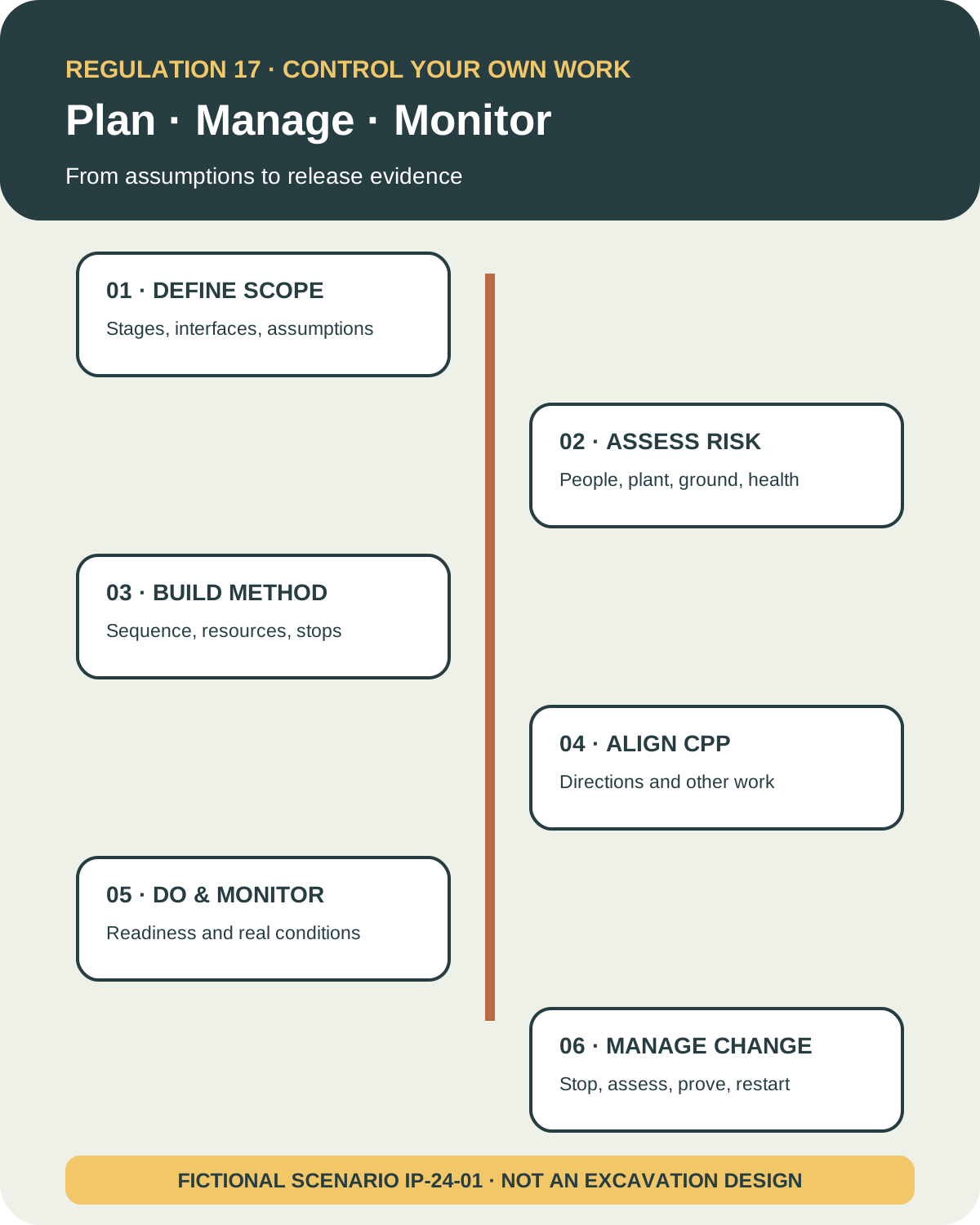
Six-slide briefing
The guideline at a glance
Slide 1 / 6
CDM 2026
Regulation 17(1)(b)
Control your work from plan to result
A CWC plans, manages and monitors work under its control so risk is controlled so far as practicable.
- Define scope
- Provide resources
- Check conditions
A work method alone does not prove control.
Use the buttons, dots or left/right arrow keys. This briefing summarises the guideline; the article and official source remain the detailed references.
Short answer
A construction work contractor (CWC) does more than execute a package received from the principal construction work contractor (PCWC). Under Regulation 17(1)(b), a CWC must plan, manage and monitor construction work carried out by it or workers under its control so that, so far as practicable, it is carried out without risks to safety or health. On a project with more than one CWC, its own work must be coordinated with the PCWC, other CWCs and, where necessary, the principal construction work designer (PCWD), while following relevant directions and the applicable parts of the construction phase plan (CPP).
Useful planning connects scope, hazards, sequence, temporary design, people, plant, materials, inspections, change triggers and emergency response. Managing means providing authority, resources, communication and controls to deliver the plan. Monitoring means checking actual conditions and correcting them when assumptions are no longer valid. A work method document alone does not prove that all three functions occur.
Legal basis and scope
Regulation 17 establishes the duties of a construction work contractor. Regulation 17(1)(a) says a CWC must not carry out construction work unless satisfied that the client is aware of its client duties. Regulation 17(1)(b) imposes the duty to plan, manage and monitor work under the CWC's control. For multi-contractor projects, Regulation 17(1)(c) requires compliance with directions from the PCWD or PCWC and the parts of the CPP relevant to the CWC's work.
For a single-contractor project, Regulation 17 requires the general principles of prevention to be taken into account when making design, technical and organisational decisions and estimating time, and requires a CPP to be drawn up or arranged, so far as practicable, before the construction site is set up. Regulation 17 also addresses skills, knowledge, training and experience; supervision, instruction and information; prevention of unauthorised access; and the Second Schedule. Regulation 17(2) specifies information for workers, including suitable site induction not already provided by the PCWC, procedures for imminent or serious danger, and particular risk information.
Paragraphs 130-148 of the DOSH CDM Guidelines Edition 2026 explain the scope of a CWC and how its duties operate. This topic focuses on paragraphs 131-140: establishing the client's position, planning, managing, monitoring, coordinating and transmitting monitoring results. Competence and training are treated more specifically in the next topic. This article does not prescribe a universal excavation-support design, rainfall trigger, supervision ratio or inspection interval. Those must come from risk, design, ground conditions, surroundings, other applicable law and relevant competent people.
Define the work under the CWC's control
Start by stating what is actually controlled: place, activity, workers, self-employed people, agency labour, plant, materials, temporary structures, deliveries and time period. Also state interfaces not fully controlled but capable of affecting the work, such as access provided by the PCWC, client utilities, another party's design, a shared crane or an area released by a preceding CWC. Contract boundaries do not necessarily equal risk boundaries.
Break the package into stages that can be checked. For excavation, stages might include verifying underground information, marking, setting up isolation, selecting plant, initial excavation, installing support, providing access, working in the excavation, inspecting after change and backfilling. This is only an illustrative structure, not a method suitable for every site. Each stage needs start conditions, prohibitions, a release authority and acceptance evidence.
Register critical assumptions: utility positions, ground condition, water level, plant space, installation sequence, adjacent loads, weather, emergency access and resource capacity. Identify who confirms each assumption and when. If information is not available, do not turn it into a fact in the procedure. Record the gap, interim measure and decision on whether work may begin.
Assess risk and select controls
The risk assessment must reflect actual work, people who may be affected and local conditions. Consider the CWC's workforce, other CWCs, the public, adjacent occupants, delivery drivers and those performing inspections or maintenance. Apply the general principles of prevention: avoid risks where possible, evaluate unavoidable risks, combat them at source, adapt work to the individual, adapt to technical progress, replace the dangerous, develop a coherent prevention policy, prioritise collective protection and give appropriate instructions.
Controls must become practical decisions: what temporary design is required, how stability is maintained, how plant and pedestrian zones are separated, who may enter, what is inspected before starting and what conditions stop work. Health hazards also require attention, including dust, noise, vibration, substances, manual handling and heat conditions as relevant to the actual task.
Do not select a control because it is easy to write. Check whether it can be installed, maintained and used in the real space and sequence. Involve supervisors and workers doing the task, while applying suitable technical input where a decision involves design or engineering. If a CWC produces design, including for a temporary structure, paragraph 130 reminds it that it also has duties as a construction work designer (CWD).
Build an executable work method
A work method should answer who, what, when, where and how. State the drawing or design version used, activity sequence, plant, access, isolation, communication, inspection, release and response to deviation. Use photographs, simple plans or models where they improve understanding, but label their status and version.
Match people to tasks. Identify supervisors, operators, inspectors, signallers, temporary-structure installers and people authorised to stop or release work. A name list is insufficient if authority and shift coverage are unclear. Provide deputies and a route to assistance when the main supervisor is unavailable.
Plan resources before committing time. Check support components, detection tools, pumps, barriers, lighting, access, emergency equipment and storage space. A programme that does not allow time for installation, inspection or change may push activity ahead of controls. The CWC should bring resource gaps to the PCWC before they become workface conflicts.
Coordinate with the CPP and others
On a multi-contractor project, the CWC's method must fit the overall project arrangements. Check CPP sections on access, traffic, emergency, permits, temporary works, change, welfare, communication and inspection. Do not merely copy the CPP into the method; explain how the package complies and where interfaces need a joint decision.
Use an interface schedule stating the CWC activity, other activity, combined risk, coordination owner, decision date and release evidence. For example, excavation can conflict with crane routes, concrete deliveries, temporary drainage or public access. Share look-ahead programmes and changes early enough for the PCWC to coordinate the whole site.
Paragraph 139 says relevant information arising from the CWC's monitoring must be provided to the PCWC. A report should therefore not end in the CWC's file. Communicate findings capable of affecting others, the CPP or site arrangements, together with interim conditions and proposed action. Following a PCWC direction does not transfer the CWC's duty to control its own work.
Manage workface implementation
Before starting, complete a readiness review. Confirm that the area is released, current information and design are available, people and plant are present, controls are installed, inspections are complete and the workforce understands sequence and stop points. Use a task-specific briefing and ask workers to describe critical points back. An attendance signature does not prove readiness.
During work, supervision must be close enough for the risk and team experience. Supervisors need to identify deviation, control unsafe conditions, coordinate change and obtain technical help. Do not alter design, sequence or support at the workface through an uncontrolled verbal instruction. Stop the affected stage, assess the effect and issue revised information.
Manage shifts and handover. Record area condition, open inspections, weather changes, pumps, barriers, plant, permits and restrictions. The next shift should not infer the condition merely from what it sees. Handover should show what is safe to use, what remains incomplete and who may give release.
Monitor: compare the plan with reality
Paragraph 138 requires a CWC to monitor its own work so that safety and health measures remain suitable, in good order and practised. Use a combination of pre-stage checks, supervision observations, workforce feedback, document audits and verification after change. Frequency must be proportionate to risk and change rather than copied from a generic schedule.
Set reinspection triggers such as rain, ground change, water ingress, vibration, damage, changed adjacent loading, barrier removal, new plant, shift change or a period of stoppage. Technical thresholds must come from design, assessment and relevant competent people; this article invents no value. When a trigger occurs, identify who stops work, who assesses and what evidence is required before restart.
Track findings from open to verified. A photograph may support the record, but it needs place, date, condition, action, owner and verification. Look for patterns such as barriers repeatedly moved or water repeatedly collecting. Recurrence may indicate unsuitable planning or resources, not only individual failure.
Fictional example: road excavation package in Ipoh
This is a fictional training example. It is not an actual incident, statistic, support design or approved work method. A CWC receives a utility excavation package for a road upgrade in Ipoh. Public routes, temporary drainage and deliveries by another CWC are nearby. The team records action IP-24-01 to coordinate support design, inspection and post-rain response.
The CWC divides work into zones and stages, checks utility information and raises gaps with the PCWC. Support design is provided through the project's technical process; this article gives no dimension or type. The work method references the design version, installation sequence, plant zone, access, inspection and prohibition on excavation entry before release.
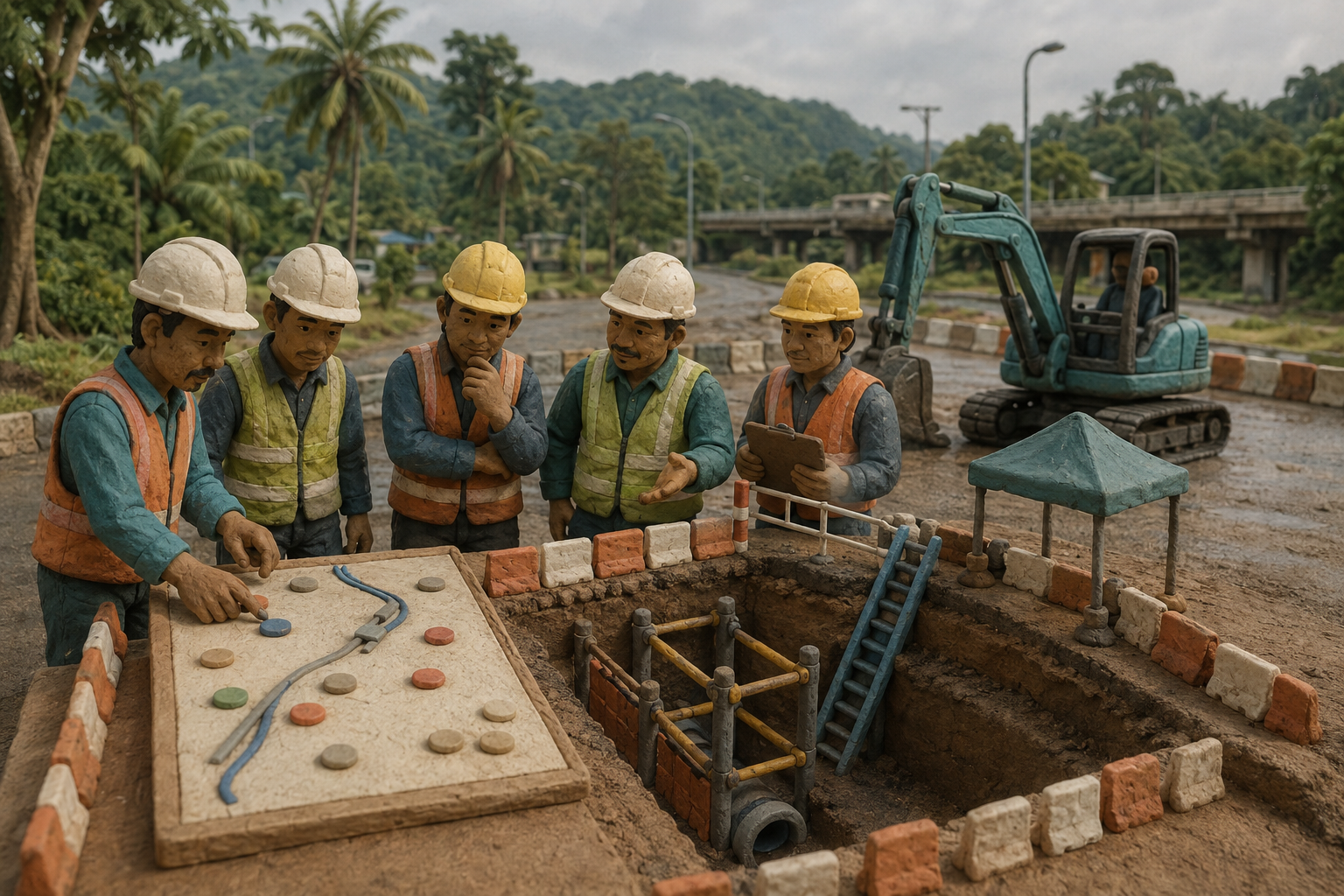
At the interface meeting, the CWC schedule shows another party's delivery crossing the barrier zone. The PCWC changes route and timing. The pre-task briefing uses a cutaway model. Workers point out access and who provides release. Before each stage, the supervisor confirms conditions and the designated inspector records findings.
After rain, the project's trigger activates a stop and reinspection. Pumps and drainage are checked, ground condition is assessed by the designated party and a fresh release is recorded before restart. The CWC sends a finding summary to the PCWC because the shared route is affected. IP-24-01 closes only after controls are installed, field-tested and related documents updated. The example does not assume a particular rain event is automatically safe or unsafe; criteria come from the actual project.
Evidence worth retaining
- CWC scope and control boundary, interfaces, assumptions, information gaps and confirmation owners.
- Risk assessment, general-principles decisions and design or technical input.
- Work method, drawings, temporary design, version records and acceptance.
- Readiness reviews, task briefings, authorised people and supervision coverage.
- Resource, plant, inspection, maintenance and stage-release records.
- Interface schedule, PCWC or PCWD directions and CPP parts followed.
- Observations, change triggers, stops, corrections, reinspections and restart authorisations.
- Monitoring information sent to the PCWC and evidence of receipt.
This article does not prescribe a universal statutory retention period. Apply relevant law, contract and project systems. Evidence should show why work was allowed to start and how changing conditions were handled.
Common failures
- Assuming the PCWC's documents replace detailed CWC planning.
- Copying an old method without checking ground, access, design, people and interfaces.
- Starting while information or temporary design remains an assumption.
- Committing work duration without time and resources for controls, inspections and change.
- Relying on a briefing without confirming understanding or workface condition.
- Changing sequence or support by verbal instruction without controlled assessment.
- Closing a finding when correction is promised rather than verified.
- Keeping monitoring results that affect the wider site only in the CWC file.
CWC checklist
- Is the client aware of its duties and is the CWC's basis for satisfaction recorded?
- Are scope, workers, plant, place, stages and interfaces defined?
- Are risks to the workforce, other CWCs and public assessed?
- Do the general principles of prevention influence sequence, method and resources?
- Are current design and information accepted and gaps controlled?
- Does the work method state inspections, releases, stops and emergency response?
- Are people, supervision, plant and time sufficient before starting?
- Does the work align with directions, the CPP and other activities?
- Are change and reinspection triggers defined without invented thresholds?
- Is relevant monitoring information sent to the PCWC?
- Are actions closed only after workface implementation and verification?
- Is the plan reopened when design, weather, people or sequence changes?
Primary references and next step
The primary legal reference is the Occupational Safety and Health (Construction Work) (Design and Management) Regulations 2024, DOSH, particularly Regulation 17(1)(a)-(c) and 17(2), read with the other relevant provisions of Regulation 17. The primary explanatory reference is the DOSH CDM Guidelines Edition 2026, paragraphs 130-140, printed pages 62-66.
This is general guidance, not legal advice or an excavation design. Contact RIMAYS to discuss planning, coordination and control evidence for Malaysian work packages.
Related articles
Garis Panduan CDM Edisi 2026
CDM 2026 · 29 of 52
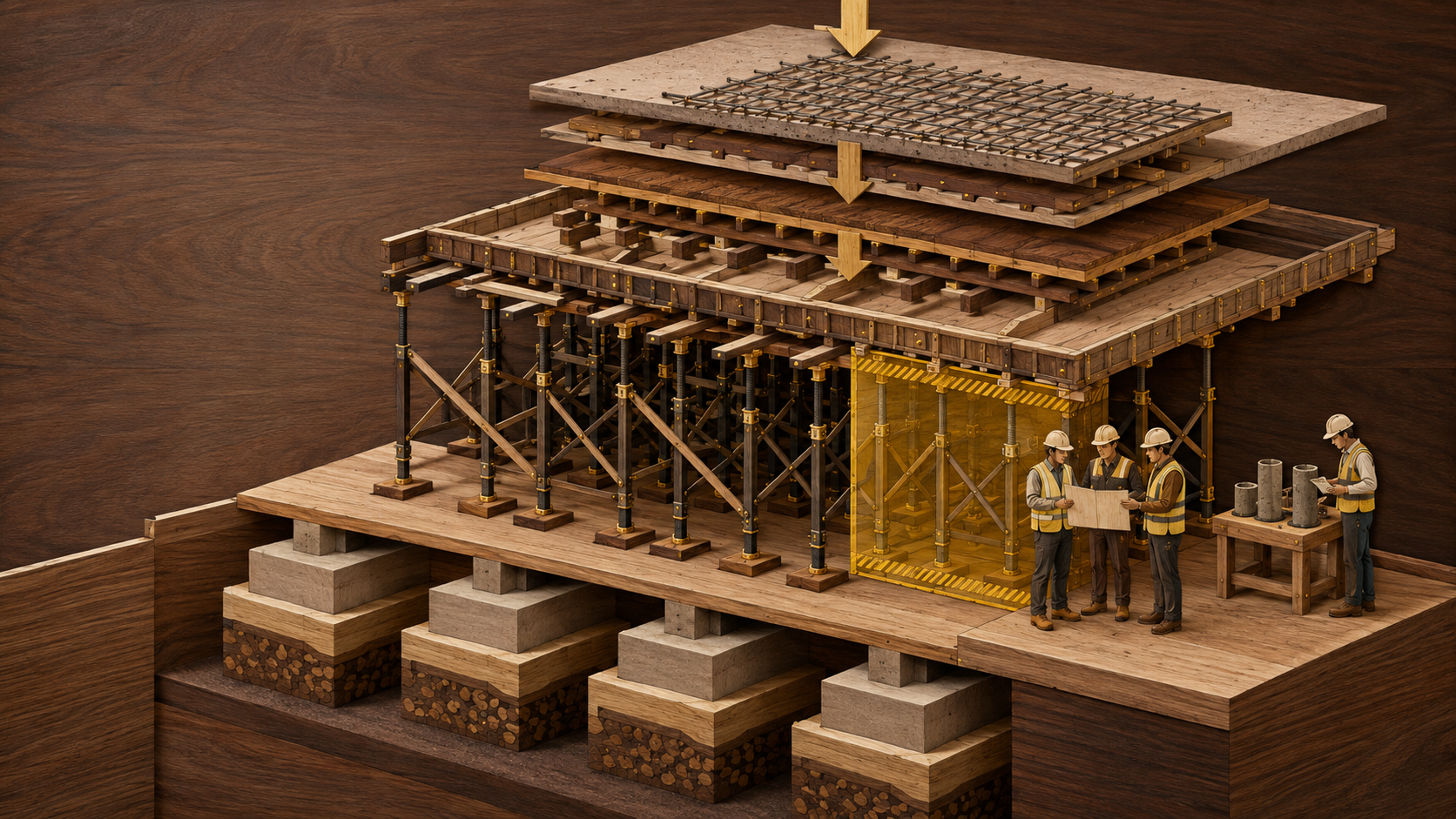
Kestabilan Struktur: Kerja Sementara, Penyangga dan Urutan
Panduan Peraturan 21 untuk reka bentuk kerja sementara, laluan beban, pemeriksaan dan penanggalan terkawal.
Ir. Ts. Dr. Mohamad Syamir bin Senin.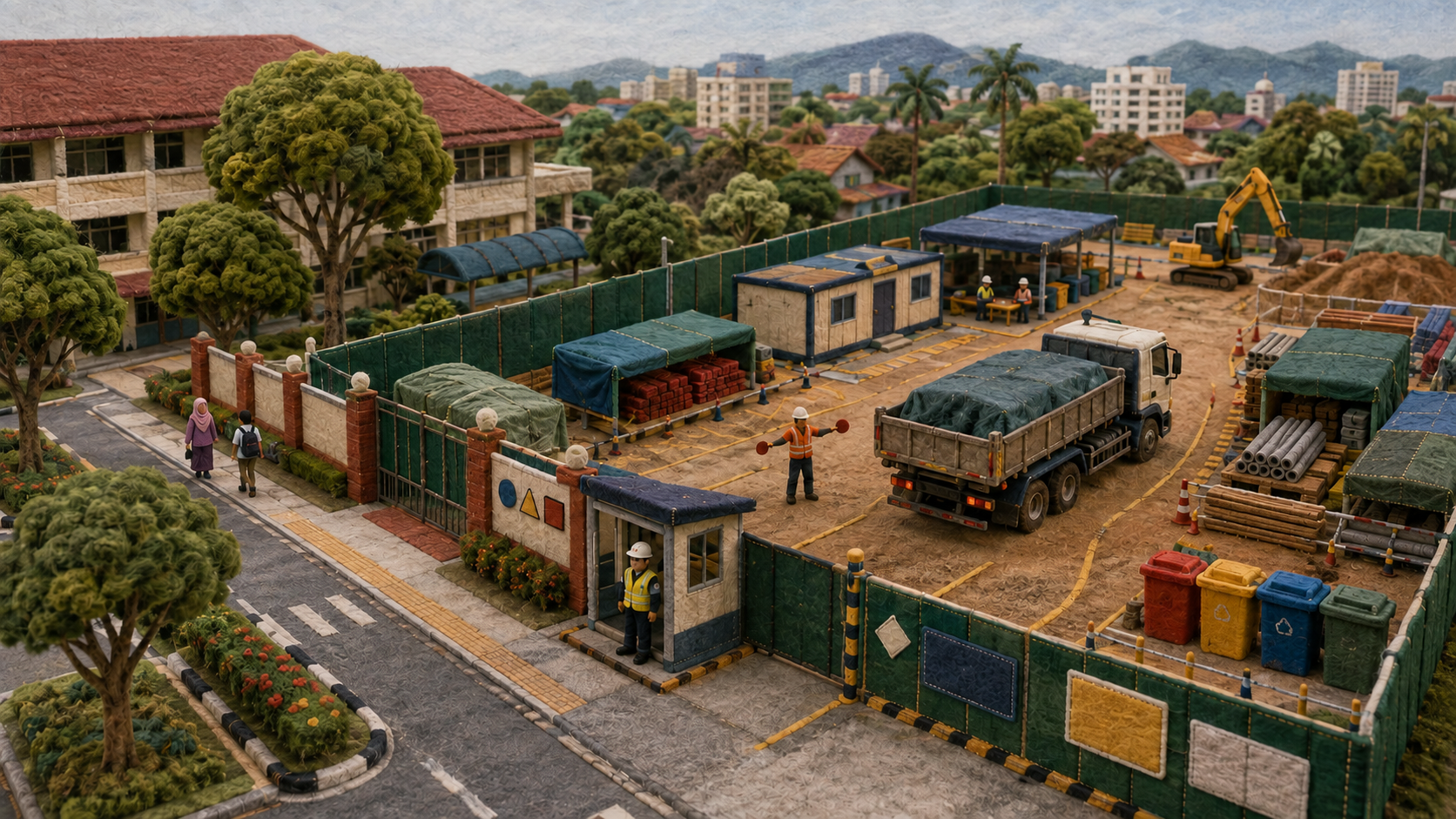
Garis Panduan CDM Edisi 2026
CDM 2026 · 28 of 52
Aturan dan Sekuriti Tapak: Lindungi Pekerja dan Orang Awam
Panduan Peraturan 20 untuk kekemasan, kebersihan, pemagaran, penandaan serta kawalan antara muka awam.
Ir. Ts. Dr. Mohamad Syamir bin Senin.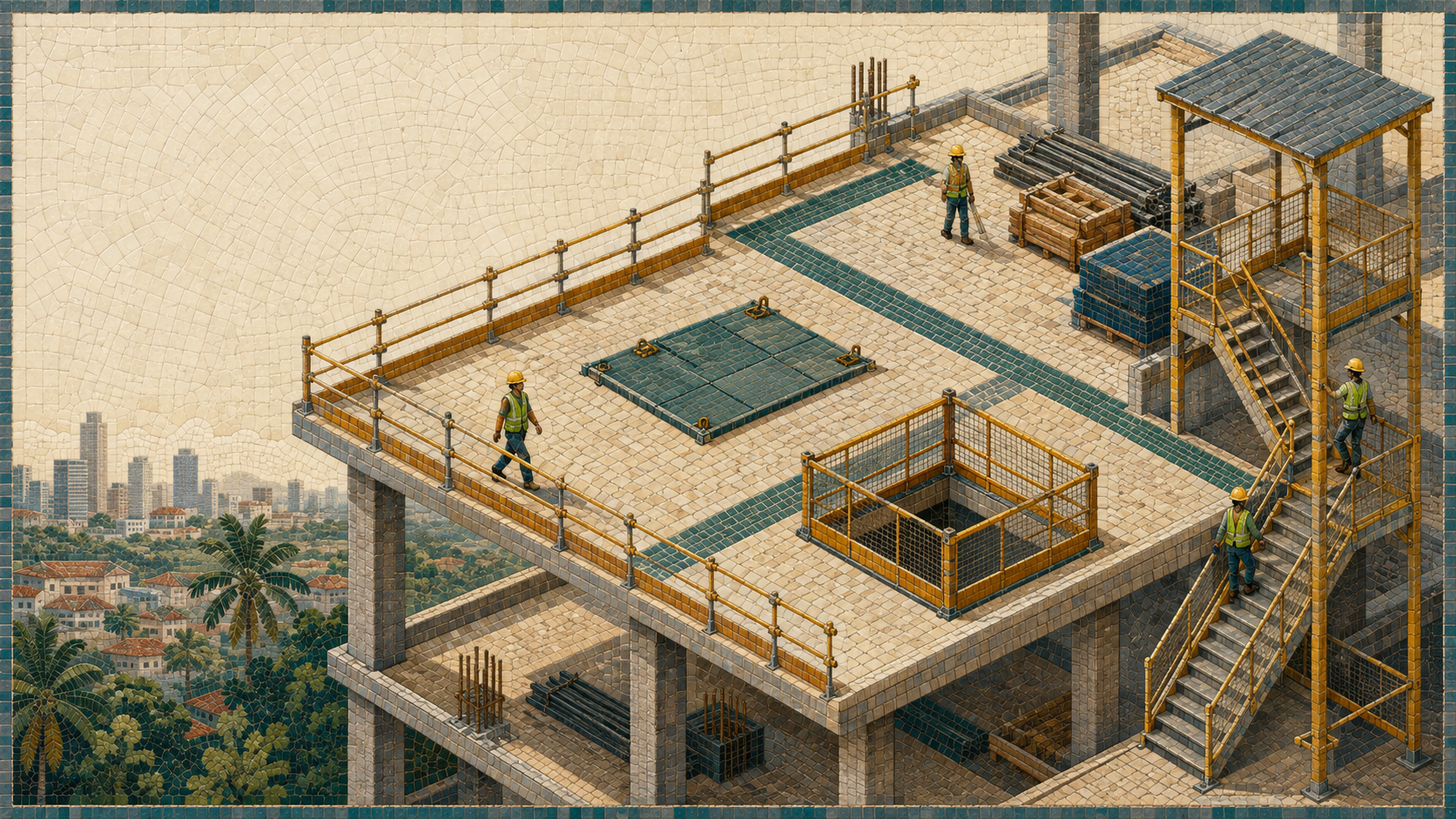
Garis Panduan CDM Edisi 2026
CDM 2026 · 27 of 52
Tempat Kerja Pembinaan Yang Selamat: Akses, Tepi dan Bukaan
Panduan Peraturan 19 untuk mengawal akses, jalan keluar, tepi, bukaan lantai dan ruang kerja mengikut keadaan sebenar tapak.
Ir. Ts. Dr. Mohamad Syamir bin Senin.