
Garis Panduan CDM Edisi 2026
CDM Interpretation 2: Construction Work, Structure and Project
CDM 2026 · 4 of 52
Practical guidance for reading construction work, structure and project together when determining CDM scope.
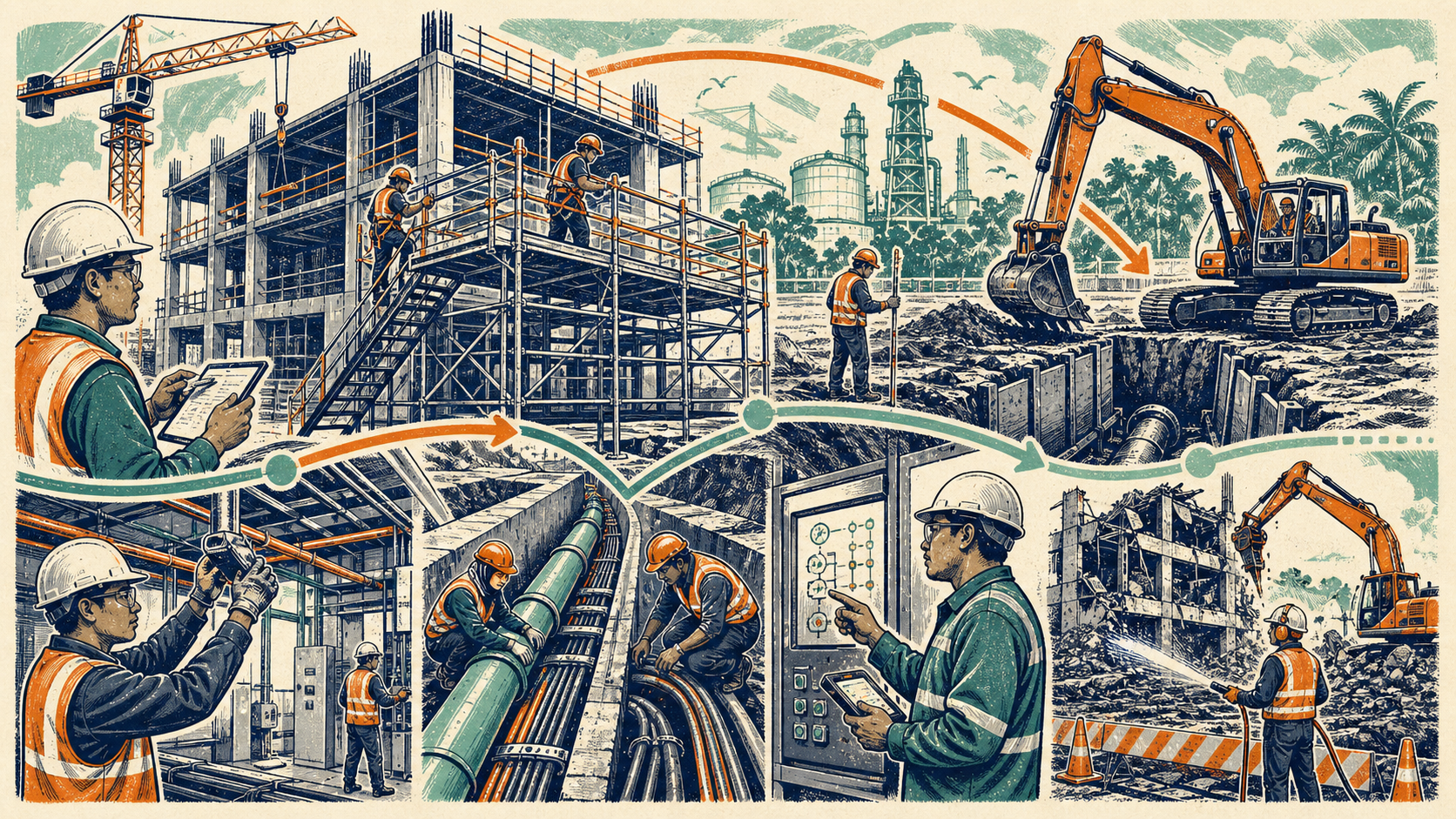
Six-slide briefing
The guideline at a glance
Slide 1 / 6
CDM 2026
Regulation 3
Read three definitions as one system
A project includes construction work; construction work generally refers to a structure; structure covers permanent and temporary works.
- Test the actual activity
- Identify the structure
- Trace the whole project
A contract label does not determine application.
Use the buttons, dots or left/right arrow keys. This briefing summarises the guideline; the article and official source remain the detailed references.
CDM 2026 Series — Topic 4 of 52. This is general industry guidance and should be read with current legislation and DOSH directions.
Three Regulation 3 definitions must be read together. A project includes or is intended to include construction work, together with all planning, design, management or other work until the construction phase is complete. Construction work covers a broad range of activities involving a structure. Structure is not limited to a permanent building: it also includes formwork, falsework, scaffolds or other structures designed or used to provide support or access during construction work.
Preparation, temporary works, permanent-service installation, commissioning and demolition must not be ignored merely because they are not the main building operation.
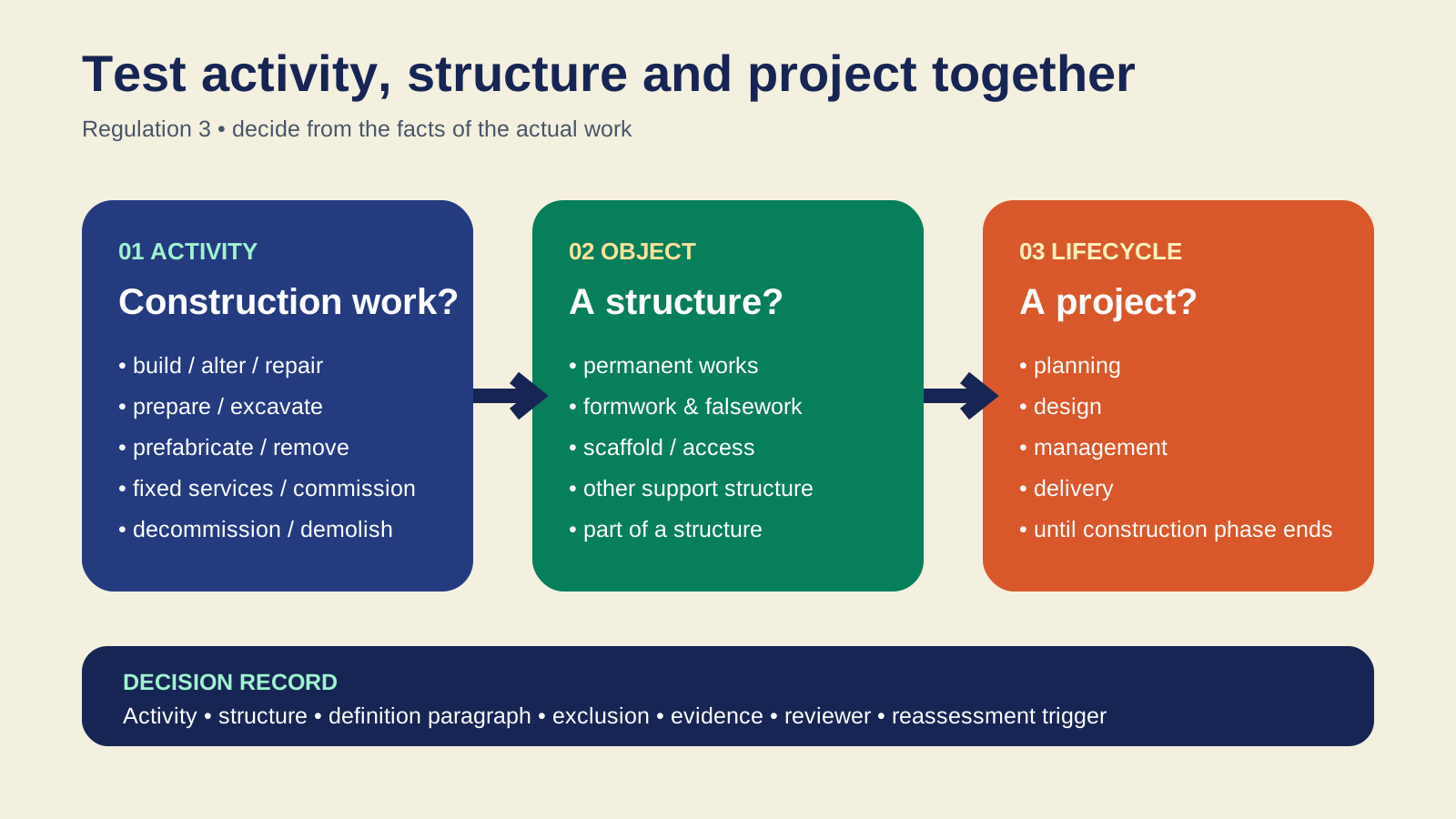
The three-definition test
- What is the actual activity? Compare it with paragraphs (a) to (e) of the construction-work definition.
- What structure is involved? Identify permanent work, a temporary structure or part of a structure.
- How does it relate to the project? Include planning, design, management, preparation, delivery and commissioning until the construction phase ends.
- Does a precise exclusion apply? Record the facts, not merely the work-order title.
Activities that commonly require testing
Construction work includes construction, alteration, conversion, fitting out, commissioning, renovation, repair, upkeep, decoration, specified maintenance, decommissioning, demolition or dismantling of a structure. It also covers preparation for an intended structure; on-site assembly or disassembly of prefabricated elements; removal of a structure or demolition waste; and installation, commissioning, maintenance, repair or removal of mechanical, electrical, gas, compressed-air, hydraulic, telecommunications, computer or similar services normally fixed within or to a structure.
Excavation includes earthwork, trenches, wells, shafts, tunnels or underground work. For a real decision, use the full Regulation 3 text rather than relying on this summary.
Temporary works are structures too
A scaffold providing access, or formwork and falsework supporting wet concrete, falls within the structure definition. The organisation should identify who designs it, what loading and site information are required, who coordinates its interface with permanent works, and how erection, inspection, alteration and dismantling will be controlled.
Practical example — scaffold for facade maintenance
Illustrative example for guidance; not a report of an actual incident. A Kuala Lumpur office building plans facade sealant replacement. The work order is labelled “maintenance”, but the selected method requires a multi-level tied scaffold and removal of several damaged panels.
The team does not decide from the maintenance label. It maps activities to the construction-work definition and identifies the scaffold as a structure providing access during construction work. The client obtains facade and service information; the scaffold designer specifies layout, loads and ties; the facade CWD checks interfaces; and the CWC/PCWC plans erection, inspection, use and dismantling. The classification, assumptions and reassessment triggers are retained in a scope matrix.
If the method changes to rope access without a temporary structure, or the scope becomes basic like-for-like replacement, the decision is reassessed against the new facts rather than treated as permanent.
Boundaries and exclusions
The Regulations exclude exploration or extraction of mineral resources and preparatory activities at the place where that exploration or extraction occurs. The guideline also gives examples outside the definition, including ordinary landscaping, lightweight office partitions, surveys that do not alter a structure, and off-site manufacture of standard prefabricated products.
The guideline explains that general maintenance of a structure or fixed plant is excluded unless it involves a temporary access structure or dismantling/alteration beyond what is ordinarily expected for maintenance. Apply these examples precisely and obtain competent advice when the factual boundary is unclear.
Compliance actions
- build an activity–structure–definition matrix for each work package;
- separate mixed activities and record each decision;
- include temporary works, preparation and commissioning in planning;
- assign duty holders and interface coordinators;
- reopen the decision when scope, method, access or structure changes.
Evidence to retain
- work scope, drawings, surveys and existing-condition photographs;
- classification matrix citing the definition paragraph and rationale;
- competent review and client decision records;
- temporary-work designs/calculations and loading information;
- relevant PCI, DRA, CPP, method statements, permits and inspections;
- change log and communication to duty holders.
Common failures
- assuming only a permanent building is a structure;
- excluding a scaffold because it is hired from a supplier;
- leaving commissioning or preparation outside project scope;
- applying one exclusion to every activity in a mixed work order;
- recording a conclusion without facts or a reassessment trigger.
Checklist
- [ ] Every actual activity is listed.
- [ ] Permanent work, temporary work and parts of structures are identified.
- [ ] Each activity is mapped to Regulation 3.
- [ ] Any exclusion is supported by facts and records.
- [ ] Duty holders and interfaces are identified.
- [ ] Risk information and work controls are updated.
- [ ] Scope change triggers reassessment.
Primary references
- DOSH — Guidelines on Occupational Safety and Health in Construction (CDM), 2026 Edition
- OSH (Construction Work) (Design and Management) Regulations 2024, Regulations 2 and 3
- Occupational Safety and Health Act 1994 (Act 514)
Consult current legislation and official DOSH publications. This article is general industry guidance, not legal advice.
Related articles
Garis Panduan CDM Edisi 2026
CDM 2026 · 29 of 52
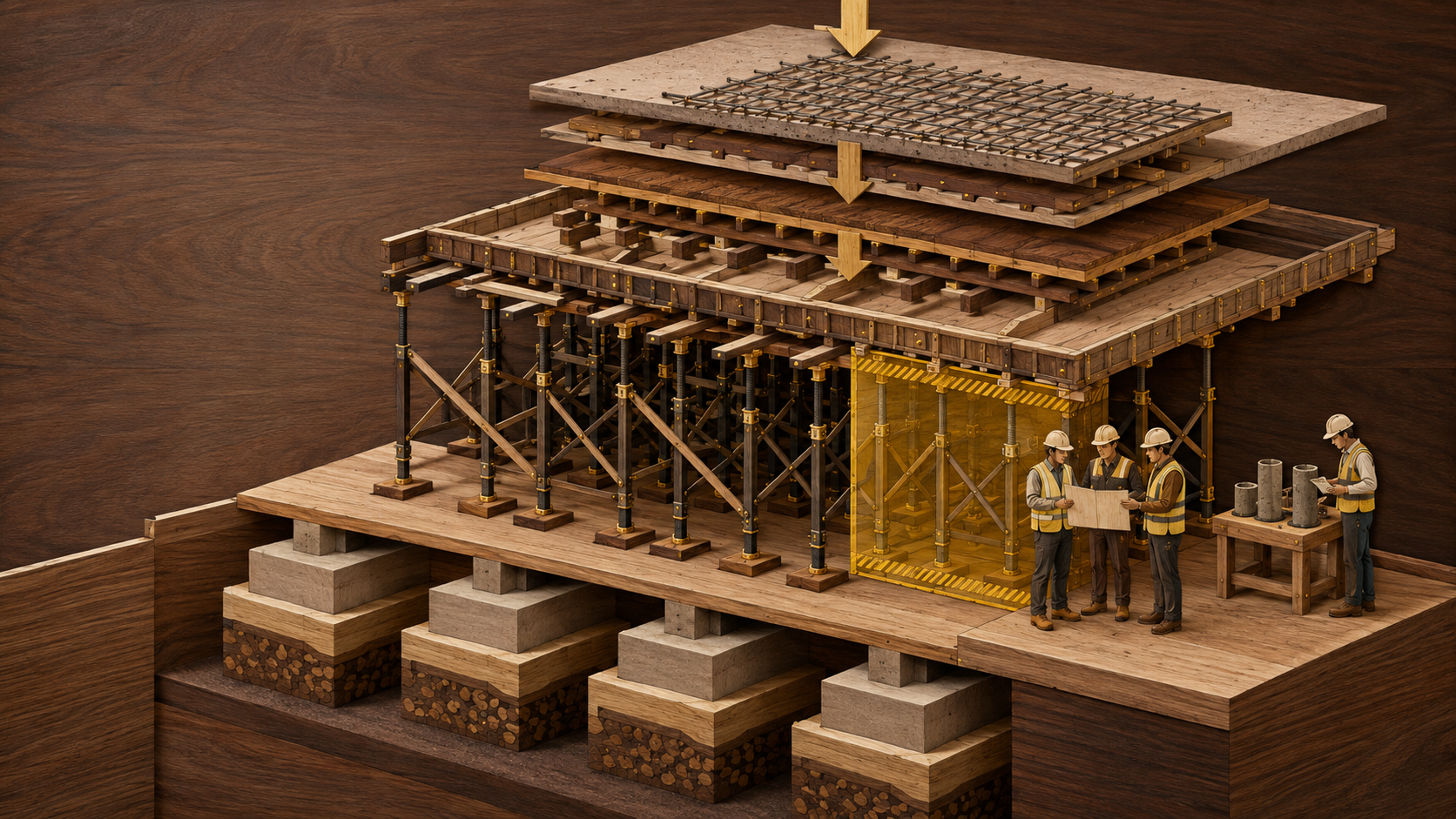
Kestabilan Struktur: Kerja Sementara, Penyangga dan Urutan
Panduan Peraturan 21 untuk reka bentuk kerja sementara, laluan beban, pemeriksaan dan penanggalan terkawal.
Ir. Ts. Dr. Mohamad Syamir bin Senin.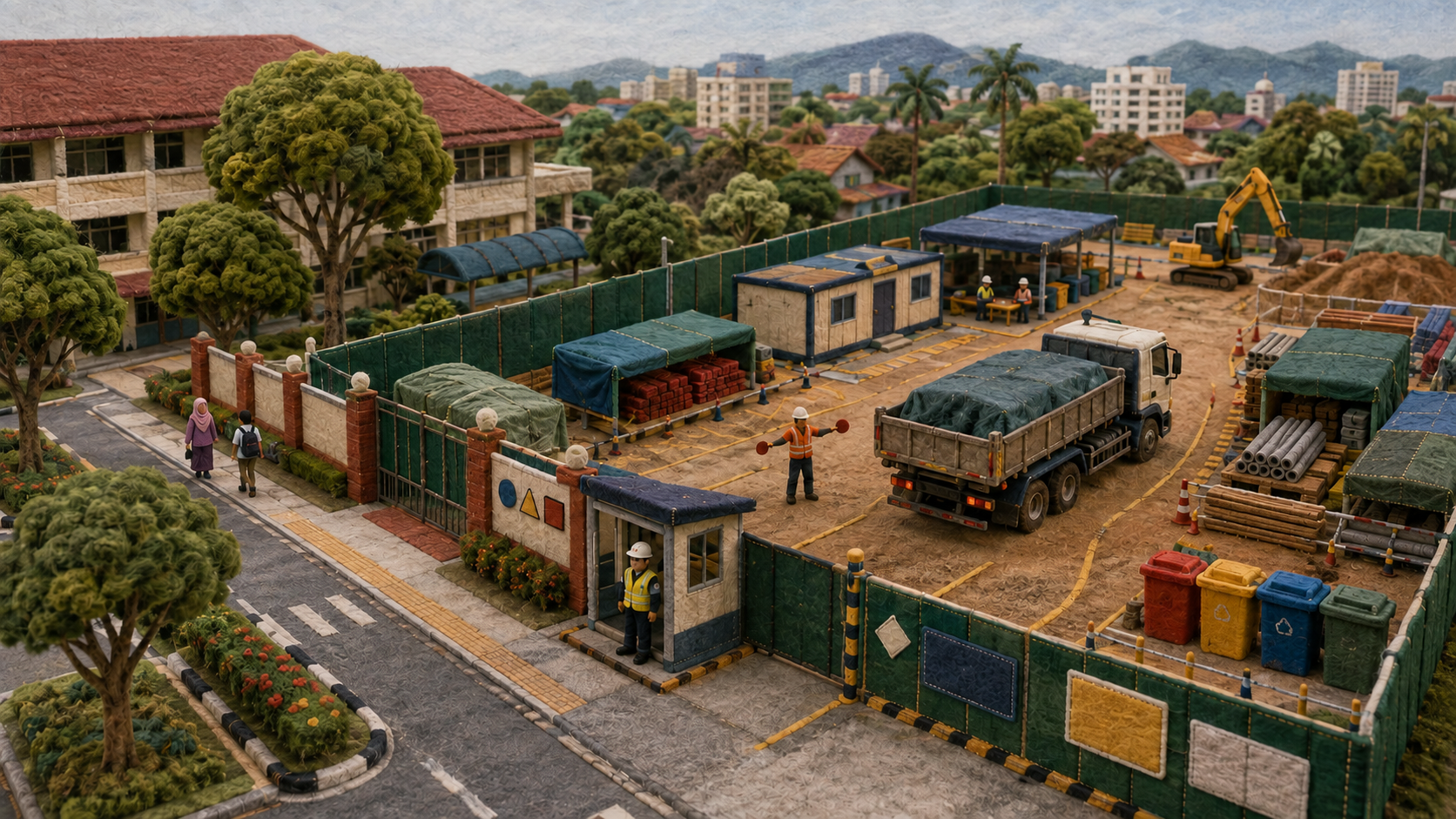
Garis Panduan CDM Edisi 2026
CDM 2026 · 28 of 52
Aturan dan Sekuriti Tapak: Lindungi Pekerja dan Orang Awam
Panduan Peraturan 20 untuk kekemasan, kebersihan, pemagaran, penandaan serta kawalan antara muka awam.
Ir. Ts. Dr. Mohamad Syamir bin Senin.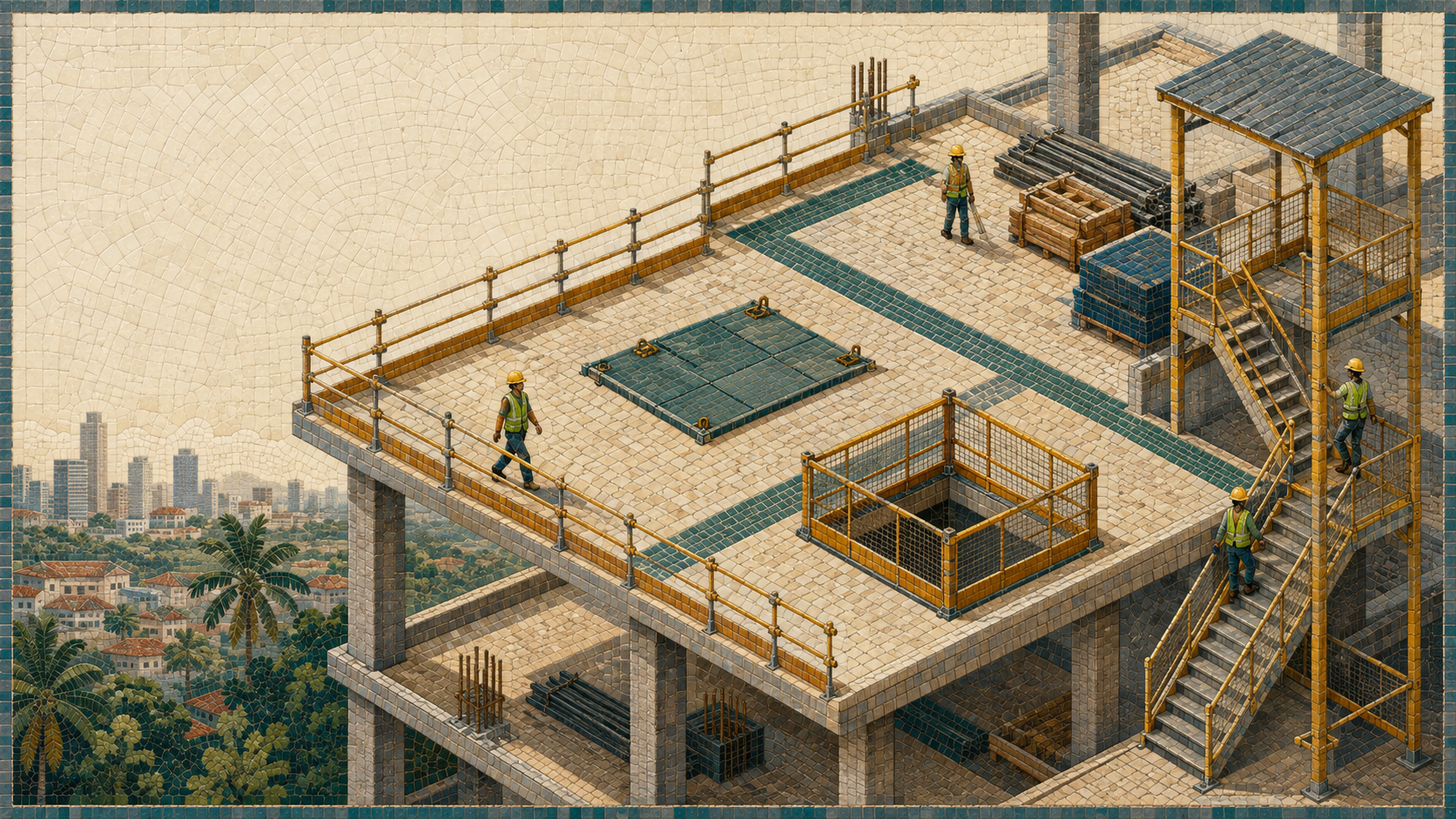
Garis Panduan CDM Edisi 2026
CDM 2026 · 27 of 52
Tempat Kerja Pembinaan Yang Selamat: Akses, Tepi dan Bukaan
Panduan Peraturan 19 untuk mengawal akses, jalan keluar, tepi, bukaan lantai dan ruang kerja mengikut keadaan sebenar tapak.
Ir. Ts. Dr. Mohamad Syamir bin Senin.