
Garis Panduan CDM Edisi 2026
Identifying the Lead Client When a Project Has Multiple Owners
CDM 2026 · 6 of 52
Practical guidance for identifying the lead client while retaining other clients’ information and cooperation duties.

Six-slide briefing
The guideline at a glance
Slide 1 / 6
CDM 2026
Multiple owners
A project can have multiple clients
Identify every party before deciding who will perform the client duties.
- Check ownership
- Check governance
- Check actual control
Do not leave responsibility unowned.
Use the buttons, dots or left/right arrow keys. This briefing summarises the guideline; the article and official source remain the detailed references.
CDM 2026 Series — Topic 6 of 52. This is general industry guidance and should be read with current legislation and DOSH directions.
A project can have more than one client. The CDM Guidelines 2026 explain that all clients should agree that only one of them will be responsible for carrying out the client duties under the CDM Regulations. This does not silence the other clients: they must still provide relevant information in their possession to help compile pre-construction information (PCI) and cooperate with those involved.
The DOSH control test
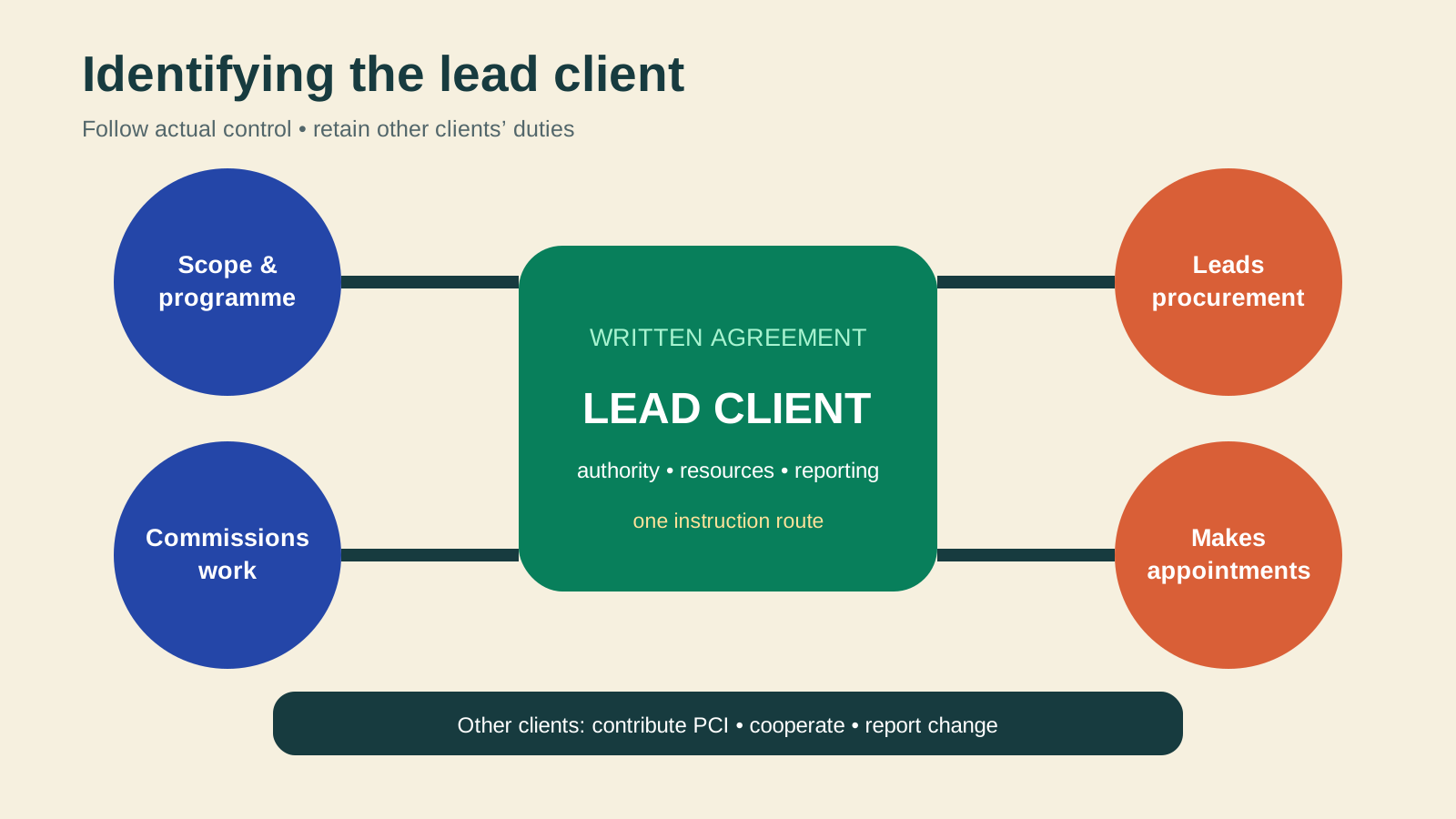
Where the lead client is unclear, resolve doubt promptly by considering who:
- ultimately decides what is built, where, when and by whom;
- commissions the design and construction work;
- initiates the work;
- leads the procurement chain; and
- appoints the CWCs including PCWC and CWDs including PCWD.
This test looks at real authority. Asset ownership, invoice payment or a contract name alone may not tell the whole story. Record evidence for each indicator and resolve conflicts in a written agreement.
Practical example — jointly owned building
Illustrative example for guidance; not an actual incident report. Three joint owners of a Penang commercial complex plan roof replacement and a mechanical-system upgrade. A building management company defines scope, secures allocation, commissions consultants, leads tendering and makes appointments.
The owners agree in writing that the management company is the lead client for carrying out CDM duties. The agreement states authority, resources, duration and reporting. Owner one supplies an asbestos survey, owner two structural drawings and owner three previous-alteration records. They continue cooperating when PCI needs clarification. PCWD and PCWC receive one clear instruction route without losing information held by other owners.
Compliance actions
- register every potential client and its interest;
- apply the five control indicators rather than assuming title ownership decides;
- agree the lead client in writing before key decisions and appointments;
- define scope, decision authority, funding, resources, duration and reporting;
- schedule information contributions required from every other client;
- establish cooperation, escalation and review when control changes.
Evidence to retain
- ownership records, governance structure and decision minutes;
- control matrix for scope, commissioning, procurement and appointments;
- lead-client agreement and acceptance;
- mandate, delegated authority, budget and resources;
- PCI register showing owner, gap, recipient and date;
- cooperation, query, information-transfer and change-review records.
Common failures
- every owner assumes another party is the client;
- a project manager is named lead client without authority or resources;
- the agreement is only verbal;
- other clients stop sharing information after appointment;
- two parties issue conflicting instructions to PCWD or PCWC;
- the map is not reviewed after sale, ownership or procurement changes.
Checklist
- [ ] Every potential client is identified.
- [ ] The five control indicators are assessed with evidence.
- [ ] One lead client is agreed in writing.
- [ ] The lead client has authority, time, funding and resources.
- [ ] Other clients’ information and cooperation duties are recorded.
- [ ] PCWD, PCWC and the team receive one instruction route.
- [ ] Ownership or control change triggers review.
Primary references
- DOSH — CDM Guidelines 2026, paragraphs 27–29
- OSH (Construction Work) (Design and Management) Regulations 2024, Regulations 2 and 3
- Occupational Safety and Health Act 1994 (Act 514)
Consult current official texts. This article is general industry guidance, not legal advice.
Related articles

Garis Panduan CDM Edisi 2026
CDM 2026 · 29 of 52
Kestabilan Struktur: Kerja Sementara, Penyangga dan Urutan
Panduan Peraturan 21 untuk reka bentuk kerja sementara, laluan beban, pemeriksaan dan penanggalan terkawal.
Ir. Ts. Dr. Mohamad Syamir bin Senin.
Garis Panduan CDM Edisi 2026
CDM 2026 · 28 of 52
Aturan dan Sekuriti Tapak: Lindungi Pekerja dan Orang Awam
Panduan Peraturan 20 untuk kekemasan, kebersihan, pemagaran, penandaan serta kawalan antara muka awam.
Ir. Ts. Dr. Mohamad Syamir bin Senin.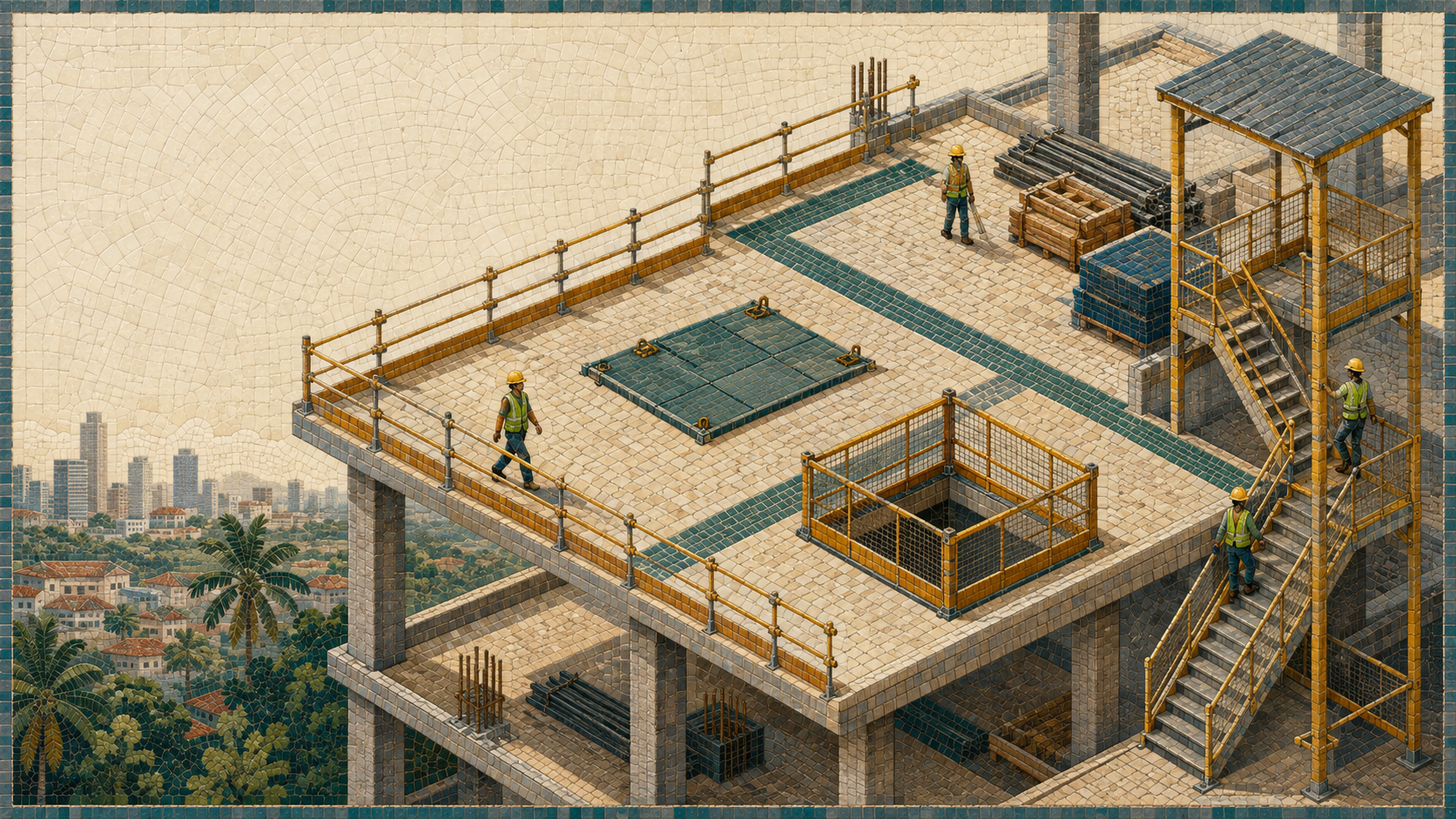
Garis Panduan CDM Edisi 2026
CDM 2026 · 27 of 52
Tempat Kerja Pembinaan Yang Selamat: Akses, Tepi dan Bukaan
Panduan Peraturan 19 untuk mengawal akses, jalan keluar, tepi, bukaan lantai dan ruang kerja mengikut keadaan sebenar tapak.
Ir. Ts. Dr. Mohamad Syamir bin Senin.