
Garis Panduan CDM Edisi 2026
Client Duty 1: Sufficient Time, Funding and Resources
CDM 2026 · 7 of 52
Practical guidance for providing sufficient time, funding and resources and reviewing project arrangements.

Six-slide briefing
The guideline at a glance
Slide 1 / 6
CDM 2026
Regulation 4
Sufficient and proportionate
Time, funding and resources must suit project size and risk.
- No fixed number
- Based on actual work
- Reviewed throughout
Commercial dates are not the only basis.
Use the buttons, dots or left/right arrow keys. This briefing summarises the guideline; the article and official source remain the detailed references.
CDM 2026 Series — Topic 7 of 52. This is general industry guidance and should be read with current legislation and DOSH directions.
Regulation 4 requires the client’s project-management arrangements to include sufficient time, funding and other resources. Construction work must, so far as practicable, be capable of being carried out without safety and health risk to people affected by the project, and Second Schedule welfare facilities must be provided. The arrangements must be maintained and reviewed throughout the project.
“Sufficient” is not a fixed number. DOSH explains that arrangements should be project-specific and proportionate to size and risk. The client tests whether programme and budget allow the team to understand the site, coordinate design, control hazards, provide welfare and perform work without pressure that encourages shortcuts.
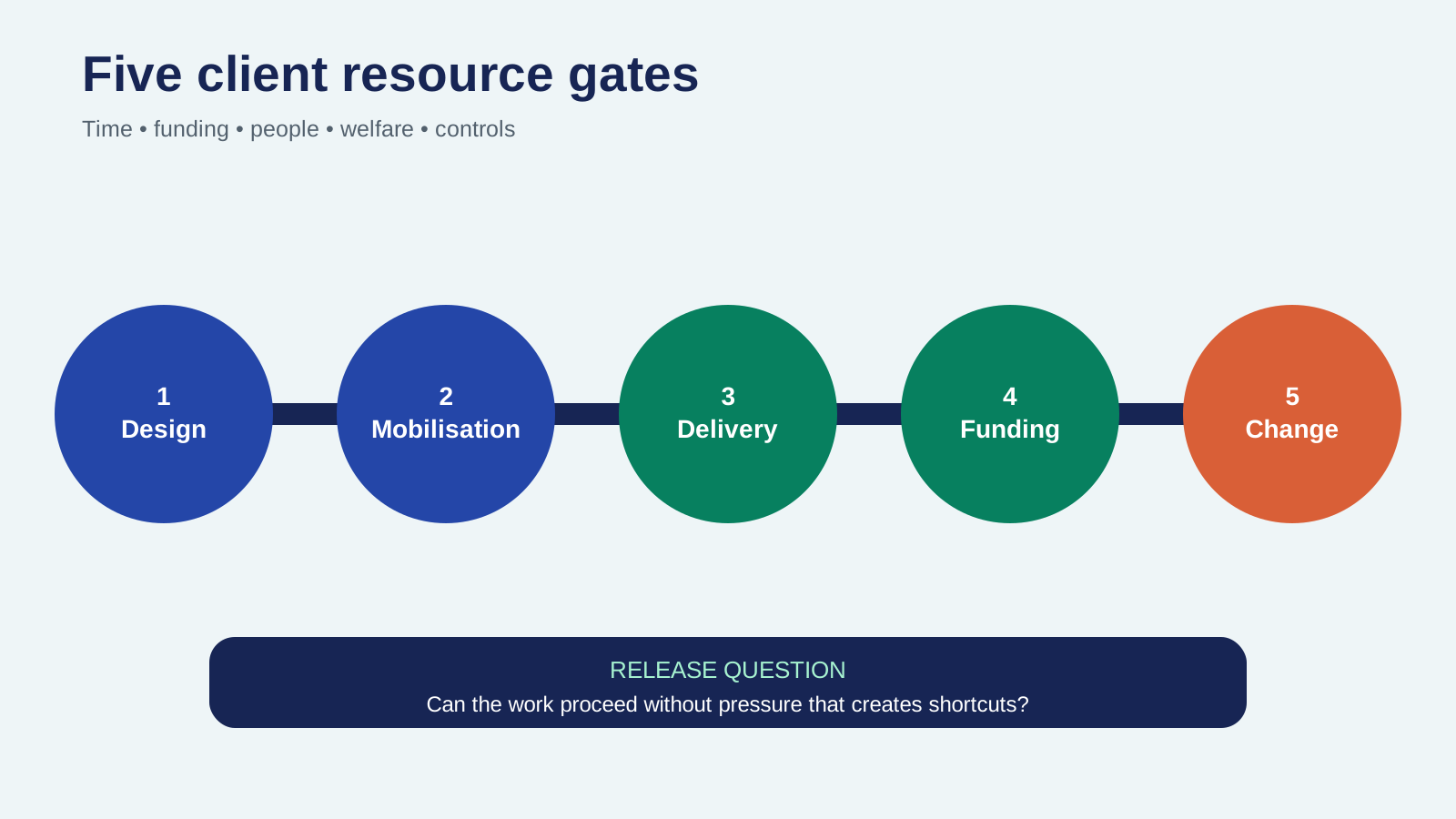
Five client review gates
- Design: Is there time for PCI, investigation, DRA, review and coordination?
- Mobilisation: Does PCWC have reasonable time for CPP, welfare, logistics, permits and briefings?
- Delivery: Does sequencing avoid dangerous overlap and rushed work?
- Funding: Are engineering controls, temporary works, supervision, inspections and competence funded?
- Change: When scope or risk changes, are time, funding and resources reassessed?
Practical example — excavation support and utility diversion
Illustrative example for guidance; not an actual incident report. A Kuala Lumpur commercial project has an aggressive start date. PCI shows underground cables near an excavation, but excavation-support design and utility verification are incomplete.
The client does not automatically preserve the original mobilisation date. With PCWD and PCWC, it adds time for utility survey, diversion coordination, support design/review and CPP preparation. The budget is updated for utility detection, temporary works, relevant engineers, supervision and inspection. A release milestone is set before excavation begins.
This does not mean delay is always required; it means the programme must reflect the risk work that genuinely needs completion.
Compliance actions
- build the baseline programme from information and work sequence, not commercial dates alone;
- ask PCWD/CWD to state time needed for investigation, DRA and coordination;
- ask PCWC/CWC for mobilisation, welfare, logistics and control requirements;
- create traceable budget allowances for risks and controls;
- set hold points for critical information or design;
- use change control to reassess time, funding and resources.
Evidence to retain
- client brief, baseline programme and assumptions;
- PCI, risk register and information gaps;
- design, mobilisation and construction resource estimates;
- budgets for risk controls, welfare and temporary works;
- programme-challenge minutes, decisions and rationale;
- milestone approvals and post-change reviews.
Common failures
- completion is fixed before risks and sequence are understood;
- design time is cut without reducing scope;
- welfare, temporary works or supervision are treated as incidental costs;
- PCWC is appointed too late to plan mobilisation;
- value engineering removes controls without DRA;
- scope change is accepted without more time or resources.
Checklist
- [ ] Design, mobilisation, construction and handover time are assessed.
- [ ] Programme reflects PCI, DRA and interfaces.
- [ ] Welfare and risk controls are funded.
- [ ] Competent people, supervision and inspection are resourced.
- [ ] Critical release milestones are recorded.
- [ ] Programme pressure and its effects are openly challenged.
- [ ] Change triggers review of arrangements.
Primary references
- DOSH — CDM Guidelines 2026, paragraphs 30–36
- OSH (Construction Work) (Design and Management) Regulations 2024, Regulation 4
- Occupational Safety and Health Act 1994 (Act 514)
Consult current official texts. This article is general industry guidance, not legal advice.
Related articles
Garis Panduan CDM Edisi 2026
CDM 2026 · 29 of 52
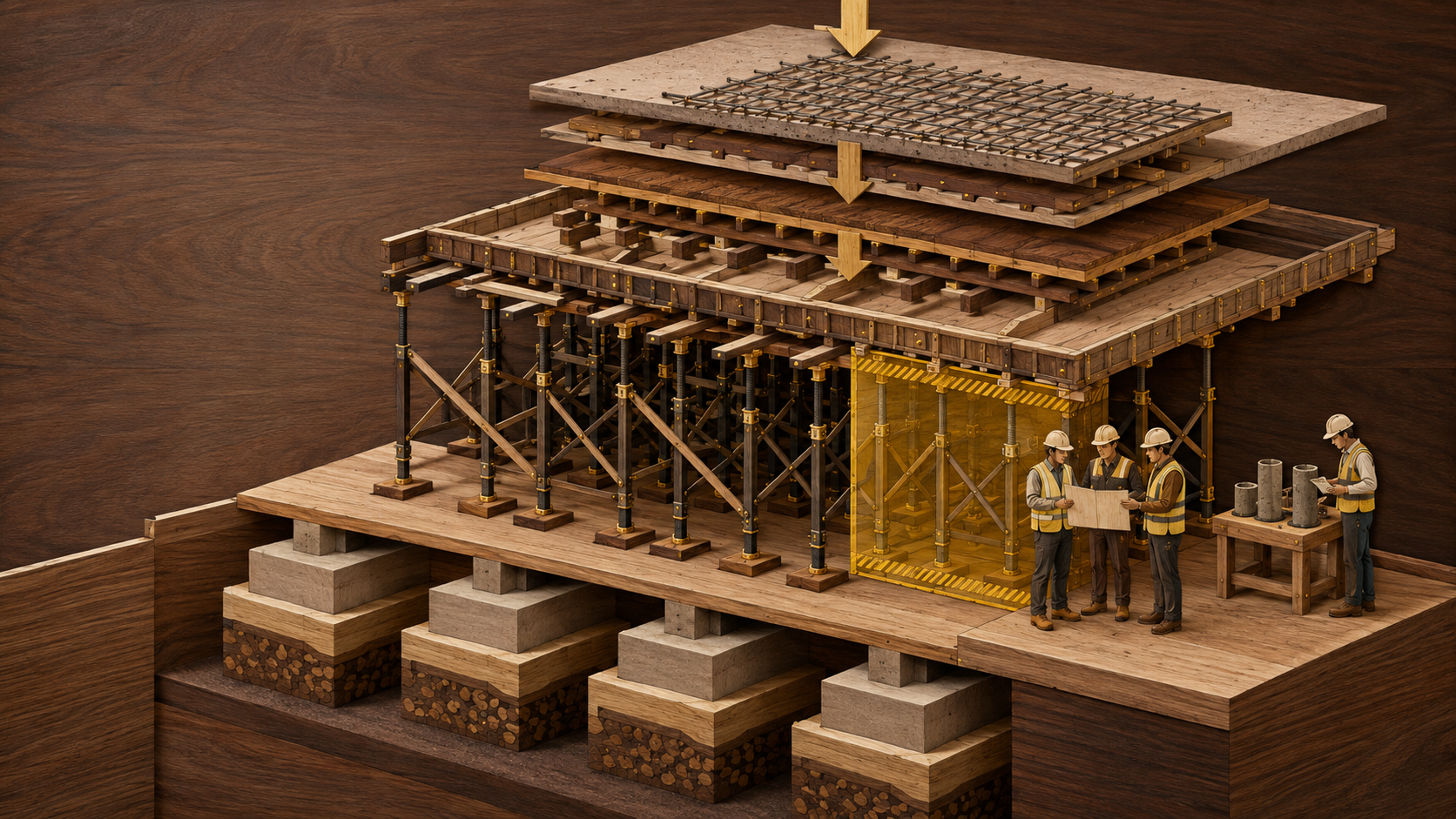
Kestabilan Struktur: Kerja Sementara, Penyangga dan Urutan
Panduan Peraturan 21 untuk reka bentuk kerja sementara, laluan beban, pemeriksaan dan penanggalan terkawal.
Ir. Ts. Dr. Mohamad Syamir bin Senin.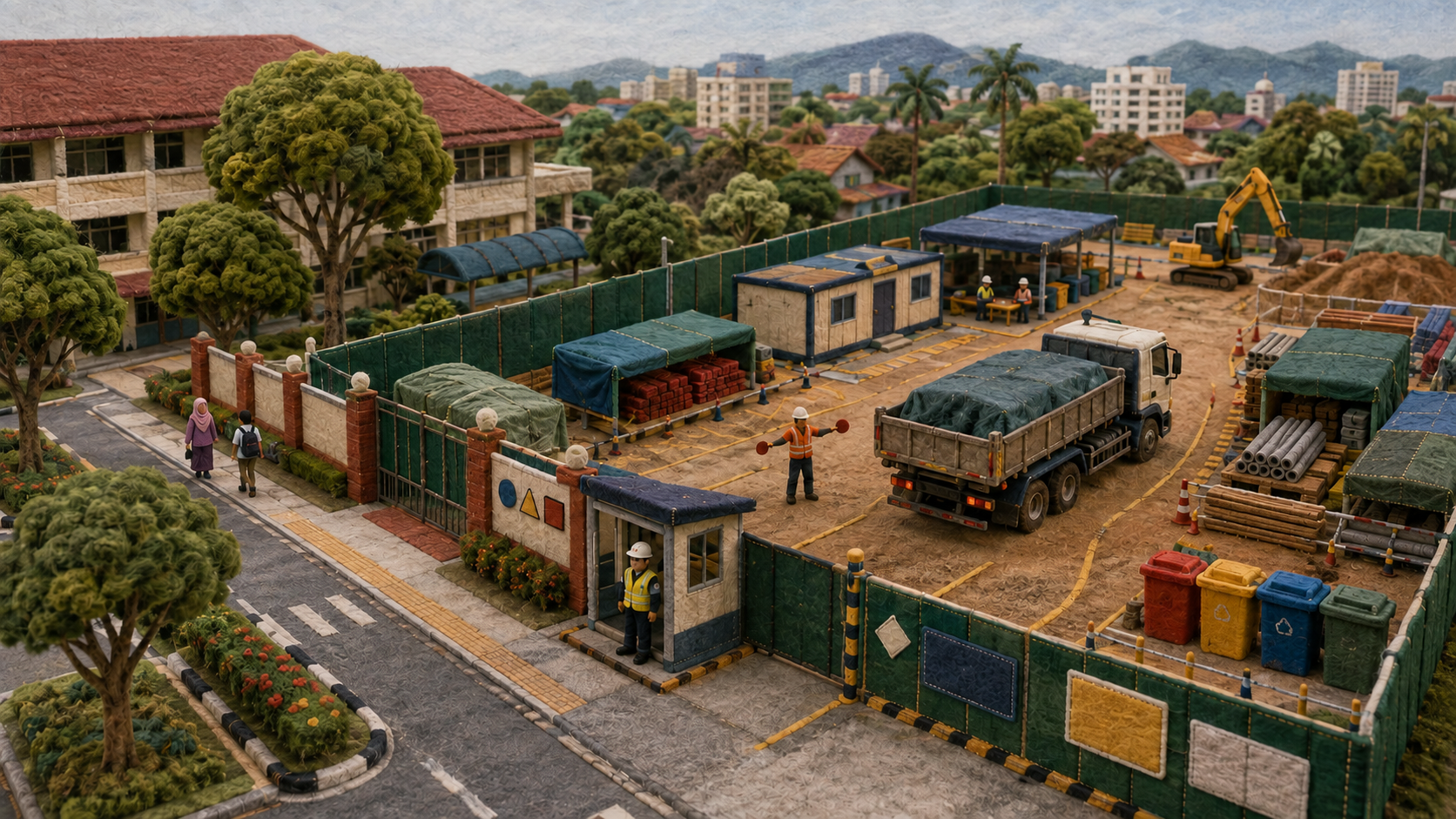
Garis Panduan CDM Edisi 2026
CDM 2026 · 28 of 52
Aturan dan Sekuriti Tapak: Lindungi Pekerja dan Orang Awam
Panduan Peraturan 20 untuk kekemasan, kebersihan, pemagaran, penandaan serta kawalan antara muka awam.
Ir. Ts. Dr. Mohamad Syamir bin Senin.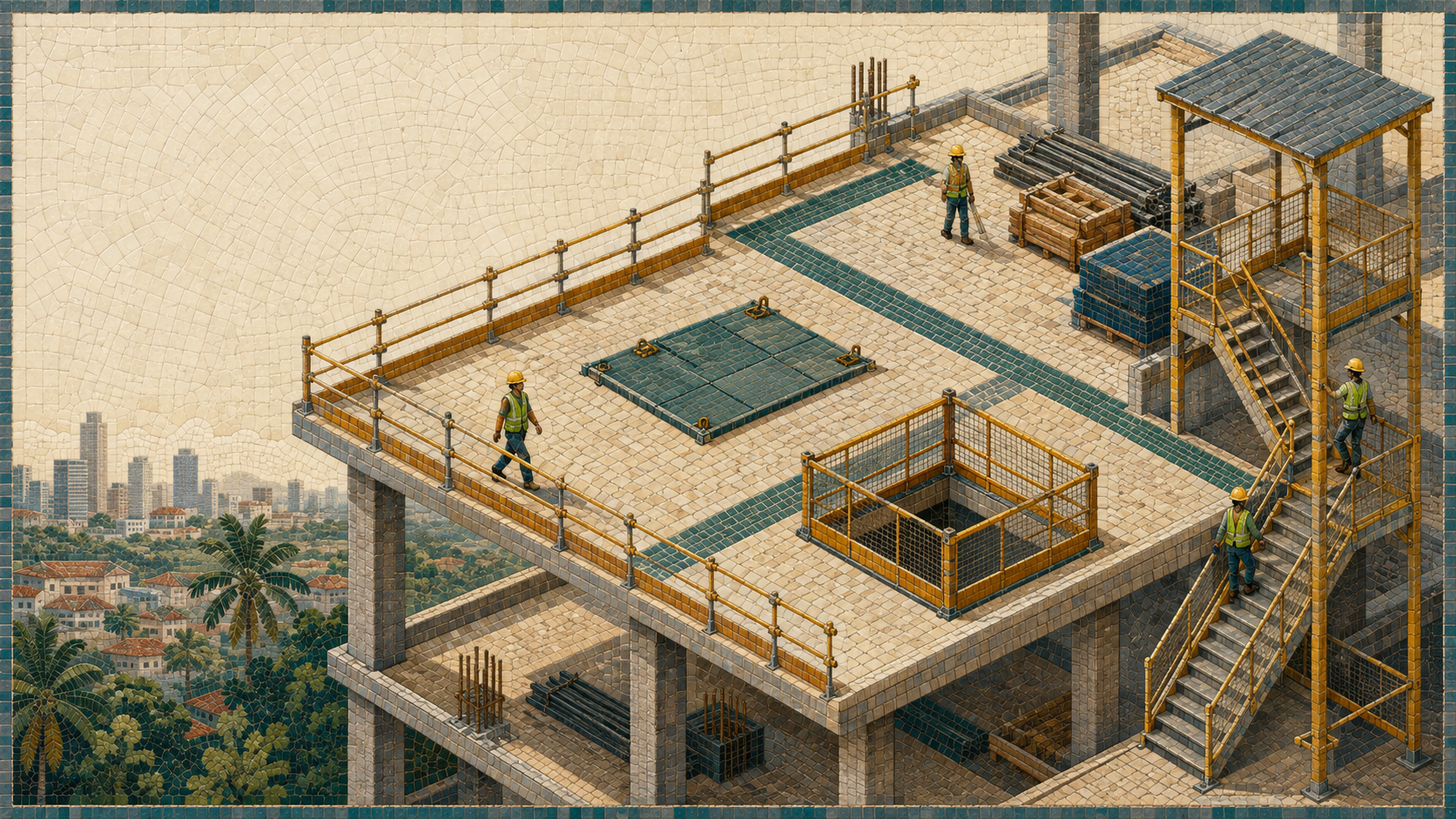
Garis Panduan CDM Edisi 2026
CDM 2026 · 27 of 52
Tempat Kerja Pembinaan Yang Selamat: Akses, Tepi dan Bukaan
Panduan Peraturan 19 untuk mengawal akses, jalan keluar, tepi, bukaan lantai dan ruang kerja mengikut keadaan sebenar tapak.
Ir. Ts. Dr. Mohamad Syamir bin Senin.