
Garis Panduan CDM Edisi 2026
Pre-construction Information: What Must Be Provided?
CDM 2026 · 9 of 52
Practical guidance for compiling, filtering, issuing and updating relevant and proportionate PCI.
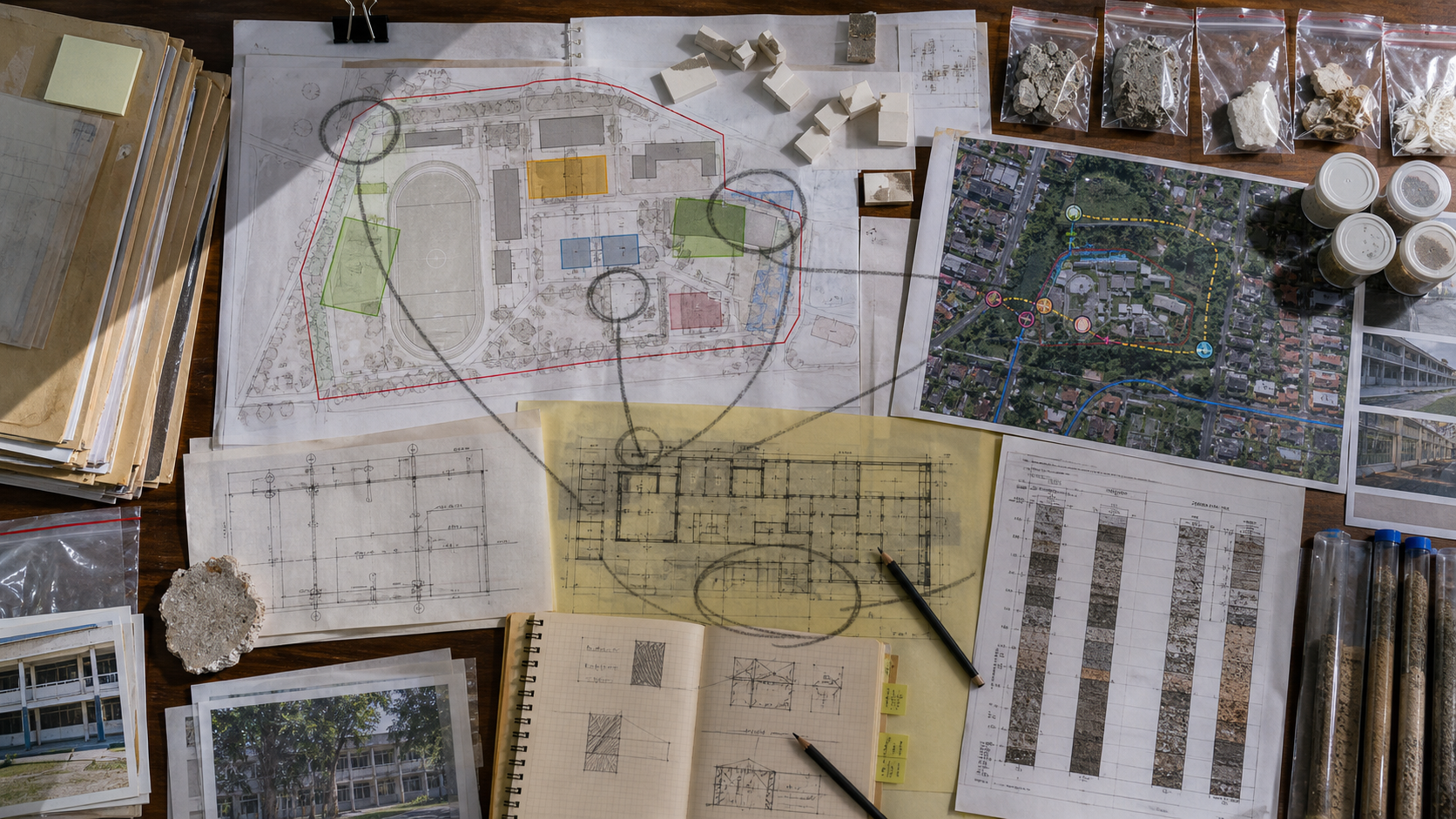
Six-slide briefing
The guideline at a glance
Slide 1 / 6
CDM 2026
Regulation 5
Provide PCI early
Issue as soon as practicable to appointed or prospective CWDs and CWCs.
- Tenderers
- Appointees
- Controlled version
Late information cannot influence decisions.
Use the buttons, dots or left/right arrow keys. This briefing summarises the guideline; the article and official source remain the detailed references.
CDM 2026 Series — Topic 9 of 52. This is general industry guidance and should be read with current legislation and DOSH directions.
Pre-construction information (PCI) is information held by the client or reasonably obtainable by or for the client, relevant to construction work and at an appropriate level of detail proportionate to risk. Regulation 5 requires the client to provide it as soon as practicable to every appointed or prospective CWD and CWC.
Good PCI is not a data dump. The CDM Guidelines 2026 say information should be simple, clear, concise and readily understandable so duty holders can perform their duties.
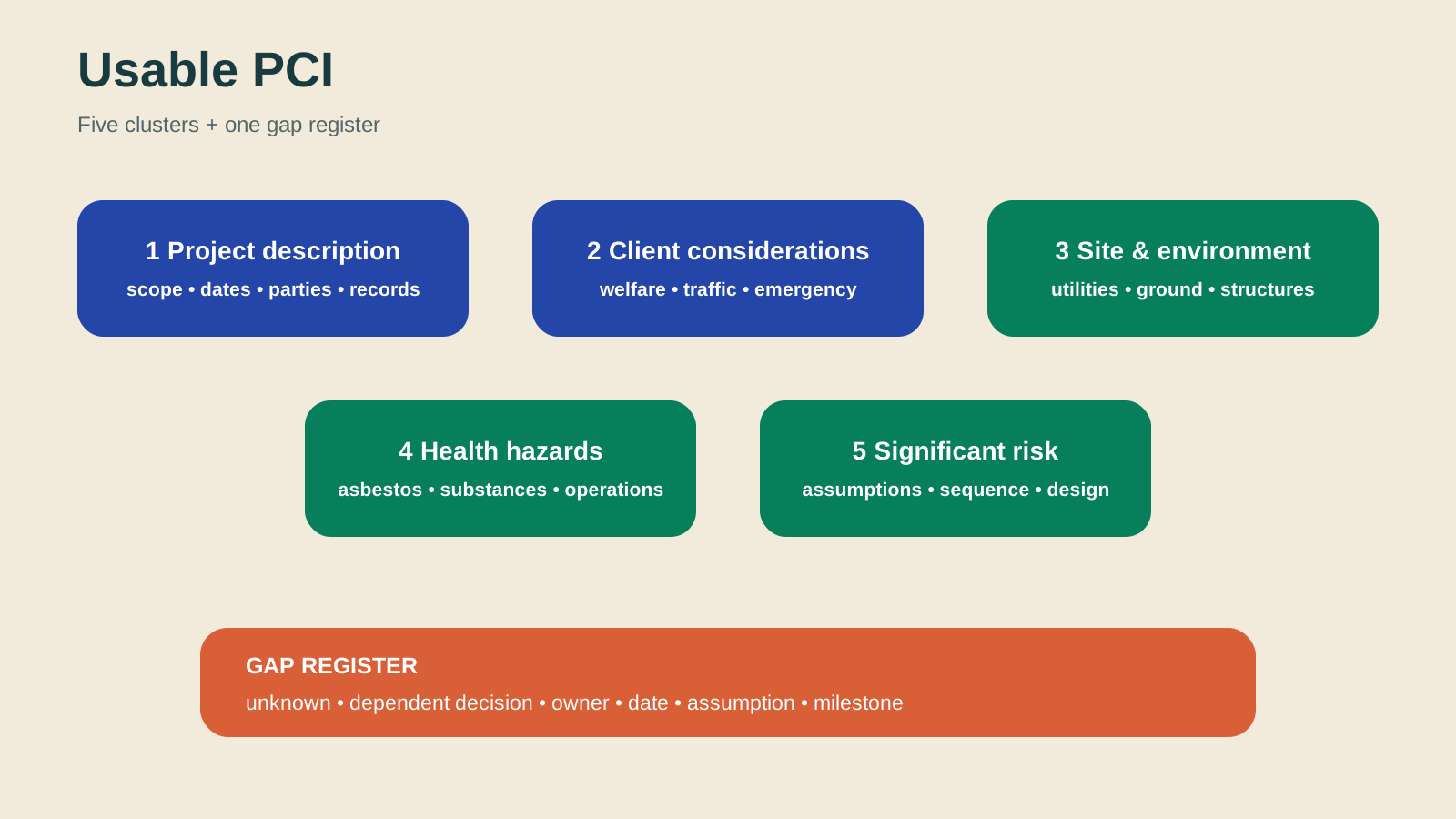
Five usable PCI clusters
- Project description: scope, key dates, mobilisation period, project parties, structure use and existing-record locations.
- Client considerations: management arrangements, communication, security, welfare, traffic, permits, fire, emergency and restricted areas.
- Environment and site: boundaries, access, neighbours, utilities, ground, underground structures, existing structures and previous alterations.
- Health hazards: asbestos, hazardous substances, contaminated land, hazards from client operations and existing controls.
- Significant design and construction hazards: assumptions, methods/sequence, change coordination, significant risks and materials needing special precautions.
Relevant information from an existing Safety and Health File must also be used.
Turning gaps into actions
The client may not hold every answer on day one. Each gap must nevertheless be stated, assessed against dependent decisions, assigned an owner and date. Where critical information is unavailable, record temporary assumptions, limits and a milestone before dependent design or work is released.
Practical example — upgrading an occupied school
Illustrative example for guidance; not an actual incident report. A Perak school upgrades an older block while part of the campus remains operational. The client combines an asbestos survey, utility plans, structural drawings, alteration records, pupil timetable, bus routes, emergency access and noise/dust constraints.
The gap register shows underground cable locations remain unverified and some ceiling areas unsurveyed. The client assigns actions, requires surveys before opening design and intrusive work, and issues early PCI to tenderers with each item’s status. PCWD adds design-risk information; PCWC uses the latest version for CPP, logistics, pupil segregation and sequencing.
Compliance actions
- search internal records, S&H Files, as-built drawings, surveys and operational knowledge;
- filter information for scope and risk, marking uncertainty;
- build a PCI register with owner, source, status, recipient and version;
- issue early to tenderers and appointees through controlled channels;
- obtain receipt confirmation and queries about omissions;
- update PCI when design, investigations or site conditions add information.
Evidence to retain
- PCI index and version history;
- search records, information requests and reasons records are unavailable;
- gap register, assumptions, owners and milestones;
- distribution, receipt and tender-query records;
- relevance/proportionality review minutes with PCWD and PCWC;
- update trail from PCI into DRA, CPP and S&H File.
Common failures
- sending hundreds of files without index or priority;
- waiting for “perfect” PCI until tender is over;
- using an old survey without stating limitations;
- ignoring operations such as pupils, traffic or client permits;
- identifying gaps without owners;
- failing to withdraw or notify recipients of superseded versions.
Checklist
- [ ] PCI is relevant, proportionate, clear and searchable.
- [ ] All five information clusters are tested.
- [ ] Source, date, limitations and assumptions are stated.
- [ ] Gaps have owners and milestones.
- [ ] Tenderers and appointees receive PCI as early as practicable.
- [ ] Receipt and queries are recorded.
- [ ] PCI is updated and aligned with other project documents.
Primary references
- DOSH — CDM Guidelines 2026, paragraphs 37–44
- OSH (Construction Work) (Design and Management) Regulations 2024, Regulations 3 and 5
- Occupational Safety and Health Act 1994 (Act 514)
Consult current official texts. This article is general industry guidance, not legal advice.
Related articles

Garis Panduan CDM Edisi 2026
CDM 2026 · 29 of 52
Kestabilan Struktur: Kerja Sementara, Penyangga dan Urutan
Panduan Peraturan 21 untuk reka bentuk kerja sementara, laluan beban, pemeriksaan dan penanggalan terkawal.
Ir. Ts. Dr. Mohamad Syamir bin Senin.
Garis Panduan CDM Edisi 2026
CDM 2026 · 28 of 52
Aturan dan Sekuriti Tapak: Lindungi Pekerja dan Orang Awam
Panduan Peraturan 20 untuk kekemasan, kebersihan, pemagaran, penandaan serta kawalan antara muka awam.
Ir. Ts. Dr. Mohamad Syamir bin Senin.
Garis Panduan CDM Edisi 2026
CDM 2026 · 27 of 52
Tempat Kerja Pembinaan Yang Selamat: Akses, Tepi dan Bukaan
Panduan Peraturan 19 untuk mengawal akses, jalan keluar, tepi, bukaan lantai dan ruang kerja mengikut keadaan sebenar tapak.
Ir. Ts. Dr. Mohamad Syamir bin Senin.