
Garis Panduan CDM Edisi 2026
Appointing PCWD and PCWC: When and How
CDM 2026 · 12 of 52
Practical guidance for early PCWD and PCWC appointment, capability assessment and written authority.

Six-slide briefing
The guideline at a glance
Slide 1 / 6
CDM 2026
Regulation 7
Test the supply chain early
Multiple CWCs or reasonable expectation triggers PCWD and PCWC appointments.
- Work packages
- Overlap
- Specialist CWCs
Do not wait for a crowded site.
Use the buttons, dots or left/right arrow keys. This briefing summarises the guideline; the article and official source remain the detailed references.
CDM 2026 Series — Topic 12 of 52. This is general industry guidance and should be read with current legislation and DOSH directions.
Where more than one CWC is involved, or can reasonably be expected at any time, Regulation 7 requires the client to appoint PCWD and PCWC in writing. Appointments must be made as soon as practicable before the construction phase begins.
PCWD must be a CWD controlling the pre-construction phase; PCWC must be a CWC capable of leading the construction phase. An appointment letter cannot merely name an organisation. It needs authority, time, resources and deliverables that enable duties to be performed.
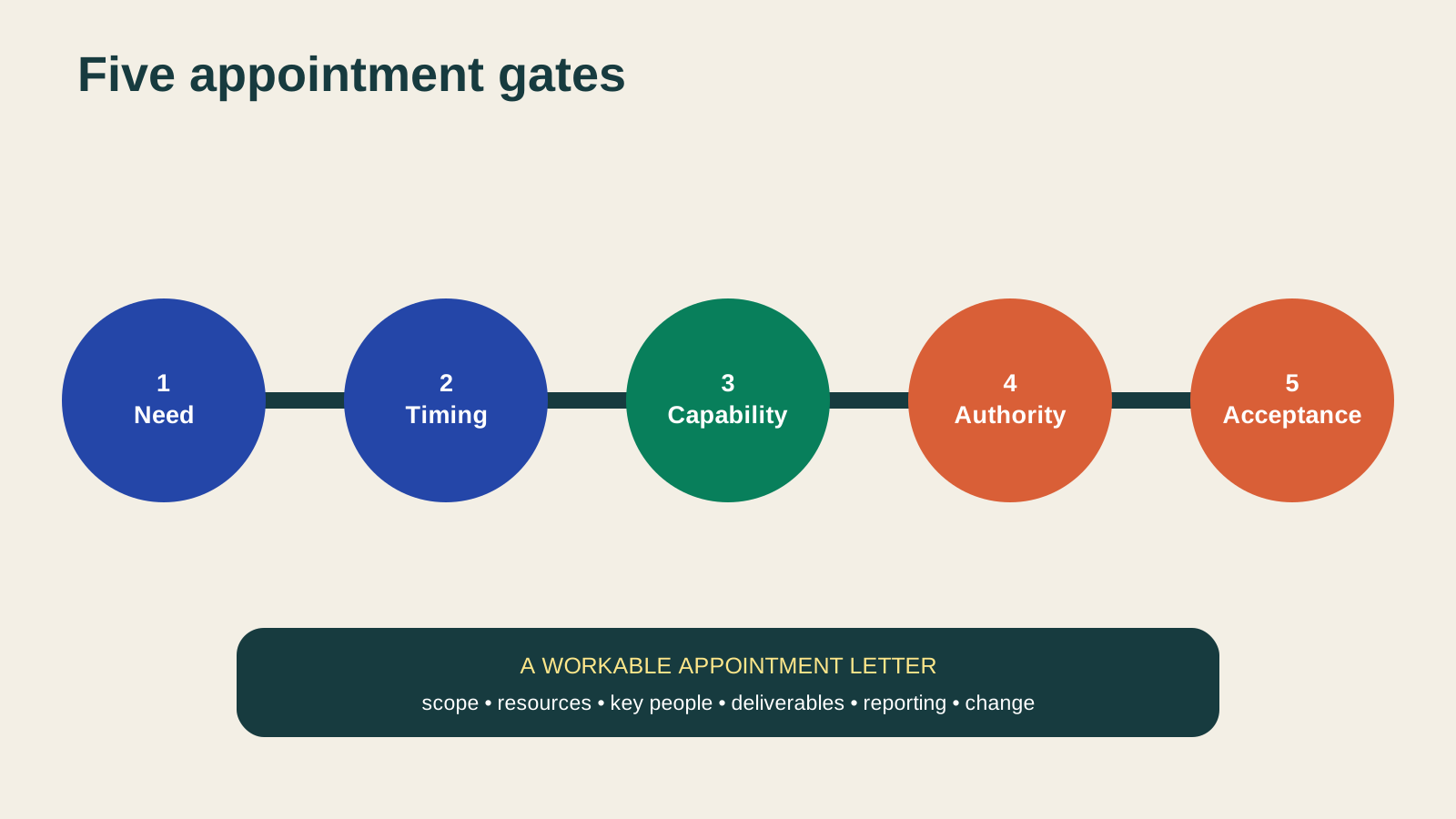
When are appointments needed?
The test starts with the expected supply chain, not the number of contractors currently on site. Ground, structure, M&E, facade, scaffold or specialist packages can create a multi-CWC project even when their work does not start simultaneously.
PCWD should be early enough to influence design, coordinate CWDs, assist PCI and manage risk before key options are fixed. PCWC needs reasonable pre-mobilisation time for CPP, logistics, welfare, emergency, CWC coordination and workplace controls.
Assessing capability
Regulation 8 requires appointees to have necessary skills, knowledge, training and experience; organisations must have organisational capability. A proportionate assessment can test:
- experience of similar projects and risks;
- key-person competence and succession plan;
- team structure, workload and specialist access;
- design or construction coordination systems;
- decision authority and client access;
- past performance and how gaps were corrected.
Practical example — warehouse with overlapping packages
Illustrative example for guidance; not an actual incident report. A Negeri Sembilan warehouse uses separate groundworks, steel and M&E packages. Expecting multiple CWCs, the client appoints PCWD before detailed design so foundation, steel, services and temporary-work interfaces can be coordinated.
PCWC is appointed before ground and structural packages overlap. Assessment shows warehouse experience but a need for extra temporary-stability expertise. The appointment records that resource, PCWD coordination authority, PCWC access/sequencing authority, deliverables, reporting and change process. Both parties accept in writing.
Appointment-letter content
- party, project, role and effective date;
- controlled phase scope and interfaces;
- regulatory duties and principal deliverables;
- coordination, instruction, escalation and hold authority;
- resources, key people and competence requirements;
- reporting, meetings, records and information access;
- change, replacement, termination and handover process.
Evidence to retain
- CWC-number analysis and appointment timing;
- capability criteria and assessment score;
- CV/experience records, organisation chart and resource plan;
- relevant references or prior-performance review;
- appointment letter and written acceptance;
- gaps, conditions and closure evidence;
- reassessment after team or scope changes.
Common failures
- waiting until a second CWC reaches site;
- selecting on price without capacity testing;
- assessing individuals but not organisational systems;
- appointment omits coordination authority;
- PCWD/PCWC is named without dedicated resources;
- key-person change does not trigger reassessment.
Checklist
- [ ] Supply chain confirms PCWD/PCWC need.
- [ ] PCWD is appointed while design can be influenced.
- [ ] PCWC has reasonable mobilisation time.
- [ ] Skills, knowledge, training, experience and organisational capability are assessed.
- [ ] Gaps have conditions and closure dates.
- [ ] Letter defines authority, resources and deliverables.
- [ ] Acceptance and change reviews are recorded.
Primary references
- DOSH — CDM Guidelines 2026
- OSH (Construction Work) (Design and Management) Regulations 2024, Regulations 7 and 8
- Occupational Safety and Health Act 1994 (Act 514)
Consult current official texts. This article is general industry guidance, not legal advice.
Related articles

Garis Panduan CDM Edisi 2026
CDM 2026 · 29 of 52
Kestabilan Struktur: Kerja Sementara, Penyangga dan Urutan
Panduan Peraturan 21 untuk reka bentuk kerja sementara, laluan beban, pemeriksaan dan penanggalan terkawal.
Ir. Ts. Dr. Mohamad Syamir bin Senin.
Garis Panduan CDM Edisi 2026
CDM 2026 · 28 of 52
Aturan dan Sekuriti Tapak: Lindungi Pekerja dan Orang Awam
Panduan Peraturan 20 untuk kekemasan, kebersihan, pemagaran, penandaan serta kawalan antara muka awam.
Ir. Ts. Dr. Mohamad Syamir bin Senin.
Garis Panduan CDM Edisi 2026
CDM 2026 · 27 of 52
Tempat Kerja Pembinaan Yang Selamat: Akses, Tepi dan Bukaan
Panduan Peraturan 19 untuk mengawal akses, jalan keluar, tepi, bukaan lantai dan ruang kerja mengikut keadaan sebenar tapak.
Ir. Ts. Dr. Mohamad Syamir bin Senin.