
Garis Panduan CDM Edisi 2026
General Duties: Capability, Cooperation, Communication and Information
CDM 2026 · 15 of 52
Practical Regulation 10 guidance for capability, cooperation, danger reporting and usable information.

Six-slide briefing
The guideline at a glance
Slide 1 / 6
CDM 2026
Regulation 10
Capability must match the role
Test skills, knowledge, experience and organisational capability against actual scope and risk.
- Similar experience
- Current resources
- OSH systems
Certificates alone do not prove capacity.
Use the buttons, dots or left/right arrow keys. This briefing summarises the guideline; the article and official source remain the detailed references.
CDM 2026 Series — Topic 15 of 52. This is general industry guidance and should be read with current legislation and DOSH directions.
Regulation 10 forms the project’s CDM “nervous system”. People and organisations must be capable of their roles, cooperate across interfaces, report dangerous conditions, and provide complete, understandable information or instructions as soon as practicable.
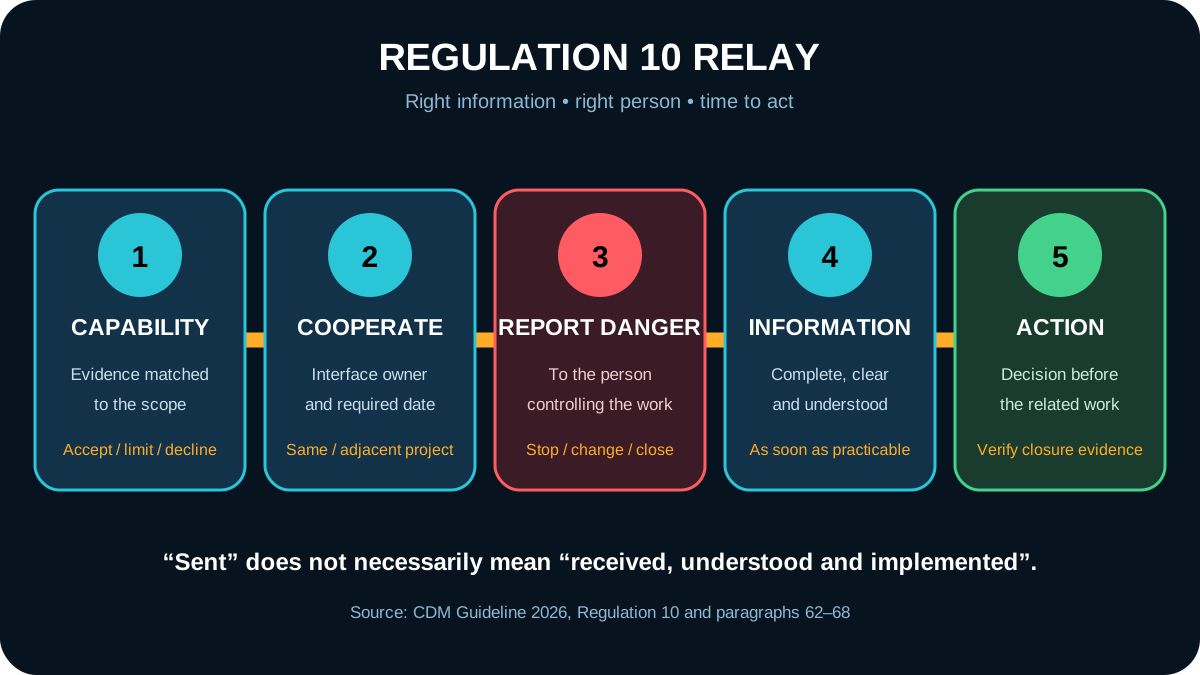
Five Regulation 10 control gates
| Control gate | Practical test |
|---|---|
| Capability | Do skills, knowledge, experience and organisational capability match scope and risk? |
| Acceptance | Does the CWD/CWC refuse or limit work beyond its capability? |
| Appointment | Has the appointer made reasonable, proportionate checks rather than relying on price or brochures? |
| Cooperation and reporting | Do interfaces and dangerous conditions reach someone able to act? |
| Information/instructions | Are they complete, clear, ordered, understood and supplied as soon as practicable? |
Organisational capability includes OSH policies and systems, suitable people and sufficient resources to make those systems work. Certificates or past experience alone do not prove current capacity; also test workload, supervision, specialist access and performance on similar risks.
Practical example (fictional scenario)
On a Kuala Lumpur office project, the lift supplier requires a 25 mm shaft-opening tolerance, while structural drawings show 15 mm. The structural engineer, lift designer, M&E coordinator and PCWC hold an interface review before concrete placement.
The lift designer explains the installation need with a dimensioned visual; the engineer checks structural effects; PCWD records the decision; PCWC applies a formwork hold point. The opening is agreed and a controlled drawing reaches the site team. This fictional example demonstrates information flow; it is not a real incident or confirmation that one tolerance suits every lift system.
Capability: check people and organisation
An appointer must take reasonable steps to satisfy itself that a CWD or CWC meets Regulation 10(1). Use proportionate checks:
- experience with genuinely comparable projects and risks;
- qualifications, training, professional membership and key-person roles;
- design, change, inspection and learning systems;
- resources, supervision ratios, workload and specialist access; and
- performance evidence, corrective action and client references.
CWDs and CWCs must not accept an appointment unless they meet the condition. Where gaps can be closed, record added resources, scope limits, independent review or supervision before acceptance.
Cooperation and danger reporting
Cooperation covers people on the same project and projects on the same or adjacent sites. It may include clients, occupiers, neighbours, utilities, concession owners, local authorities and suppliers. Define interface owner, information-required date, format, recipient and closure evidence.
A person working under another’s control must report anything they know that could endanger themselves or others. The reporting route should reach the person controlling the work, with authority to stop or change it.
Usable information
Good instructions are concise, clear, logically ordered and in Bahasa Melayu plus other languages where appropriate. Use illustrations where helpful. Detail must be proportionate to complexity, risk, nature and purpose. “Sent” is not the same as “understood”: verify receipt, version, comprehension and action.
Evidence to retain
- capability matrix and proportionate prequalification records;
- workload, resource and scope-limit declarations;
- interface register with owners, required dates and status;
- coordination minutes, design comments and controlled decisions;
- danger reports, stop-work instructions and closure evidence; and
- distribution, briefing, translation, acknowledgement and version records.
Common failures
- selecting on price without testing capability;
- accepting scope beyond current experience or resources;
- coordination meetings without decisions, owners or dates;
- issuing drawings after related work starts;
- generic instructions or language the workforce cannot understand; and
- sending hazard reports to an inbox not monitored by anyone controlling the work.
Checklist
- Is scope and risk matched to capability evidence?
- Are gaps, limits and additional resources recorded before acceptance?
- Who owns every interface, and when is information required?
- Can workers report directly to the person controlling the work?
- Are instructions complete, clear, ordered, illustrated and translated where needed?
- Can version, receipt, understanding and action be demonstrated?
- Do changes trigger renewed capability and coordination review?
Primary references
- DOSH, CDM Guideline 2026, Regulation 10 and paragraphs 62-68.
- P.U. (A) 147/2024, Regulation 10.
- Occupational Safety and Health Act 1994 (Act 514).
Related articles

Garis Panduan CDM Edisi 2026
CDM 2026 · 29 of 52
Kestabilan Struktur: Kerja Sementara, Penyangga dan Urutan
Panduan Peraturan 21 untuk reka bentuk kerja sementara, laluan beban, pemeriksaan dan penanggalan terkawal.
Ir. Ts. Dr. Mohamad Syamir bin Senin.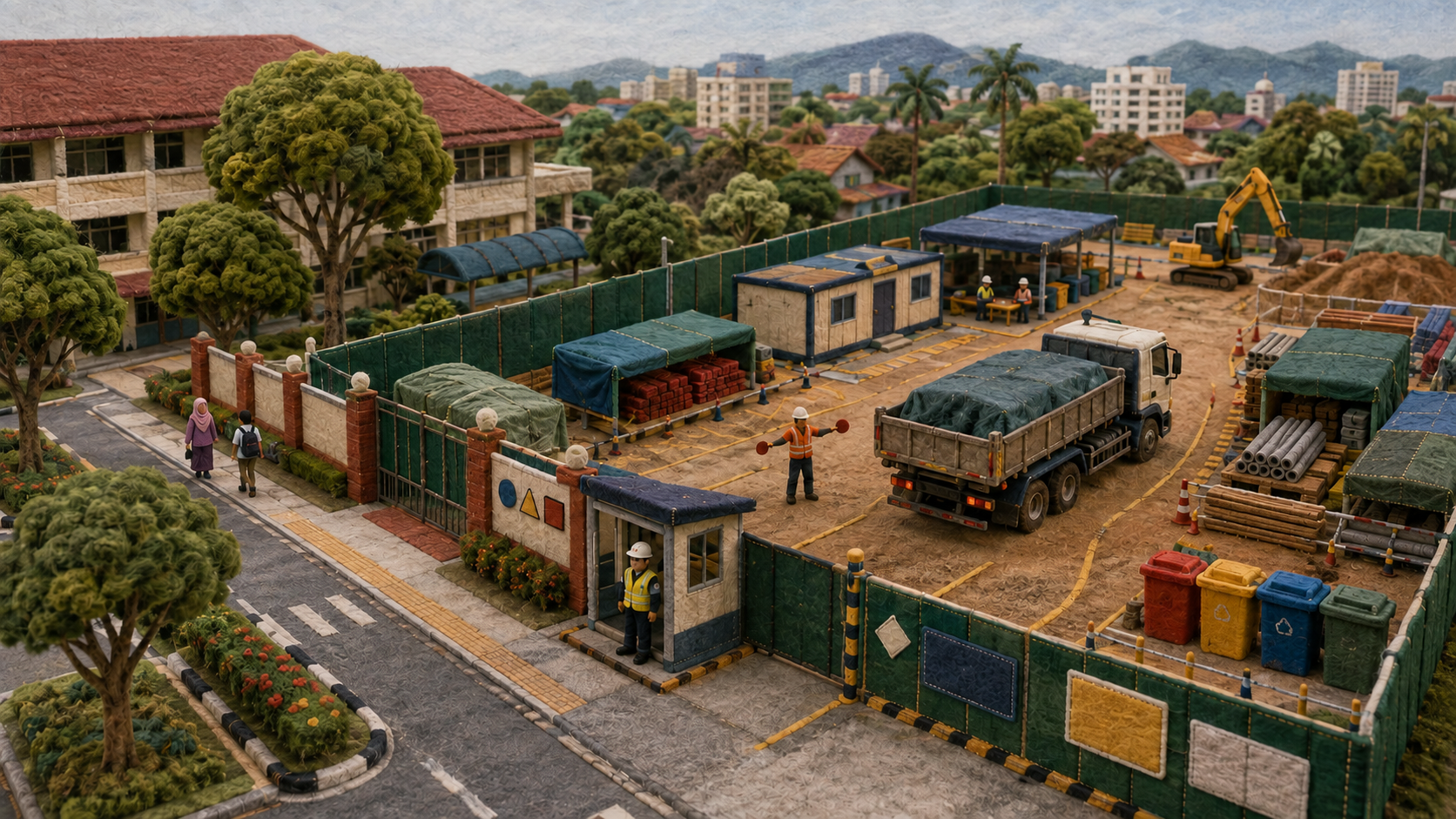
Garis Panduan CDM Edisi 2026
CDM 2026 · 28 of 52
Aturan dan Sekuriti Tapak: Lindungi Pekerja dan Orang Awam
Panduan Peraturan 20 untuk kekemasan, kebersihan, pemagaran, penandaan serta kawalan antara muka awam.
Ir. Ts. Dr. Mohamad Syamir bin Senin.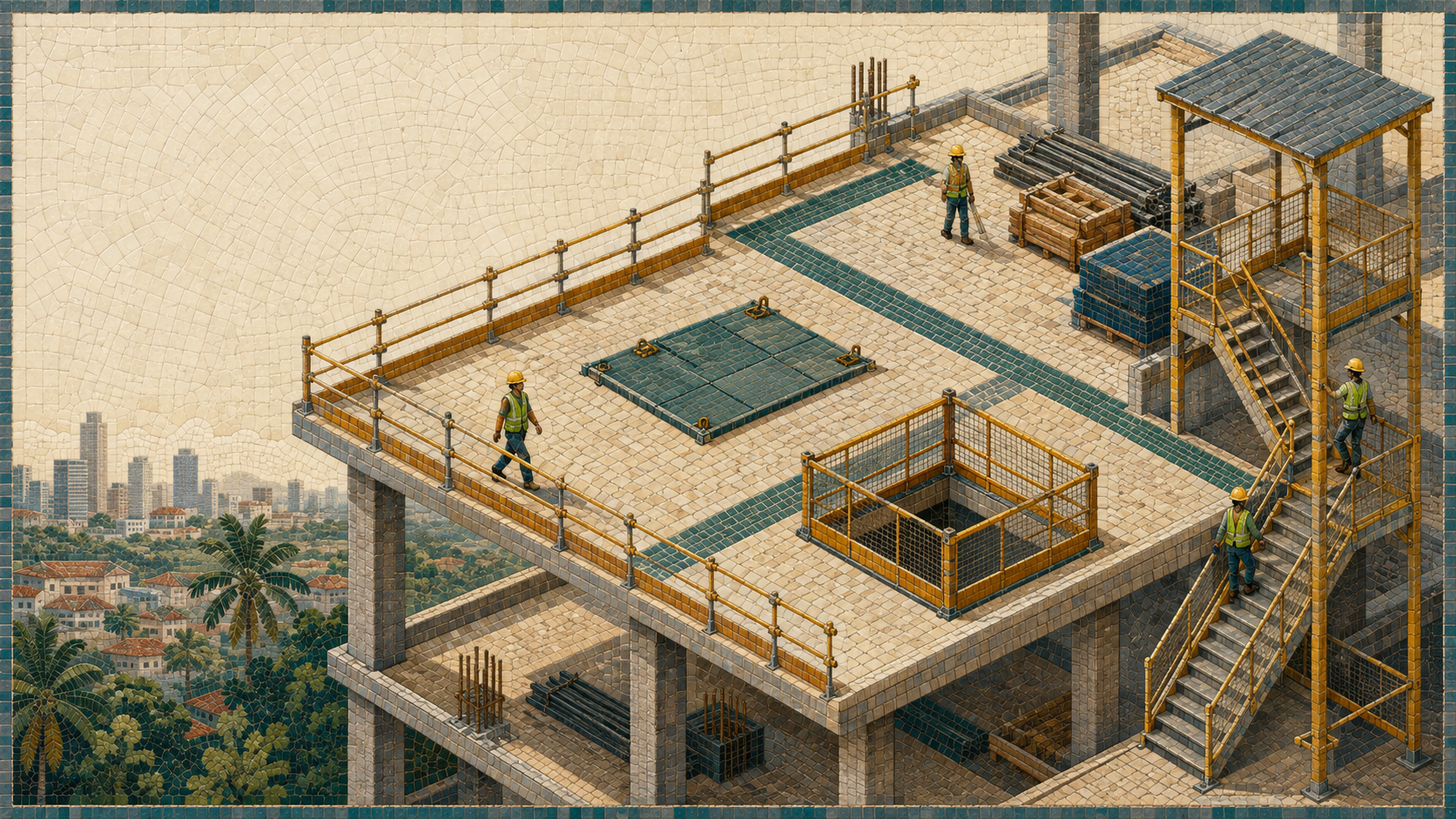
Garis Panduan CDM Edisi 2026
CDM 2026 · 27 of 52
Tempat Kerja Pembinaan Yang Selamat: Akses, Tepi dan Bukaan
Panduan Peraturan 19 untuk mengawal akses, jalan keluar, tepi, bukaan lantai dan ruang kerja mengikut keadaan sebenar tapak.
Ir. Ts. Dr. Mohamad Syamir bin Senin.