
Garis Panduan CDM Edisi 2026
Worker Engagement: From Toolbox Talk to Decision
CDM 2026 · 23 of 52
A PCWC guide to turning toolbox talks and worker views into traceable decisions, actions and effectiveness reviews.

Six-slide briefing
The guideline at a glance
Slide 1 / 6
CDM 2026
Regulation 16(1)
Engagement is a decision cycle
The PCWC maintains arrangements to cooperate, consult, share information and review effectiveness with workers.
- Listen before deciding
- Answer every issue
- Review results
Toolbox attendance alone does not prove involvement.
Use the buttons, dots or left/right arrow keys. This briefing summarises the guideline; the article and official source remain the detailed references.
Short answer
Worker engagement under Regulation 16 is not limited to delivering a toolbox talk and collecting signatures. The principal construction work contractor (PCWC) must make and maintain arrangements that enable the PCWC and workers to cooperate in developing, promoting and reviewing the effectiveness of measures for workers' safety, health and welfare. The PCWC must also consult workers or their representatives about project matters that may affect them, insofar as they have not already been consulted by their employer, and enable them to inspect and take copies of relevant information subject to the exceptions in Regulation 16(1)(c).
A toolbox talk can be one channel, but the process is incomplete until views are received, assessed by someone with decision authority, answered, implemented and reviewed with the workforce. A useful system provides a traceable path from a workface issue to a decision people can use.
Legal basis and scope
Regulation 16(1)(a) uses the term principal construction work contractor and requires the PCWC to make and maintain arrangements that enable the PCWC and workers engaged in construction work to cooperate in developing, promoting and reviewing the effectiveness of measures for ensuring workers' safety, health and welfare. Regulation 16(1)(b) requires consultation with workers or their representatives on project matters likely to affect safety, health or welfare, insofar as they or their representatives have not been consulted by their employer.
Regulation 16(1)(c) concerns the ability of workers or their representatives to inspect and take copies of project information in the PCWC's possession or knowledge, or information the PCWC is required to provide under the Regulations, where it relates to safety, health or welfare at the construction site. The text excludes information whose disclosure would be against national security interests and information relating specifically to an individual unless that person consents. This article does not expand those exceptions or assume every project document can be distributed without control.
Paragraphs 126–129 of the DOSH CDM Guidelines Edition 2026 explain worker involvement, the option of establishing a safety and health committee, representation from the PCWC and other construction work contractors (CWCs), and worker access to information. The Guidelines state that Regulation 16 is an additional duty to the Occupational Safety and Health (Safety and Health Committee) Regulations 1996. Project teams should therefore check both applicable regimes and should not assume that one meeting replaces every other duty.
Separate communication, consultation and involvement
Communication moves information in one direction: a supervisor explains an arrangement or change. Consultation allows reasonable time and information for workers to provide experience, concerns and suggestions before a decision is finalised where practicable. Involvement goes further: workers help develop options, test controls and review whether the result is effective.
All three are needed at different times. An immediate instruction may be necessary when an unsafe condition arises. Prompt action does not remove the need to examine causes and involve those doing the work in a more durable solution. Conversely, consultation does not mean every suggestion must be accepted or that safety decisions are made by vote. The PCWC remains responsible for meeting its duties, applying suitable competence and explaining the basis of decisions.
Toolbox talks often fail when the agenda is full, only the supervisor speaks, generic points are read from an old sheet and feedback is reduced to “any questions?”. Focus the session on a particular task or change. Show the actual mock-up, place, sequence or equipment. Ask open questions: where is access difficult, when is the view obstructed, who is affected by plant movement, and what changes between shifts? Provide a route for feedback after the session because workers may need to see the actual condition first.
Design arrangements that work
Start with a workforce map, not a meeting calendar. Identify the PCWC, every CWC, self-employed people, agency workers, shifts, working languages, remote locations and existing representatives. Decide what is handled through daily supervision, toolbox talks, joint inspections, worker representatives, the safety and health committee, or a confidential channel. Night workers, new starters and small groups must not be omitted merely because they are absent from the main meeting.
Define consultation triggers. These can include changes to design, sequence, method, plant, access, isolation, materials, shifts, welfare facilities or interfaces between trades. Input before mobilisation provides more opportunity to eliminate problems. Feedback after a trial or inspection helps assess effectiveness. Complaints, observations, dangerous occurrences and difficulty following a work method must also enter the system without waiting for a scheduled meeting.
Each issue should have a concise description, location, affected parties, interim condition, decision owner and response date proportionate to risk. Separate acknowledgement from resolution. “Received” means the issue is recorded. “Decided” explains the action or why it will not proceed. “Closed” requires implementation and verification at the workface. Where the final control is not ready, state the temporary measure and who must be informed.
Information workers can understand and inspect
Consultation is hollow if workers do not receive enough information to understand choices and consequences. Select relevant material: parts of the construction phase plan (CPP), sequence drawings, risk assessments, safe work procedures, lifting plans, design changes, emergency arrangements or inspection findings. Do not hand over a document bundle without explaining what matters. Use formats matched to the task, such as a physical mock-up, location photographs, floor markings or a demonstration.
Use clear Malaysian workplace English and Bahasa Melayu Malaysia, plus other languages or visual support required by the actual workforce. Explain abbreviations. Ask workers to describe the sequence back or show decision points. This is not a language examination; it checks whether critical information can be used. Record the material version, date, group and method used to check understanding.
Information access must be managed without exposing personal data or excluded material. Provide a place and method for workers to inspect and take copies of eligible information, including for people who do not use the project application. Record requests, documents supplied, versions and any valid reason for restriction. Where part of a document contains individual data, consider an appropriate extract or controlled redaction with competent advice; do not invent new exceptions.
Turn views into decisions
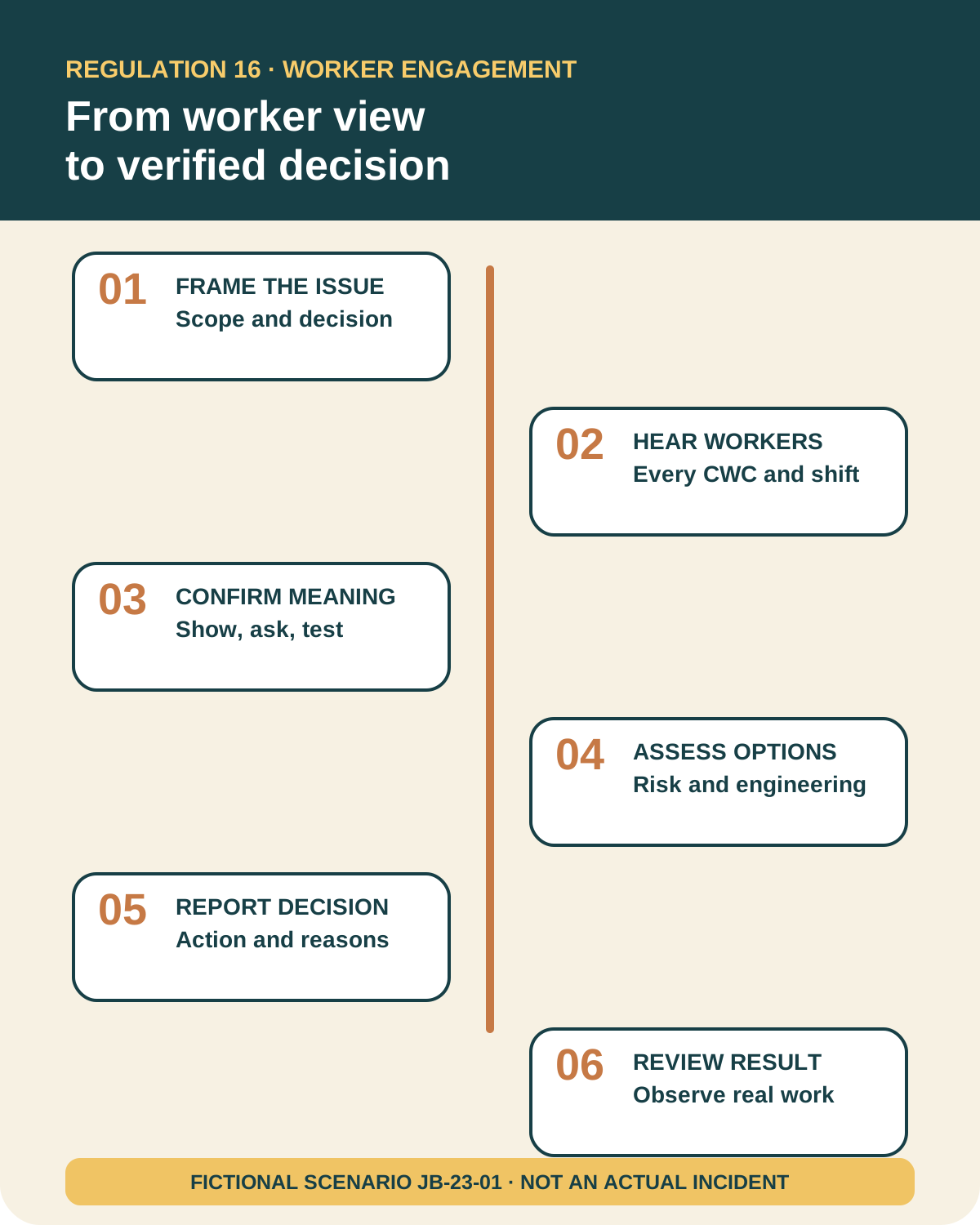
Use a six-step path: frame the issue, hear the workforce, confirm understanding, assess options, report the decision and review the result. During assessment, combine worker experience with design, engineering, risk assessment, legal requirements and project coordination. Record who decided and the basis. A suggestion that is not accepted still deserves a respectful, clear response, particularly where the person who raised it will remain exposed to the work.
Decision feedback must reach affected shifts and CWCs, not merely attendees. Use an action number or simple identifier and update relevant boards, applications, the CPP, procedures or drawings. Withdraw obsolete versions. After implementation, observe real work and ask users whether the control creates another risk, slows a critical step or is difficult to use. A photograph of installation alone does not prove effectiveness.
Fictional example: formwork sequence trial in Johor Bahru
This is a fictional training example. It is not an actual incident, statistic or approved work method. A high-rise project in Johor Bahru plans a new core-wall formwork sequence. Carpenters, a crane operator and concrete crew share the component delivery space. Before use, the PCWC and CWC construct a full-scale formwork mock-up in a controlled training area.
During the session, a carpenter shows that the temporary component position narrows access when the concrete hose is brought in. The crane operator explains that a sightline is obstructed during one stage. The concrete crew proposes a revised delivery sequence. The supervisor records issue JB-23-01, with a location sketch, affected groups and an interim measure that the original sequence cannot yet be used at the workface.
The design and construction team assesses the suggestions against temporary stability, access space, lifting and the work plan. One option is rejected because it affects an engineering requirement; the reason is explained to the workforce. Another is tested at the mock-up: the component position is changed and delivery times are separated. Representatives of all three groups walk through the route and signalling interface without an active load. This does not replace design, inspection or work authorisation requirements.
The PCWC issues a controlled decision referring to the related drawing and procedure versions. Both shifts receive the change briefing. The supervisor observes the first cycles at the workface and obtains feedback after each one. JB-23-01 is closed only after implementation, withdrawal of obsolete versions and worker confirmation that access and interfaces are clearer. If conditions or sequence change, the issue is reopened for assessment.
Committee, representatives and direct channels
Paragraph 127 of the Guidelines says a PCWC may establish a safety and health committee representing workers and employers to review site conditions that can affect safety and health. It describes membership including senior PCWC site staff, the safety and health officer where relevant, the site safety supervisor, and appointed workers from the PCWC and other CWCs. The Guidelines say meeting frequency should be proportionate to site risk and not less than once every three months. Teams must read the applicable 1996 requirements for employer safety and health committees and should not turn this guidance description into the sole arrangement for every project.
A committee helps identify patterns across CWCs, but it should not be the only doorway. Workers need direct routes to supervisors and representatives, joint inspections and a mechanism for urgent concerns. Explain who can raise an issue, how confidentiality is handled, who sees records and how a response is returned. Employment status, language, shift or subcontract tier should not become barriers.
Evidence worth retaining
- Workforce, representative, language, shift and CWC map, with the consultation channels used.
- Task-specific agendas and materials, versions, dates, participants and understanding checks.
- Issue register separating received, under assessment, decided, implemented and verified states.
- Worker views recorded without changing their meaning, including declined suggestions and decision reasons.
- Requests to inspect or copy information, material supplied and data controls applied.
- Committee or other meeting minutes, action owners, target dates and escalation.
- Updated drawings, CPP, risk assessments or procedures and evidence that obsolete versions were withdrawn.
- Post-implementation observations and user feedback supporting the effectiveness review.
Keep evidence proportionate and traceable. This article does not prescribe a universal statutory retention period. Apply relevant legal and contractual requirements and protect personal data. Good evidence shows decision quality, not meeting volume.
Common failures
- Reading a generic toolbox script that is disconnected from the actual work or change.
- Asking for views after a decision can no longer be influenced without a sound reason.
- Recording “no issues” when workers lacked usable information, time or channels.
- Assuming one CWC representative covers every trade, language and shift.
- Closing an action when an email is sent, before field implementation and verification.
- Rejecting a suggestion without reasons or leaving workers unaware of the result.
- Providing access only through an application that part of the workforce cannot use.
- Exposing individual data or withholding every document under an overly broad confidentiality claim.
PCWC checklist
- Which workers and representatives may be affected, across every CWC and shift?
- Is consultation early enough to influence the decision?
- Is relevant, current and understandable project information available?
- Can workers inspect and take copies of eligible information through a practical method?
- Are open questions, demonstrations or joint inspections used to obtain real experience?
- Does each issue have an owner, status, response and interim measure where necessary?
- Are decisions and reasons reported to every affected group?
- Are related documents and instructions updated and obsolete versions withdrawn?
- Is implementation checked at the workface and effectiveness reviewed with users?
- Do committee and direct channels complement each other without delaying urgent reports?
- Are information exceptions and personal data handled specifically rather than broadly?
- Are arrangements reviewed when the workforce, risks, design or sequence changes?
Primary references and next step
The primary legal reference is the Occupational Safety and Health (Construction Work) (Design and Management) Regulations 2024, DOSH, particularly Regulation 16(1)(a)–(c). The primary explanatory reference is the DOSH CDM Guidelines Edition 2026, paragraphs 126–129, printed pages 60–61. Also review the Occupational Safety and Health (Safety and Health Committee) Regulations 1996 where applicable.
This is general guidance, not legal advice. Contact RIMAYS to discuss a consultation process, toolbox materials and action tracking suited to your Malaysian project.
Related articles

Garis Panduan CDM Edisi 2026
CDM 2026 · 29 of 52
Kestabilan Struktur: Kerja Sementara, Penyangga dan Urutan
Panduan Peraturan 21 untuk reka bentuk kerja sementara, laluan beban, pemeriksaan dan penanggalan terkawal.
Ir. Ts. Dr. Mohamad Syamir bin Senin.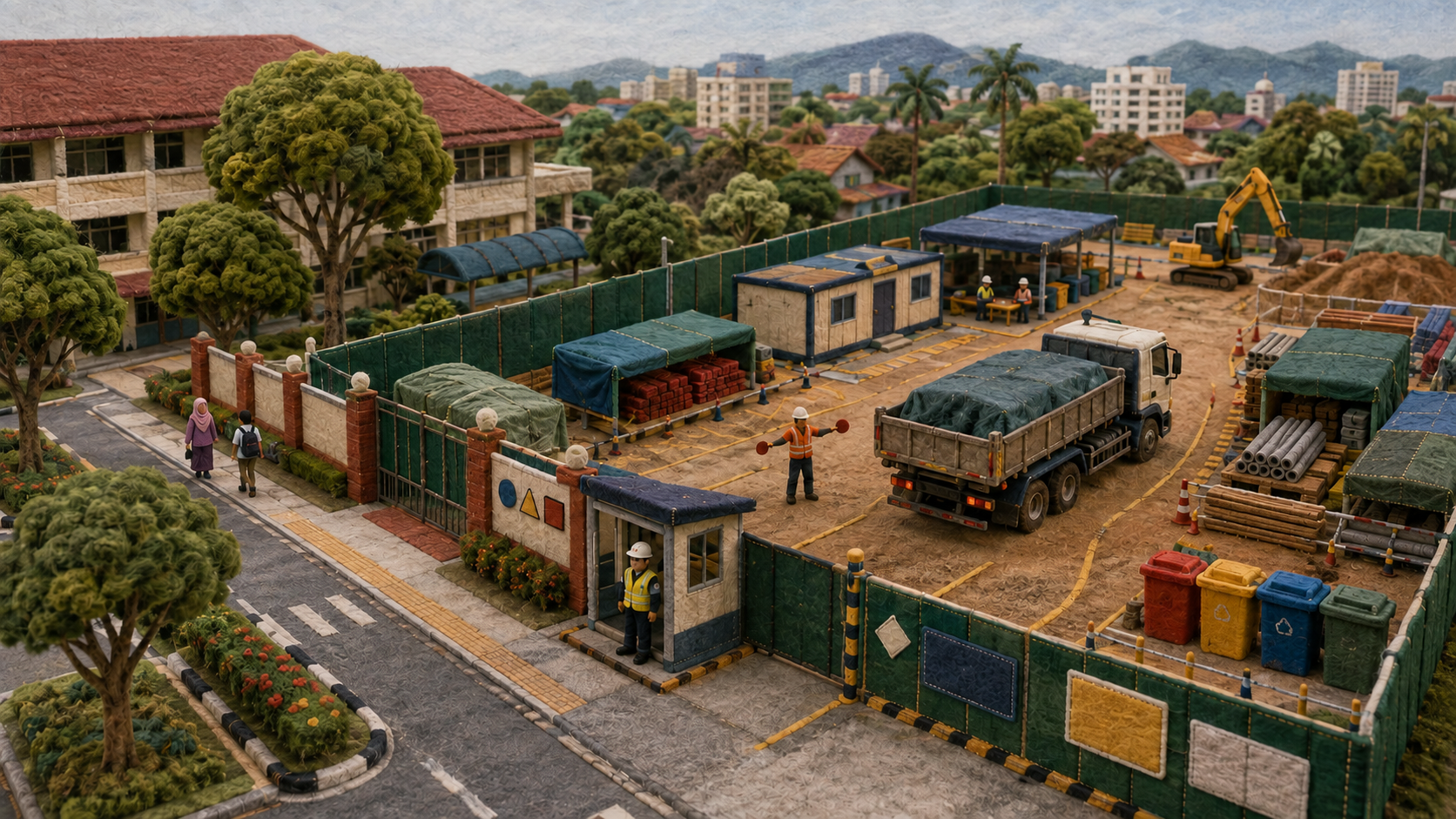
Garis Panduan CDM Edisi 2026
CDM 2026 · 28 of 52
Aturan dan Sekuriti Tapak: Lindungi Pekerja dan Orang Awam
Panduan Peraturan 20 untuk kekemasan, kebersihan, pemagaran, penandaan serta kawalan antara muka awam.
Ir. Ts. Dr. Mohamad Syamir bin Senin.
Garis Panduan CDM Edisi 2026
CDM 2026 · 27 of 52
Tempat Kerja Pembinaan Yang Selamat: Akses, Tepi dan Bukaan
Panduan Peraturan 19 untuk mengawal akses, jalan keluar, tepi, bukaan lantai dan ruang kerja mengikut keadaan sebenar tapak.
Ir. Ts. Dr. Mohamad Syamir bin Senin.