
Garis Panduan CDM Edisi 2026
Contractor 2: Training, Instruction and Interface Coordination
CDM 2026 · 25 of 52
A CWC guide to assessing capability, giving usable instruction and controlling M&E handover before energisation.

Six-slide briefing
The guideline at a glance
Slide 1 / 6
CDM 2026
Regulation 17
Capability must match the task
Assess skills, knowledge, training and experience against the real activity, system and decisions.
- Task demand
- Individual evidence
- Capability gaps
A certificate alone does not confirm a specific task.
Use the buttons, dots or left/right arrow keys. This briefing summarises the guideline; the article and official source remain the detailed references.
Short answer
A construction work contractor (CWC) that employs or appoints a person to work on a construction site must ensure that the person has the skills, knowledge, training and experience needed to carry out the work safely and healthily. The CWC must also provide suitable supervision, information and instruction. For electrical and commissioning work, individual capability is not enough if the system boundary, isolation status, approval authority and handover arrangements are not agreed by everyone sharing the interface. Before energisation, the CWC should confirm who controls the system, what is isolated, how the condition is verified, who may work, how change is controlled and what evidence allows work to proceed.
Legal basis and scope
Regulation 17 sets duties for construction work contractors. Paragraphs 142-149 of DOSH's 2026 CDM Guidelines explain the requirements for skills, knowledge, training, experience, supervision, information and instruction. Paragraph 142 requires the CWC to ensure that an employed or appointed individual can perform the activity safely and healthily and secure the safety and health of people working on the site. Paragraph 143 explains that a newly trained individual should be supervised and allowed to gain experience in varied conditions; a skilled person without formal qualifications should be assessed and monitored in the work environment.
Paragraph 144 uses a gap approach: assess existing capability, compare it with the capability needed for the work, then identify deficiencies. Paragraph 145 notes that other OSH law may also prescribe training. Paragraph 146 makes training assessment continuous when risks, technology, equipment or systems of work change. Paragraph 147 includes soft skills such as leadership, problem solving, decision making, teamwork, anticipating risk and clear communication. Paragraph 148 requires appropriate supervision, with its level depending on risk and the worker's skills, knowledge, training and experience. Paragraph 149 requires the information and instruction needed to work without OSH risk, including suitable induction not already provided by the PCWC, procedures for immediate or almost certain danger, and relevant information about hazards, risks and control measures.
This article is interface-management guidance. It is not an electrical work procedure, permit to work, confirmation of electrical competency or system-design advice. Applicable electrical law, premises rules, manufacturer instructions and relevant competent persons remain necessary.
Define the capability required for the real task
Start with the activity and work boundary, not a list of certificates. Break the task into decisions: identify energy sources, read current system information, select isolation points, verify condition, control locks or permits, maintain the work boundary, detect change and hand over the system. For each decision, define the required skills, knowledge, training, experience and authority.
Check evidence proportionately. A qualification can support the assessment but does not prove that a person understands this installation, work phase or project arrangement. Use technical discussion, work observation, demonstration, experience records and checks of understanding. For a newly trained person, specify work scope, supervision, decision limits and the route to help. Do not use a general title such as “wireman” or “engineer” as a substitute for confirming the real role and authority.
A useful capability matrix matches person, activity, authority boundary, evidence, supervisor, review date and reassessment triggers. It should not be a certificate register detached from the programme. When the system, equipment, risk or sequence changes, reopen the assessment before the person continues affected work.
Give instructions that work at the workplace
Instruction should be specific to task, location, stage and system status. Before work, explain scope, physical and functional boundaries, energy sources, isolation points, access control, authorised people, communication, testing, prohibitions, emergency action and handover conditions. Use controlled revisions of drawings or schedules. Signs or diagrams can help, but do not depend on colours, abbreviations or labels that other teams may interpret differently.
Check understanding by show-back or teach-back. Ask workers to identify equipment in scope, boundaries they must not cross, people to contact and action if status changes. An attendance signature proves presence, not that the instruction was understood or usable.
Paragraph 149 says procedures for immediate or almost certain danger should make clear that an exposed worker must stop work immediately, report to the CWC and move to a safe place. The procedure should identify who receives the report, who has authority for immediate action and relevant emergency arrangements. Make the instruction available on every shift without depending on one supervisor being present.
Control the M&E and commissioning interface
An interface exists when one party can change a condition relied on for another party's safety. During electrical handover, the installation contractor may control physical work, the commissioning team controls tests, the PCWC coordinates the site, a supplier controls some information and the client may control an existing system. An interface schedule should state asset or zone, current status, control owner, who may request change, who may approve it, verification evidence and handover recipient.
Use one agreed and version-controlled source of status. Clearly distinguish “installation complete”, “ready for test”, “isolated”, “under test”, “energised” and “handed over”. Define project terms; do not assume that every team gives them the same meaning. A status board, permit or digital system must match the physical condition. A discrepancy is a reason to stop and check, not to choose the easiest record.
Coordination meetings should focus on upcoming changes: scheduled tests, parallel work, temporary supplies, access, shift changes, barrier removal and people who may be affected. The CWC should give relevant information to the PCWC so site interfaces can be coordinated. A PCWC direction does not transfer the CWC's duty for people and work under its control.
Isolation and permit protocol before energisation
The project protocol should define system boundaries and responsibility without pretending to replace technical procedures or electrical law. Before energisation, conduct a joint review of current system information, incomplete work and inspections, isolation points, lock or device control, verification method, access, warnings, emergency readiness and notification recipients.
A permit needs clear scope and status, authorised issuer and recipient, validity conditions, and records of suspension, change, cancellation and closure. Do not turn the permit into an administrative form completed after the decision. It must stop work when the boundary, people, system or conditions no longer match approval.
Control change through a traceable request. A change to test sequence, isolation point, temporary supply, connection, control software, access or authorised person must be assessed by the appointed parties. Inform affected parties and withdraw obsolete documents. At shift change, the handover should state the real status, open permits, incomplete work, prohibitions and next actions.
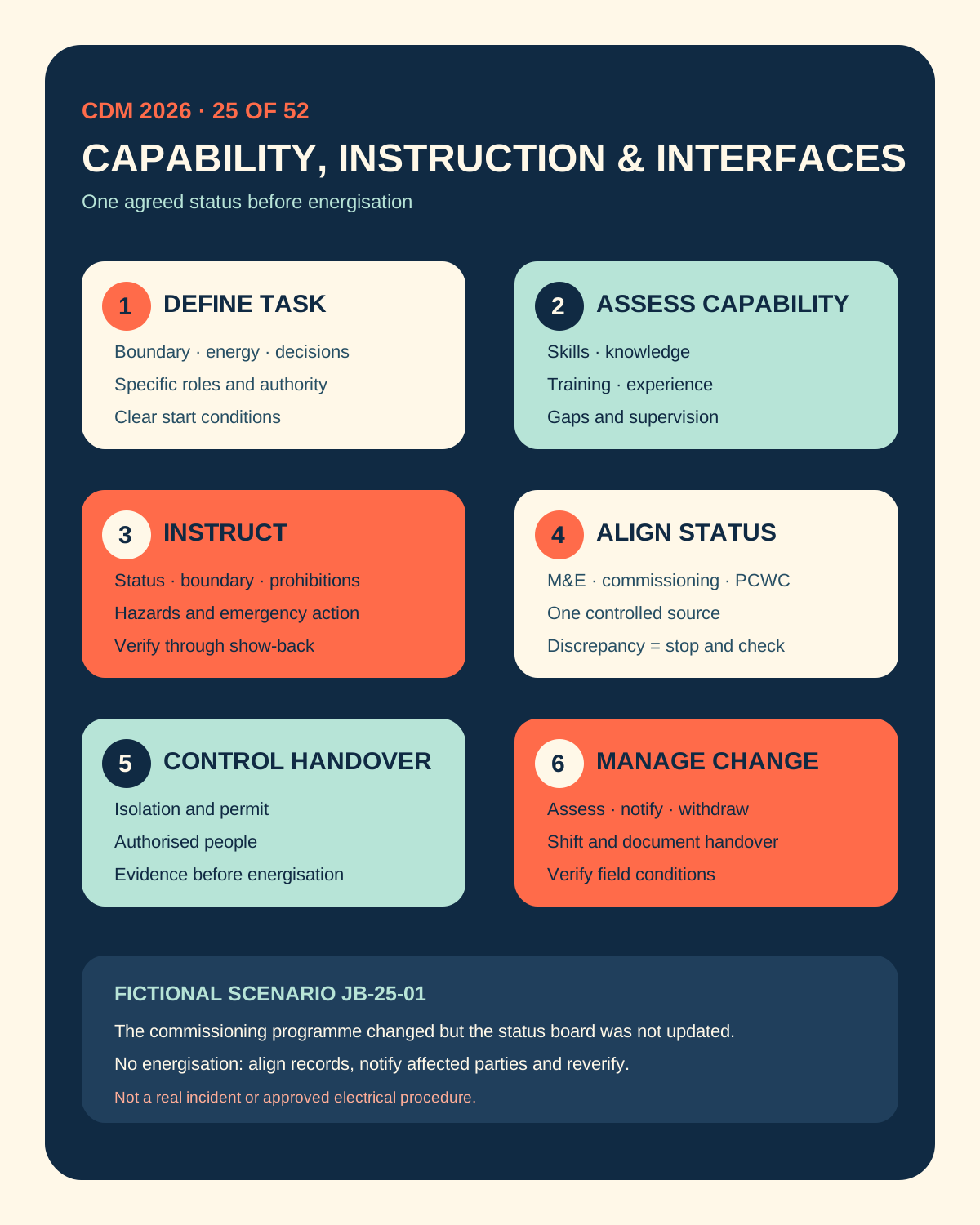
Fictional example: switchboard handover in Johor Bahru
This is a fictional training example. It is not a real incident, statistic, approved electrical procedure or competency confirmation. An M&E CWC is completing a switchboard in a Johor Bahru commercial building. A commissioning team from another CWC is due to start testing while a temporary supply remains in use for adjacent work. The team opens interface record JB-25-01.
The M&E CWC maps the installation boundary and temporary supply on a controlled drawing. The PCWC holds a joint review with the M&E supervisor, the project's authorised person and commissioning lead. They review each person's capability for the assigned task, permit scope, lock ownership, report recipients and access to help. Workers teach back the boundary and stop-work action.
The team finds that the commissioning programme changed but the status board was not updated. Energisation does not proceed. JB-25-01 records the discrepancy, action owner and people to notify. Programme, drawing and status record are aligned and obsolete documents withdrawn. Handover proceeds only after appointed parties verify the physical condition, relevant permits agree and every affected team receives revised instruction. The example gives no test technique or switching sequence.
Compliance actions
- Define tasks, system boundaries and decisions requiring specific authority.
- Assess skills, knowledge, training and experience against the work demand.
- Set supervision, work limits and help for inexperienced people.
- Give task-specific information and instruction; verify understanding practically.
- Map interfaces, control owners, status and affected parties.
- Use an agreed isolation, permit and handover protocol before energisation.
- Reassess after changes in risk, technology, equipment, system, people or sequence.
- Give relevant information to the PCWC and verify field closure.
Evidence worth retaining
- Task-based capability matrix, assessment evidence, gaps, limits and supervision plan.
- Induction and task instruction records, controlled material and verification of understanding.
- Current drawings, system schedules and revision registers showing the boundary.
- Authorised-person register, lock or device control and authority changes.
- Interface schedule, decision minutes, notifications and acknowledgements.
- Permits, project-specified isolation and verification records, suspensions and closures.
- Shift handovers, status discrepancies, work stops, corrections and restart authority.
- Reassessment after changes to risk, technology, equipment or system of work.
This article sets no universal retention period. Apply relevant law, contract, system-owner requirements and project controls.
Common failures
- Treating certificates alone as proof of capability for the installation and task.
- Giving generic instruction without system boundary, status, authority or change action.
- Using attendance signatures as the only proof of understanding.
- Allowing two teams to maintain conflicting status records.
- Energising to meet the programme although permits or handover do not align.
- Changing an isolation point or test sequence through an uncontrolled verbal instruction.
- Failing to reassess training and supervision after technology or work-system change.
- Closing an action when documents change without verifying physical conditions.
Checklist before work or energisation
- Are task, asset, zone and system boundary identified on current information?
- Has each person's capability been assessed against the real task and other applicable law?
- Do new or inexperienced people have clear limits and supervision?
- Does instruction cover hazard, risk, controls, emergencies and stop-work authority?
- Can the workforce teach back the boundary and action if status changes?
- Is one status record agreed by M&E, commissioning and the PCWC?
- Are permit issuers, recipients and closers authorised?
- Are isolation and actual condition verified through the valid project process?
- Are all open permits, incomplete work and temporary supplies known?
- Are changes assessed, communicated and obsolete documents withdrawn?
- Does shift handover show status, prohibitions and access to supervision?
- Does closure evidence show the field condition, not documents alone?
Primary references
The primary legal reference is the Occupational Safety and Health (Construction Work) (Design and Management) Regulations 2024, DOSH, particularly Regulation 17 and its duties concerning people, supervision, information and instruction. The main explanatory source is DOSH's 2026 CDM Guidelines, paragraphs 142-149, printed pages 66-68. Contact RIMAYS to discuss capability matrices, interface controls and handover evidence for Malaysian projects.
Related articles

Garis Panduan CDM Edisi 2026
CDM 2026 · 29 of 52
Kestabilan Struktur: Kerja Sementara, Penyangga dan Urutan
Panduan Peraturan 21 untuk reka bentuk kerja sementara, laluan beban, pemeriksaan dan penanggalan terkawal.
Ir. Ts. Dr. Mohamad Syamir bin Senin.
Garis Panduan CDM Edisi 2026
CDM 2026 · 28 of 52
Aturan dan Sekuriti Tapak: Lindungi Pekerja dan Orang Awam
Panduan Peraturan 20 untuk kekemasan, kebersihan, pemagaran, penandaan serta kawalan antara muka awam.
Ir. Ts. Dr. Mohamad Syamir bin Senin.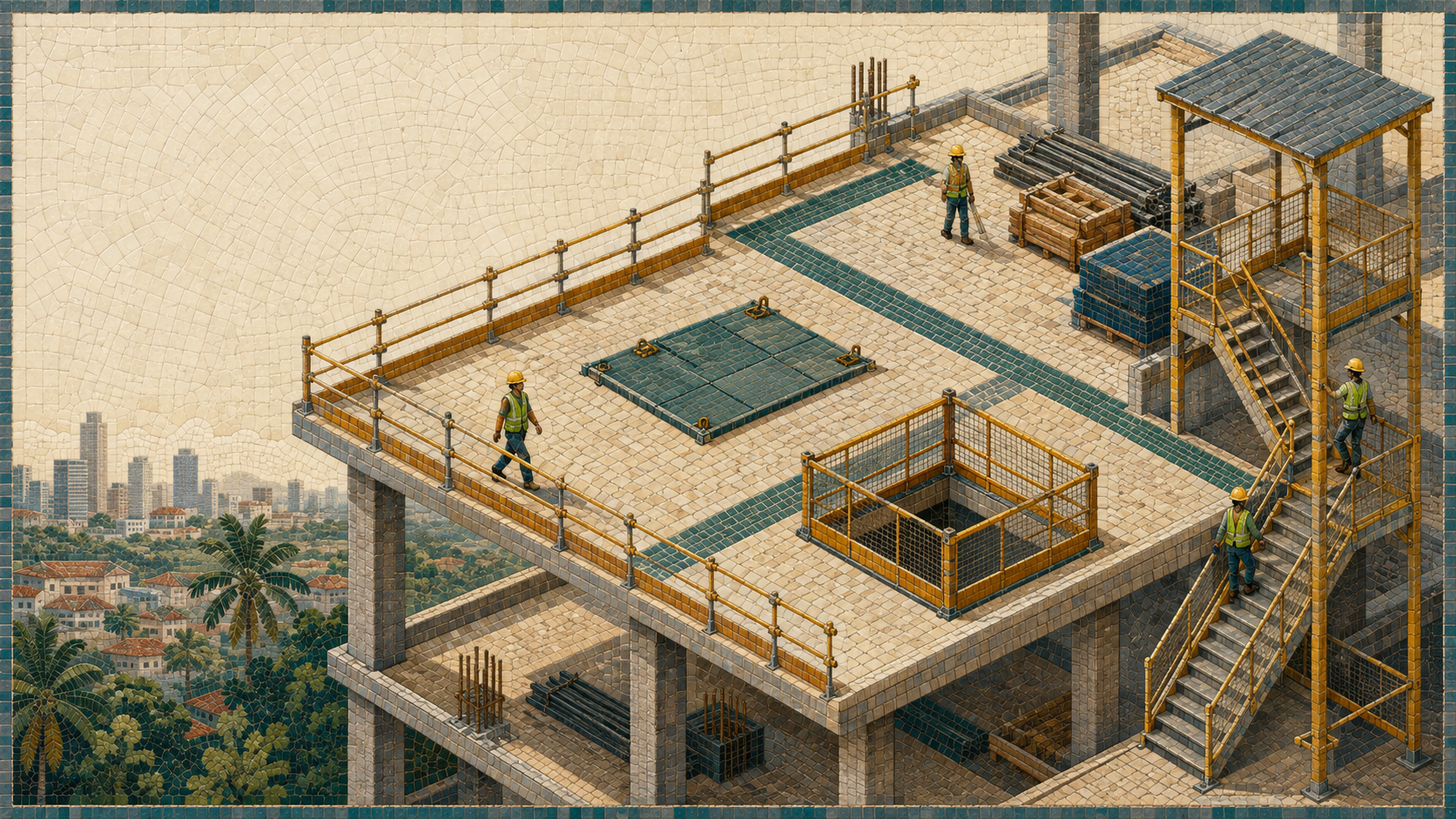
Garis Panduan CDM Edisi 2026
CDM 2026 · 27 of 52
Tempat Kerja Pembinaan Yang Selamat: Akses, Tepi dan Bukaan
Panduan Peraturan 19 untuk mengawal akses, jalan keluar, tepi, bukaan lantai dan ruang kerja mengikut keadaan sebenar tapak.
Ir. Ts. Dr. Mohamad Syamir bin Senin.