
Garis Panduan CDM Edisi 2026
Structural Stability: Temporary Works, Propping and Sequence
CDM 2026 · 29 of 52
Regulation 21 guidance for temporary-works design, load paths, inspection and controlled removal.
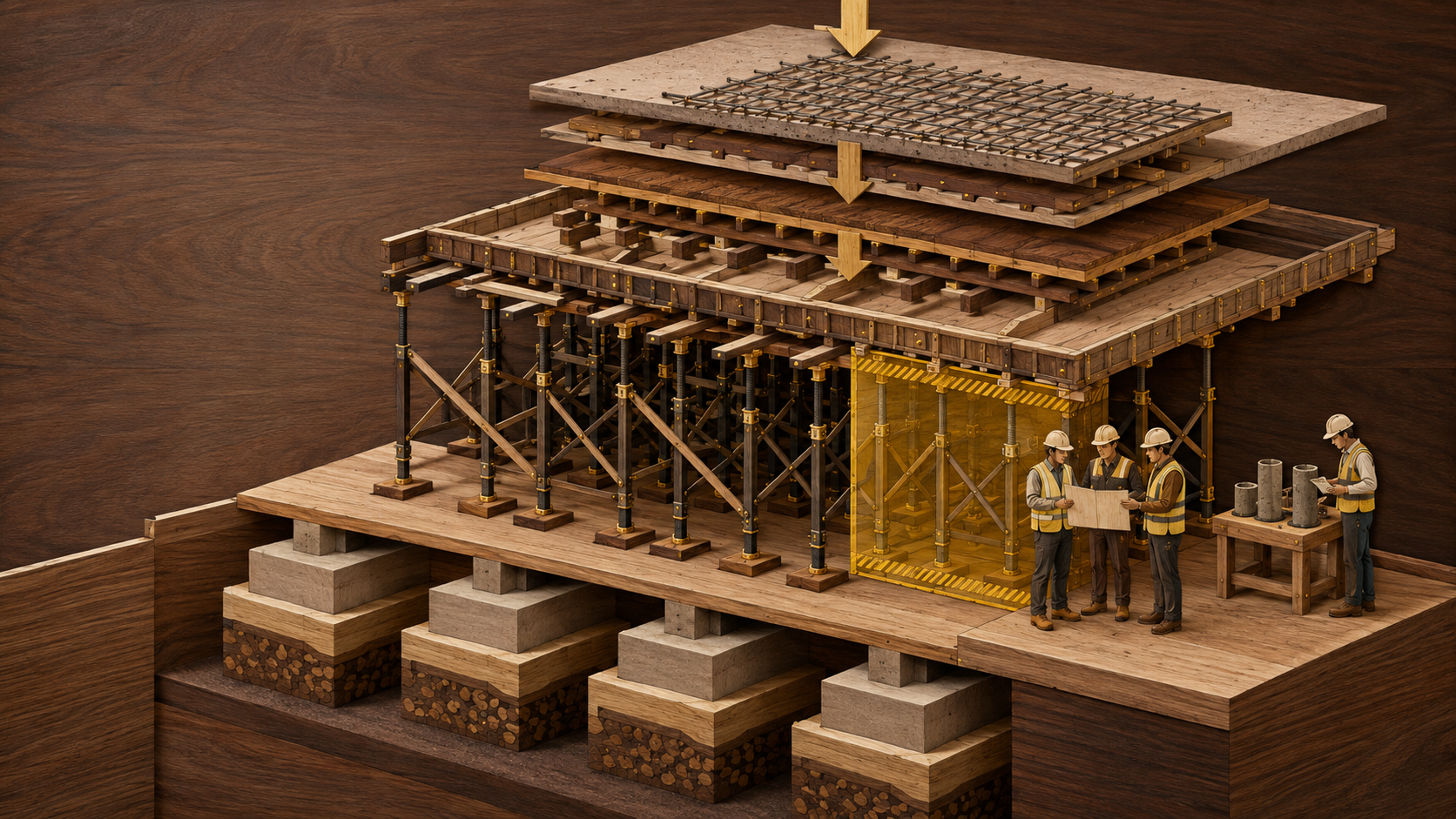
Six-slide briefing
The guideline at a glance
Slide 1 / 6
CDM 2026
Regulation 21
Control stability at every stage
Construction must not weaken or place a new or existing structure in an unstable condition.
- Permanent works
- Temporary state
- Exposed people
Review sequence, not only the final state.
Use the buttons, dots or left/right arrow keys. This briefing summarises the guideline; the article and official source remain the detailed references.
Structural stability must be controlled as one system from design to removal. Regulation 21 requires the construction work contractor (CWC), where necessary, to take practicable steps to prevent danger and ensure that new or existing structures remain stable while construction work is carried out. It also establishes requirements for shoring, temporary supports, temporary structures and loading.
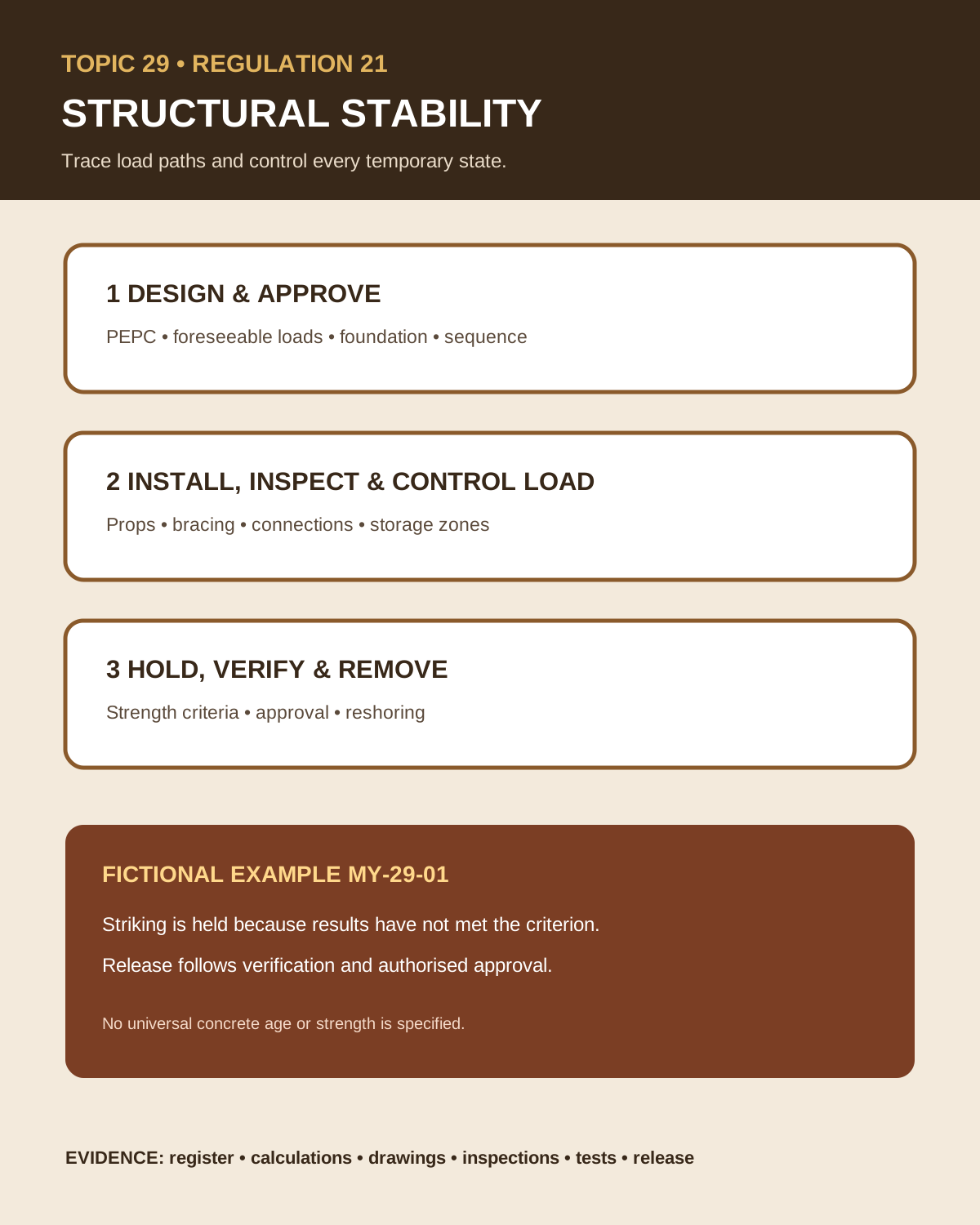
Core requirements of Regulation 21
Regulation 21(1) calls for practicable steps to prevent danger to any person and keep new or existing structures stable. Construction work must not cause a structure to be affected, weakened or placed in a temporarily unstable condition. Assessment must cover every work stage, not merely the final state.
Regulation 21(2) requires any shoring, temporary support or temporary structure to be designed, installed and maintained to withstand foreseeable loads. It must be used for the purpose for which it was designed, installed and maintained. Regulation 21(3) prevents a structure from being loaded until it becomes unsafe to any person.
Paragraphs 163–166 of the DOSH Guidelines connect these duties to the definition of “structure”, risk assessment, the construction phase plan (CPP), safe work procedures and a Professional Engineer with Practising Certificate (PEPC). Paragraph 165 states that shoring, temporary supports or temporary structures are to be designed, certified and approved by a PEPC, with installation and maintenance under the PEPC’s supervision or an appointed representative.
Establish a temporary-works plan
Define who designs, checks, approves, coordinates, installs, inspects, changes and authorises removal. The temporary-works register should cover formwork, falsework, support scaffolds, façade retention, excavation support, platforms, temporary embankments and any arrangement affecting stability.
For each item retain the design basis, design loads, support conditions, installation sequence, connection and bracing details, tolerances, inspections, hold points and removal criteria. Interfaces with permanent works, ground, utilities, cranes, material storage and other packages must be identified.
Site drawings need clear revision and status. Withdraw superseded drawings. Changes to prop spacing, height, bracing, sole plates, prop heads or sequence must not be decided verbally at the workface. Record the change, obtain design review and rebrief affected teams.
Trace the load path
Every load needs a continuous route to a support capable of receiving it. Consider wet concrete, workers, equipment, vibration, stored materials, formwork and loads from levels above. A prop that appears upright is not necessarily safe if its base is weak, the head is not fully seated, bracing is absent or concentrated loading was omitted.
Check ground or supporting-slab conditions and the capacity of lower levels. Where reshoring is used, determine its sequence and load distribution between floors. Do not store block pallets, steel or other materials on a slab or platform without confirming load limits and permitted zones. Zone marking helps but does not replace calculations or delivery control.
Control installation and change
Inspect before use, after significant installation, after change, severe weather, impact or signs of movement. Check components against drawings, actual conditions, connections, bracing, completeness, foundations, alignment and access. Assign defects to an owner and do not release the zone until correction is verified.
Installers must understand the sequence because temporary stability may depend on braces fitted before the next component. Lifting plans and permanent-structure sequence must align with temporary-works design. If actual conditions differ from assumptions, stop affected work and refer the matter back to the designer or PEPC.
Remove against criteria, not a calendar
Props or formwork must not be removed merely because a customary period has passed or concrete looks hard. Criteria may include verified concrete strength, representative test results, structural condition, current and future loads, and approval by the designated technical authority. The removal sequence must avoid concentrated loads or temporary instability.
Use a formal hold point before striking. The request identifies location, level, pour date, test result, present and next loads, and sequence. The authorised party records the decision. After removal, inspect the structure and manage temporary components so they create no new hazard.
Fictional training example MY-29-01
Fictional example — not a real incident, statistic or legal conclusion. A Kuala Lumpur concrete podium has a transfer slab supported by falsework. The PEPC design specifies prop and bracing configuration, material limits above the slab, concrete-strength testing, and the removal and reshoring sequence.
The programme originally anticipates striking on a certain day. However, representative results have not met the design criterion. The supervisor maintains the hold point, prevents additional material storage and informs the structural and logistics teams. After the criterion is met, the PEPC or authorised representative checks conditions, permits the controlled sequence and records release. The example sets no universal age or strength value; criteria must come from the project design.
Compliance actions
- Register every temporary work and structure that may be affected.
- Clearly appoint design, check, installation, inspection and release functions.
- Obtain PEPC design, certification and approval as described by the DOSH Guidelines.
- Record foreseeable loads, load paths, foundations and interfaces.
- Control drawing versions and every site change.
- Inspect before use and after change, weather or impact.
- Set material-storage zones and limits.
- Use technical hold points and criteria for removal.
- Verify post-removal condition and close the record.
Evidence to retain
Retain the temporary-works register; PEPC appointment and scope; design bases, calculations, drawings and reviews; certificates or approvals; component records; installation reports; inspections and dated photographs; change requests; site instructions; loading records; material-test results; striking requests; release approvals; sequence briefings; defect reports and correction evidence.
Common failures
- A prop is altered or moved for access without design review.
- Bracing is incomplete but the area is released.
- Materials are stored without verified limits or zones.
- Prop foundations are not assessed or sole plates are unsuitable.
- Superseded drawings remain at the workface.
- Removal follows a customary day count rather than project criteria.
- Test results cannot be traced to the pour location.
- An inspection closes without evidence of field conditions.
Supervisor checklist
- Is every temporary work in the current register?
- Are current drawings and approvals available at the workface?
- Do configuration, bracing, connections and foundations match the design?
- Are load paths and limits understood and controlled?
- Has change or damage triggered review?
- Is the hazardous zone restricted until defects close?
- Are striking criteria met and evidenced?
- Is the removal and reshoring sequence approved?
- Is release recorded by the authorised party?
Primary JKKP/DOSH references
Refer to Regulation 21 of the Occupational Safety and Health (Construction Work) (Design and Management) Regulations 2024, P.U. (A) 147, together with the Guidelines for those Regulations, First Edition 2026, paragraphs 163–166. Also consult the Board of Engineers Malaysia guidance identified by DOSH. This article does not replace PEPC design or project-specific assessment.
Related articles
Garis Panduan CDM Edisi 2026
CDM 2026 · 28 of 52
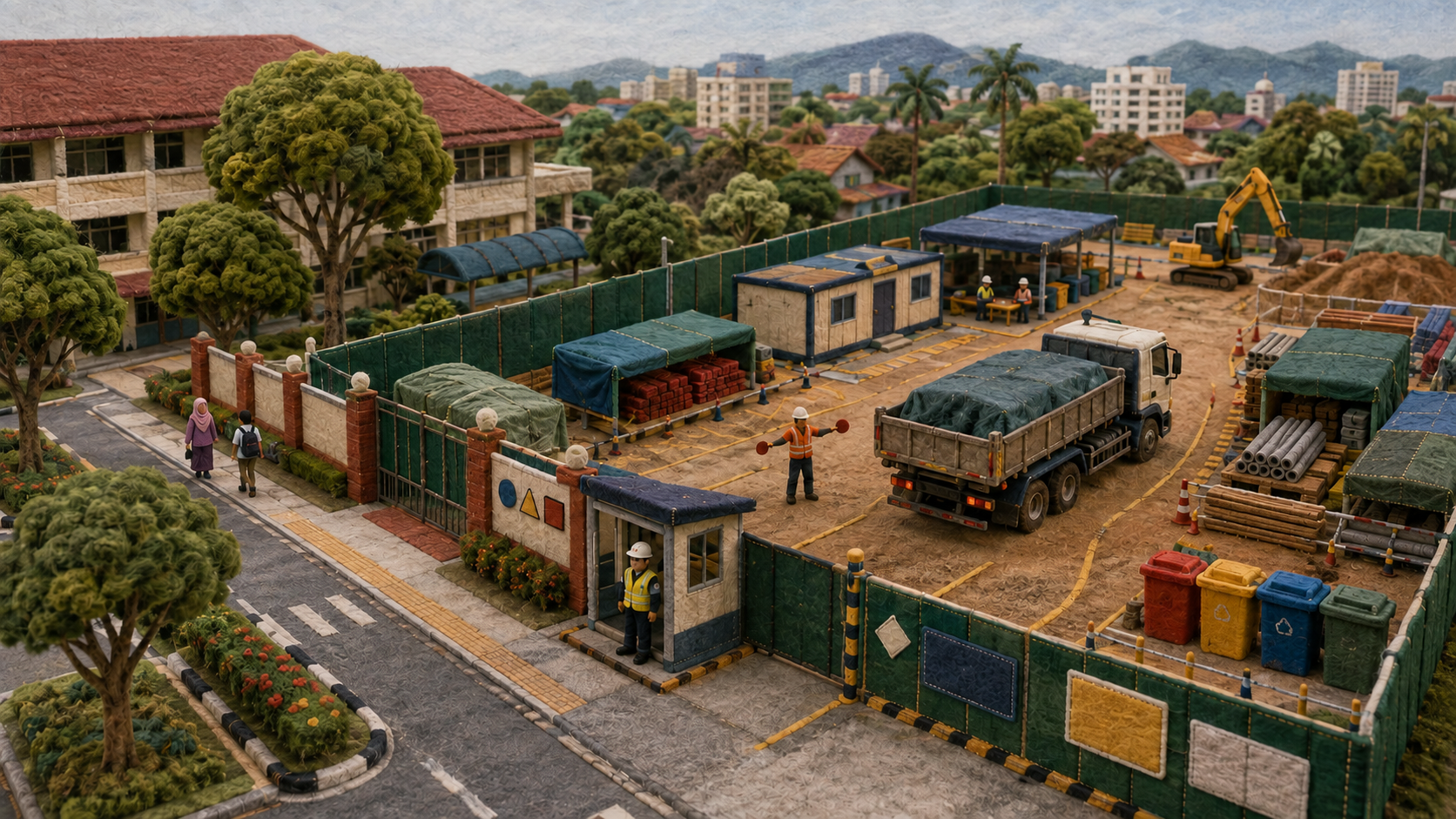
Aturan dan Sekuriti Tapak: Lindungi Pekerja dan Orang Awam
Panduan Peraturan 20 untuk kekemasan, kebersihan, pemagaran, penandaan serta kawalan antara muka awam.
Ir. Ts. Dr. Mohamad Syamir bin Senin.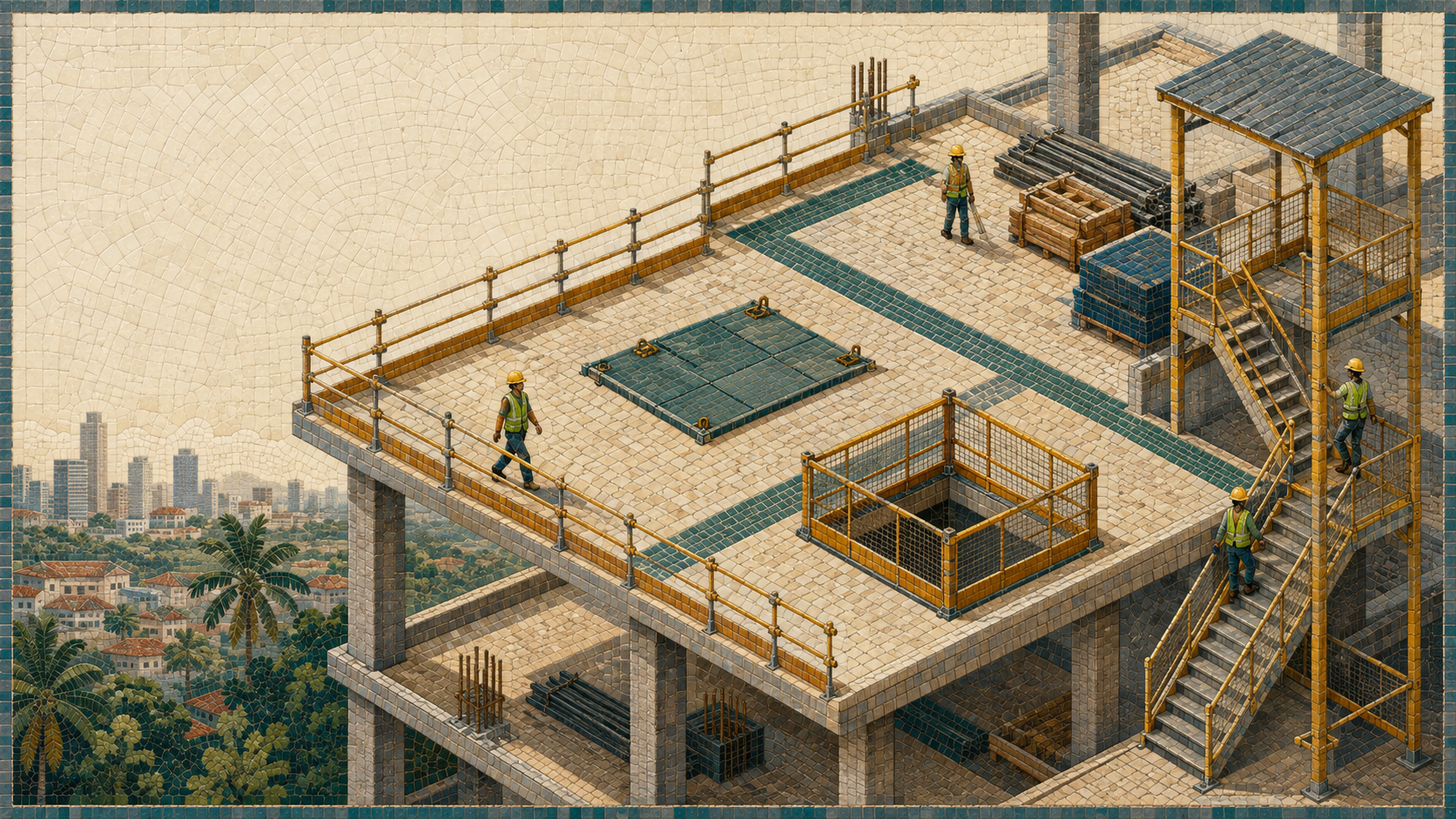
Garis Panduan CDM Edisi 2026
CDM 2026 · 27 of 52
Tempat Kerja Pembinaan Yang Selamat: Akses, Tepi dan Bukaan
Panduan Peraturan 19 untuk mengawal akses, jalan keluar, tepi, bukaan lantai dan ruang kerja mengikut keadaan sebenar tapak.
Ir. Ts. Dr. Mohamad Syamir bin Senin.
Garis Panduan CDM Edisi 2026
CDM 2026 · 26 of 52
Bahagian IV: Menentukan Siapa Mengawal Keperluan Tapak
Panduan memetakan kawalan sebenar, menyelaras tanggungjawab dan mengesahkan keperluan Bahagian IV di tapak pembinaan.
Ir. Ts. Dr. Hj. Mohd Fairuz Ab Rahman (PMP)Ir. Ts. Dr. Mohamad Syamir bin Senin.