
Garis Panduan CDM Edisi 2026
Explosives: Control from Storage to Misfire
CDM 2026 · 31 of 52
Regulation 23 guidance for authority, inventory, transport, perimeter, firing, release and misfire.
Six-slide briefing
The guideline at a glance
Slide 1 / 6
CDM 2026
Regulation 23
Control the whole chain
Store, transport and use explosives in a safe and controlled manner.
- Risk assessment
- CPP
- Safe procedure
Control starts before material arrives.
Use the buttons, dots or left/right arrow keys. This briefing summarises the guideline; the article and official source remain the detailed references.
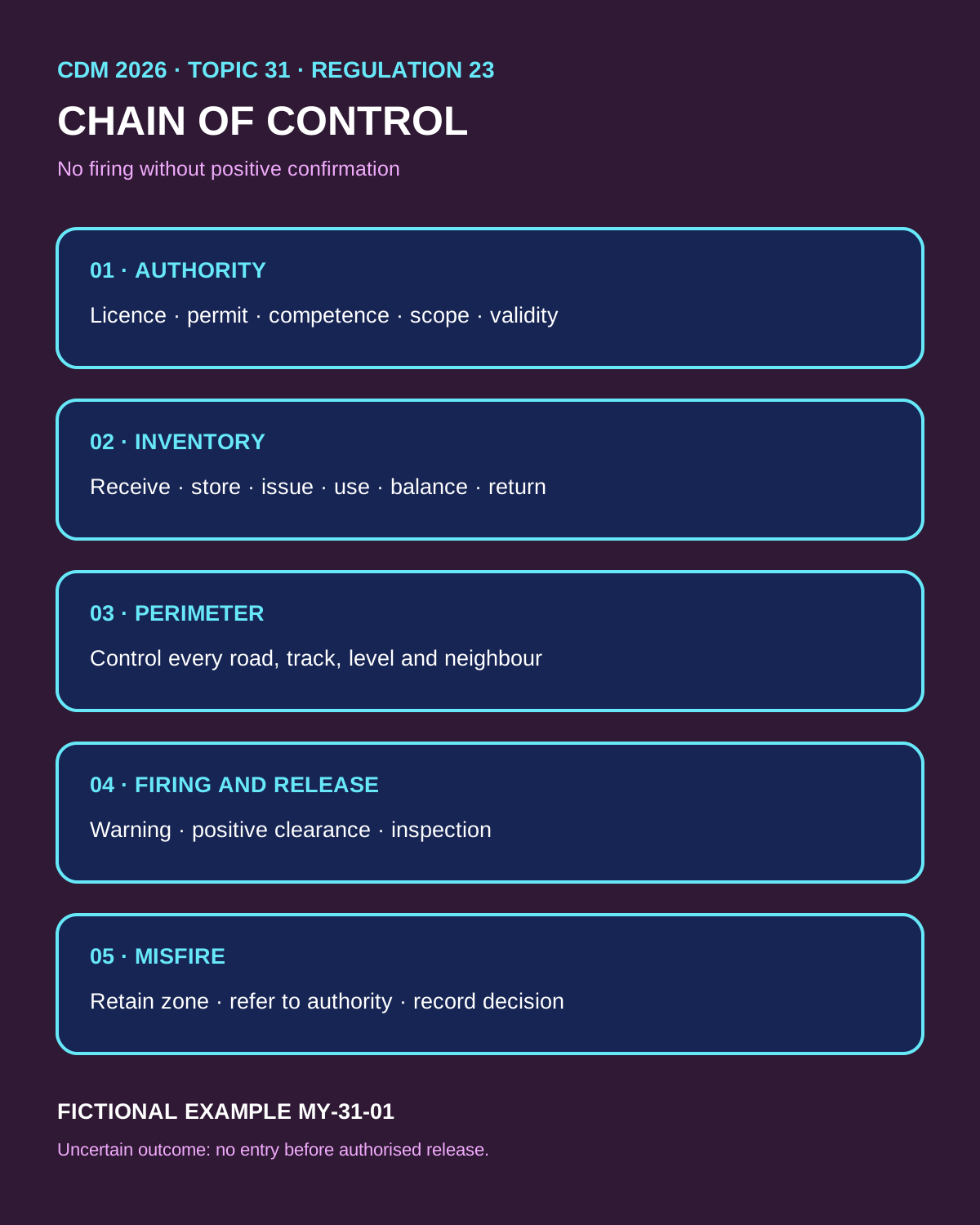
Explosives on a construction site require continuous control from receipt, storage and transport through use, return of balances and management of abnormal conditions. Regulation 23(1) requires the construction work contractor (CWC), so far as practicable, to store, transport and use any explosive in a safe and controlled manner.
Core requirements of Regulation 23
Regulation 23(2) provides that an explosive charge may only be used or fired on a construction site after suitable and sufficient steps have been taken to ensure that no person is exposed to risk of injury from the explosion, projection or flying debris. Paragraphs 171–173 of the DOSH Guidelines require the CWC to consider the risk assessment, refer to the construction phase plan (CPP), implement controls and establish safe work procedures for storage, transport and use.
DOSH states that the CWC may refer to BS 5607:2017 or a recognised international standard. The Guidelines also direct reference to relevant enforcement agencies such as the Royal Malaysia Police (PDRM), local authorities (PBT), the Explosives Act 1957 and Explosives Rules 1923. Confirm licensing, permit and approval requirements directly with the relevant authority for the activity and project location; this article does not determine a specific entitlement or authorisation.
Define authority and competence
The CWC should clearly establish who coordinates blasting work, who may receive or issue stock, who controls the magazine, who establishes the perimeter, who gives warnings and who may declare the area safe. Verify licences, permits, competence, scope and validity before mobilisation. A job title alone is not evidence of authority.
The contact structure should include project management, the shotfirer or relevant specialist, site safety, PDRM, PBT, landowner, utility owners and neighbours where applicable. Define how work is stopped, issues escalated and failed communication managed. Informal instructions must never override the approved procedure.
Storage, issue and return
Use storage authorised and suitable under applicable authority conditions. Control keys, access, condition, separation where required, signs and inspections. Never keep explosives in a site office, cabin, vehicle or unapproved temporary location. Control ignition sources and maintain location-specific emergency arrangements.
Every receipt, issue, transfer, use and return should be traceable to date, time, type, quantity, issuer, recipient and balance. Reconcile before and after work. Any stock discrepancy, loss, damage or unmatched item should trigger a stop, location control and notification through approved channels.
Controlled transport and handover
Plan routes, timing, vehicles, supervision and handover points under legal and authority conditions. Avoid unnecessary stops and retain control by authorised people. Do not mix transport with unauthorised passengers or loads. Check packaging and documents before departure and at handover.
On site, use a route that avoids public areas, hot work and unrelated plant movement. Bring material to the work area only as required by the approved plan. Count and formally return balances rather than leaving them at the workface.
Perimeter, warning and release
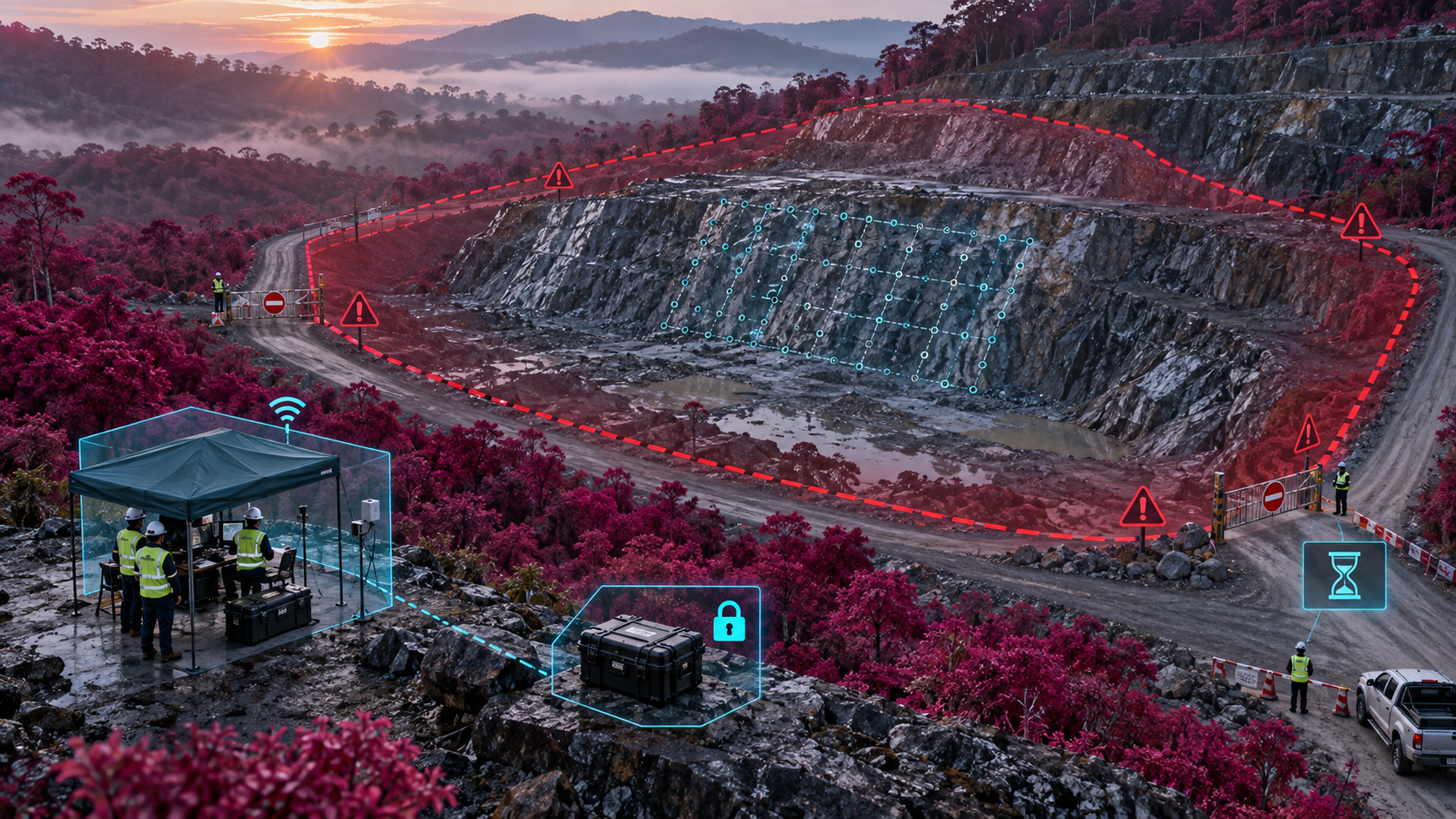
The blast plan should define the danger area from a competent assessment of the face, method, projection and exposed parties. Control every road, track, level, building, water route or access point that could bring a person into the area. Guards must understand when to close and reopen routes and must remain until released.
Use an agreed warning sequence understood by workers and affected neighbours. Confirm evacuation positively through records or communication; no reply is not proof that an area is clear. Only the named authority may give final permission to fire and later declare the area safe after the required inspection.
Misfire: retain control and do not self-investigate
The plan should establish misfire arrangements before work starts: who assumes control, how the perimeter remains in place, how people are warned, who may assess, communication routes and decision records. Where the blast outcome is uncertain, treat the area as not safe. Prevent entry and related work, retain controls, and follow the approved procedure plus applicable authority and manufacturer instructions.
Do not use a general briefing to prescribe a universal waiting period or technical recovery method. Timing and action depend on the system, conditions, approved procedure and authority direction. Only authorised competent people may assess and release. Any unmatched material or hole remains an open issue until formally resolved.
Fictional worked example MY-31-01
Fictional example — not a real incident, statistic or legal conclusion. A rock-cut project in Pahang plans controlled blasting. Its CPP, risk assessment and specific plan identify road guards, warnings to nearby premises, inventory reconciliation and the person authorised to release the area.
After the firing sequence, the team cannot verify the expected outcome. The supervisor does not allow the excavator operator to enter. The perimeter and guards remain, the named technical authority is informed, inventory and records are checked, and authorised personnel implement the misfire procedure. The area reopens only after inspection and recorded release. This example intentionally gives no technical instruction, distance or waiting time.
Compliance actions
- Verify licences, permits, approvals and competence with PDRM, PBT and relevant authorities.
- Align the risk assessment, CPP and safe work procedure.
- Define authority for stock, transport, perimeter, firing and release.
- Use authorised storage and routes.
- Record and reconcile every inventory movement.
- Guard every access and use positive evacuation confirmation.
- Establish warnings, emergency communications and a misfire plan before work.
- Stop for stock discrepancy, failed communication or uncertain outcome.
- Reopen only after inspection and authorised release.
Evidence to retain
Retain licences and permits; authority correspondence; competence and appointment records; risk assessment; CPP; storage, transport, firing and misfire procedures; perimeter plan; neighbour notifications; stock register; issue and return vouchers; reconciliations; storage and vehicle inspections; warning and guard records; communication log; weather or condition records where relevant; post-work inspection; nonconformities and closure evidence.
Common failures
- Expired permits or competence not rechecked.
- Stock kept in an unauthorised temporary location.
- Issue and return not reconciled on the same day.
- A public path or minor track omitted from the perimeter.
- Radio silence treated as proof the area is empty.
- Other work admitted before authorised release.
- A misfire treated as an ordinary operational delay.
- Generic records cannot be matched to the actual work.
Supervisor checklist
- Are all licences, permits, competence and scopes valid?
- Is material continuously controlled by authorised people?
- Do receipts, issues, use, balance and return reconcile?
- Are every access point, neighbour and utility identified?
- Does each guard understand instructions and release?
- Is evacuation positively confirmed?
- Can only the named person authorise firing?
- Is the misfire plan available without encouraging self-action?
- Is the area inspected before reopening?
- Are decisions and exceptions recorded?
Primary JKKP/DOSH and PDRM references
Refer to Regulation 23, P.U. (A) 147/2024, the *CDM Guidelines, First Edition 2026*, paragraphs 171–173, and the official PDRM general licensing page. Obtain project-specific confirmation from the relevant authorities.
Related articles

Garis Panduan CDM Edisi 2026
CDM 2026 · 33 of 52
Empangan Kekotak dan Kaison: Reka Bentuk, Air dan Penyelamatan
Panduan Peraturan 25 untuk reka bentuk PEPC, pemantauan air, pam, akses, pemeriksaan dan penyelamatan.
Ir. Ts. Dr. Mohamad Syamir bin Senin.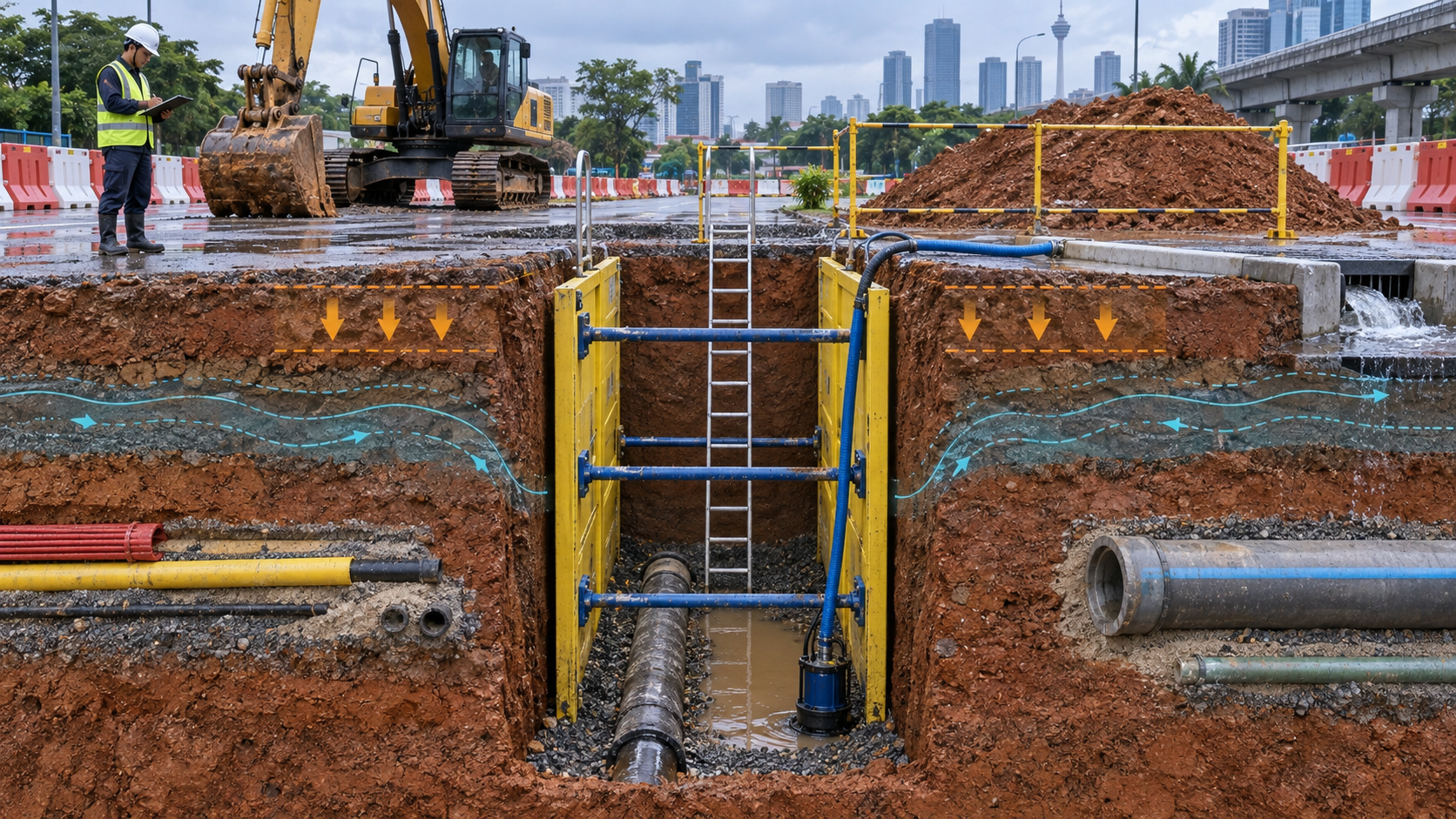
Garis Panduan CDM Edisi 2026
CDM 2026 · 32 of 52
Pengorekan: Cegah Runtuhan, Air dan Kerosakan Utiliti
Panduan Peraturan 24 untuk utiliti, sokongan, air, beban tepi, akses dan pemeriksaan sebelum masuk.
Ir. Ts. Dr. Mohamad Syamir bin Senin.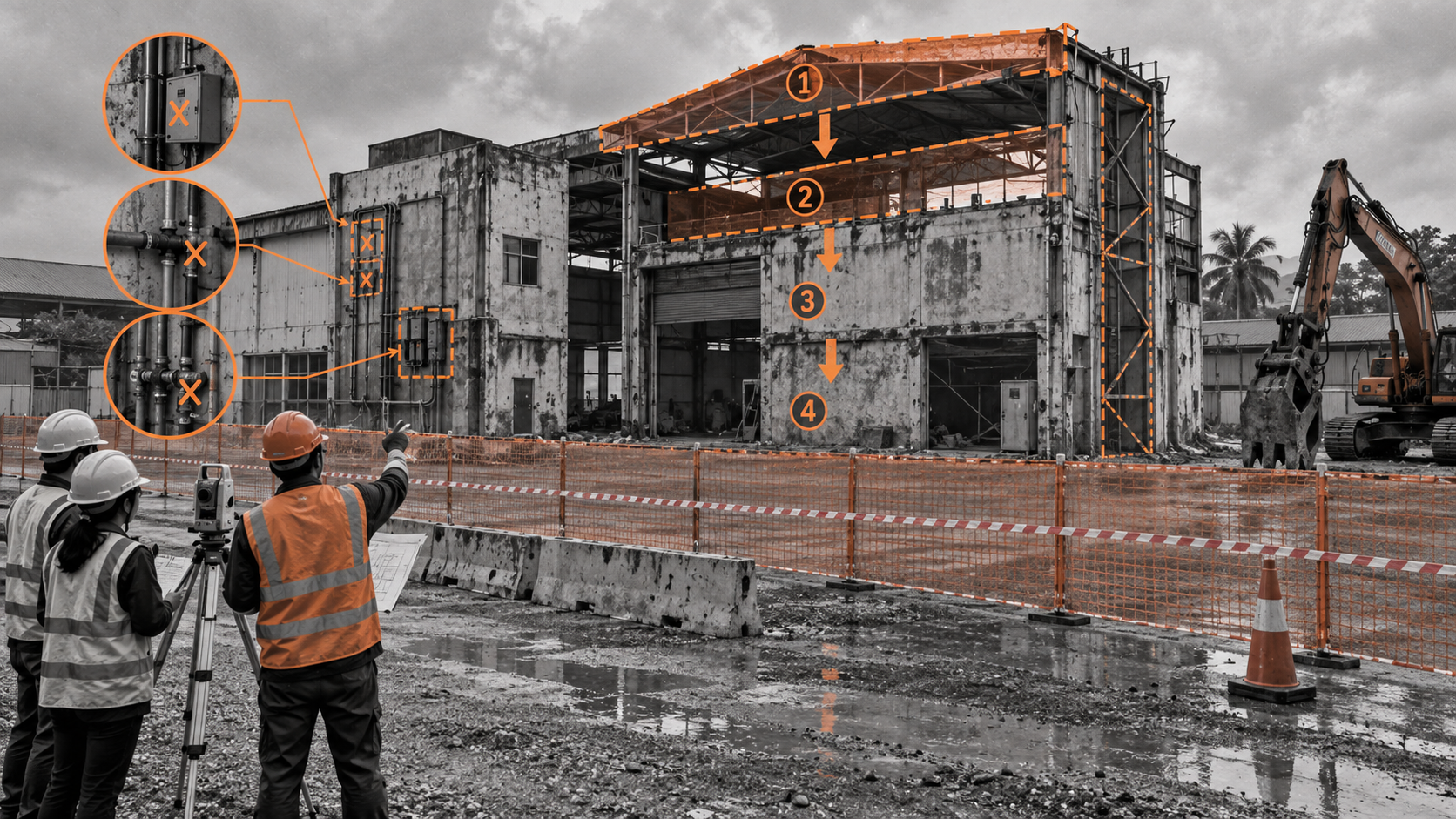
Garis Panduan CDM Edisi 2026
CDM 2026 · 30 of 52
Perobohan: Survei, Pengasingan dan Urutan Selamat
Panduan Peraturan 22 untuk survei, pengasingan utiliti, kestabilan, zon larangan dan perkiraan bertulis.
Ir. Ts. Dr. Mohamad Syamir bin Senin.