
Garis Panduan CDM Edisi 2026
Excavation: Prevent Collapse, Water and Utility Damage
CDM 2026 · 32 of 52
Regulation 24 guidance for utilities, support, water, edge loads, access and pre-entry inspection.
Six-slide briefing
The guideline at a glance
Slide 1 / 6
CDM 2026
Regulation 24
Prevent collapse and falling objects
Support or reinforcement must suit actual ground, water, loads and work.
- Stability
- Edges
- Exposed people
No one method fits every excavation.
Use the buttons, dots or left/right arrow keys. This briefing summarises the guideline; the article and official source remain the detailed references.
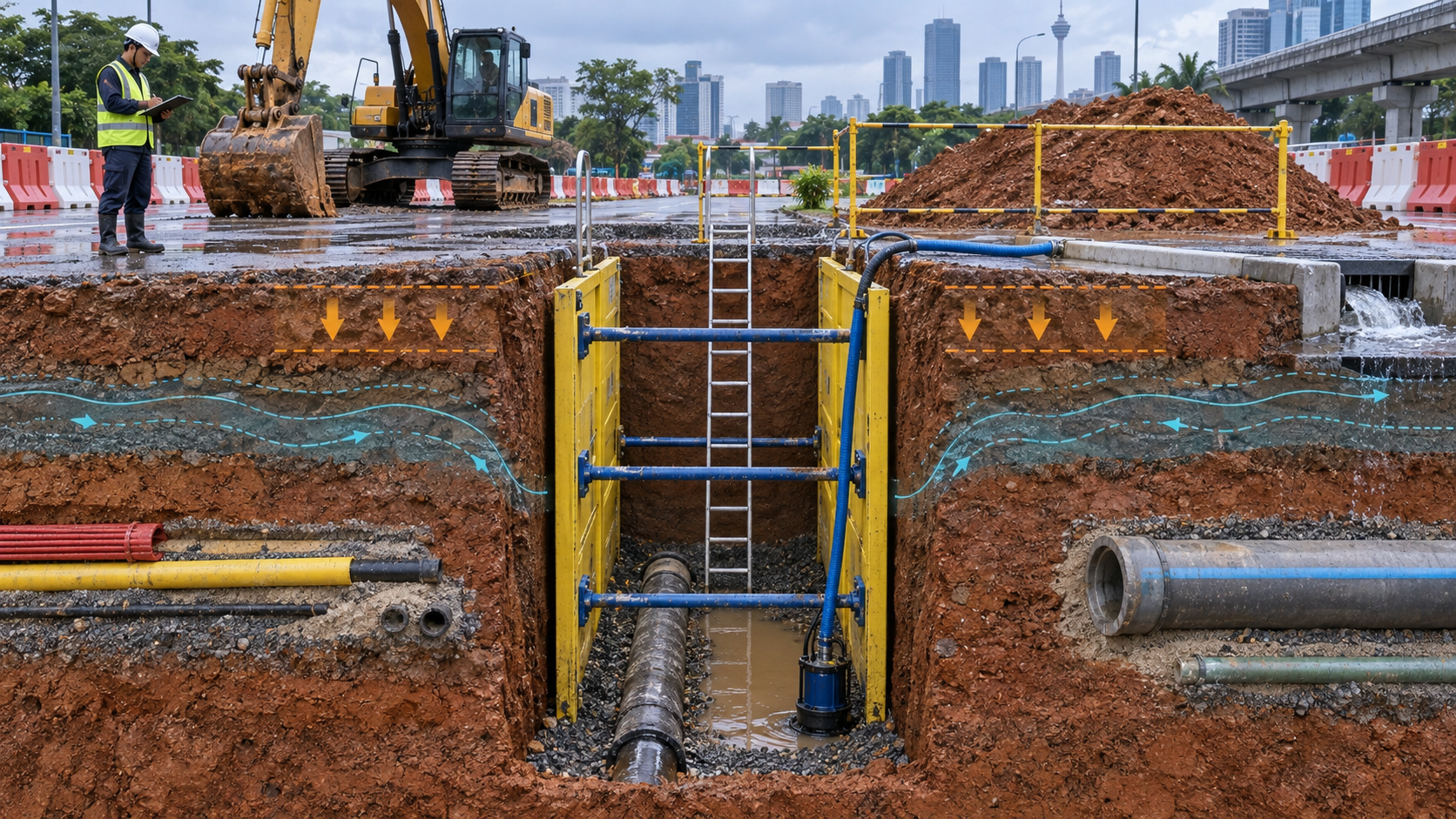
An excavation can change from an ordinary workplace to an unsafe condition after rain, soil movement, plant activity or an exposed utility. Regulation 24 controls excavation stability, falling or dislodged material, edge loading and inspection before work continues.
Core requirements of Regulation 24
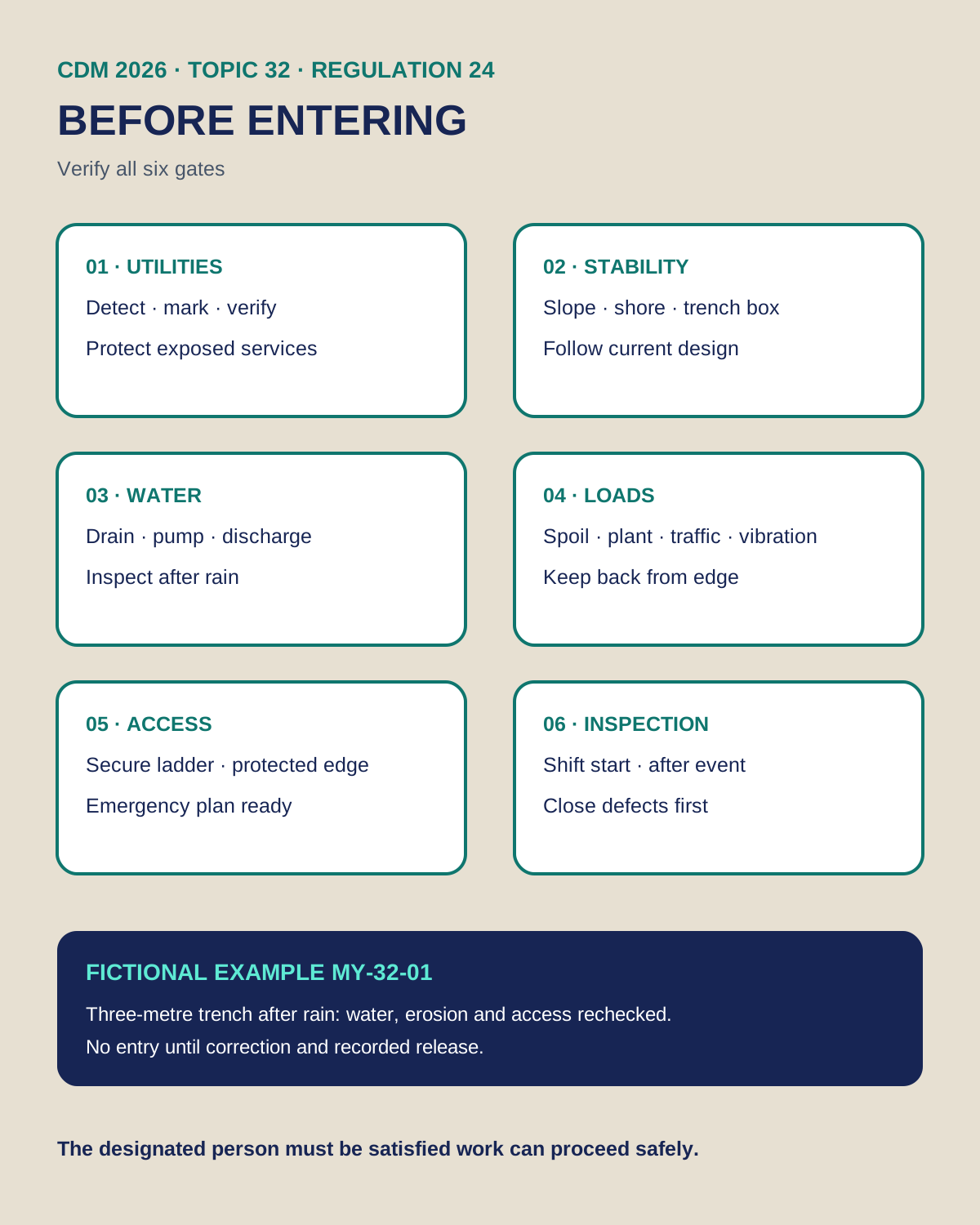
Regulation 24(1) requires the construction work contractor (CWC) to take practicable steps, including support or reinforcement, so that no excavation collapses; material forming or adjacent to a wall or roof is not dislodged or falls; no person is buried or trapped; no person, plant or accumulation falls in; and adjacent ground is not loaded by plant or material.
Construction work inside an excavation may not proceed unless the excavation and plant or objects that could affect safety are inspected by the designated person at the start of the shift, after an event likely to affect strength or stability, and after an object accidentally falls or becomes dislodged. The designated person must be satisfied that work can proceed safely. Where dissatisfaction is reported, work cannot proceed until the matter is satisfactorily remedied.
Paragraphs 174–175 of the DOSH Guidelines connect these duties to risk assessment, a safe work procedure, suitable support or reinforcement and the 2017 DOSH construction-industry excavation guideline.
Locate utilities before digging
Obtain utility records from the client, asset owners and relevant authorities. Compare drawings with surface markings, chambers, building connections and site history. Use suitable detection and verification before mechanical excavation approaches a utility zone. Mark routes and tolerances on site, brief operators and define work near services.
Old records do not prove actual location. Electricity, gas, water, sewer, telecommunications and drainage may be shallow, diverted or unrecorded. Stop that part of the work and investigate further where a service cannot be confirmed. Support and protect exposed utilities according to asset-owner requirements; do not leave their weight on fragile joints.
Select stability controls for actual conditions
No single method suits every excavation. Sloping, benching, trench boxes, shoring or other systems must account for depth, soil, groundwater, loads, duration, vibration, neighbours and space. A trench box protects people within its shielded zone; it does not necessarily stabilise the entire ground surface or protect people outside it.
Design or selection should define configuration, components, limits, installation and removal sequence, and inspection. Do not force damaged parts, leave unplanned gaps or alter a strut to pass a pipe without approval. Install from a protected position so far as practicable.
Control water, weather and atmosphere
Water can weaken soil, increase pressure, erode the toe and carry material into the excavation. Provide surface drainage, sumps, pumps, backup power where needed and discharge that does not erode the edge or flood neighbours. Inspect after rain, pump failure, pipe leakage or water-level change. Remove people where inflow cannot be controlled.
Depending on soil, utilities, contamination and nearby processes, an excavation can also collect gas, vapour or an oxygen-deficient atmosphere. Determine whether atmospheric assessment and confined-space controls apply. An open excavation is not automatically safe air.
Loads, plant and edge protection
Keep spoil, materials, cranes, excavators and traffic back from the edge according to the stability assessment, not a customary distance alone. Use barriers, stop blocks and a marshal where plant approaches. Never move a bucket or load over people in the excavation. Control vibration from compaction, piling and traffic.
Protect edges against people or objects falling. Arrange small materials and tools so they cannot roll in. Provide a designed guarded crossing where people must cross. Protect the public and vehicles during road works through suitable traffic management.
Access, egress and emergency arrangements
Provide stable access close to the workplace. Secure ladders, provide a safe handhold and extend them sufficiently for exit without climbing soil. Never use struts or pipes as ladders. For a long excavation, set access number and position from travel distance and risk.
Emergency arrangements must address collapse, water ingress, utility damage, hazardous atmosphere and injury. Rescue must not expose rescuers to unstable ground. Confirm communication, alarm, plant shutdown and equipment locations before entry.
Inspection and release
The designated person should inspect soil, cracks, bulging, water, spoil, plant, support systems, components, access, barriers, utilities and surrounding change. Use a record that identifies location, time, condition, defects, actions and release decision. A signature without site observation is not an inspection.
Triggers include rain, flooding, unusual vibration, support impact, depth or geometry change, falling material, ground movement and changed plant. Keep the area out of use while any defect remains open.
Fictional worked example MY-32-01
Fictional example — not a real incident, statistic or legal conclusion. A utility project in Johor prepares a three-metre trench. Its assessment selects a trench box, ladder access, spoil control and pumping. Before the shift after overnight rain, the designated person finds increased water, edge erosion and a pump hose obstructing the ladder.
Entry is not released. The team redirects discharge, corrects access, checks trench-box position and verifies that the exposed utility remains supported. Work resumes only after correction and recorded reinspection. The example sets no universal spoil distance or support design; controls must reflect project conditions and design.
Compliance actions
- Complete risk assessment, ground information and utility location.
- Select and design support or slopes for actual conditions.
- Control surface water, groundwater, leaks and discharge.
- Restrict spoil, material, plant, traffic and vibration at edges.
- Provide access, barriers and emergency arrangements.
- Appoint the designated person with stop-work authority.
- Inspect at shift start and after each statutory trigger.
- Prohibit entry until defects are remedied and release recorded.
Evidence to retain
Retain ground information; utility plans and verification; risk assessment; safe work procedure; support design, calculations and manuals; pumping and drainage plan; plant inspections; designated-person appointment; shift and post-event inspection registers; photographs; weather record; defect and closure evidence; briefings; entry permits where used; atmospheric results where relevant; and approved changes.
Common failures
- Digging from old utility plans without field verification.
- Assuming a trench box stabilises all ground outside the shield.
- Placing spoil or an excavator near the edge without assessment.
- Leaving a ladder unsecured, remote or obstructed.
- Pumping water where discharge erodes the edge.
- Missing reinspection after rain or falling material.
- Altering a strut or support for a service without approval.
- Signing a form without observing the whole excavation.
Supervisor checklist
- Are utilities detected, marked and verified?
- Are ground, water and edge loads assessed?
- Does support or slope match the current design?
- Are spoil, plant and traffic controlled?
- Are water and atmosphere managed?
- Is access and egress safe and unobstructed?
- Are edges and crossings protected?
- Are shift and post-event inspections complete?
- Are all defects closed before entry?
- Can emergency arrangements operate without unsafe entry?
Primary JKKP/DOSH references
Refer to Regulation 24, P.U. (A) 147/2024, the *CDM Guidelines, First Edition 2026*, paragraphs 174–175, and the 2017 DOSH construction-industry excavation guideline. This article does not replace project-specific design or site assessment.
Related articles
Garis Panduan CDM Edisi 2026
CDM 2026 · 33 of 52
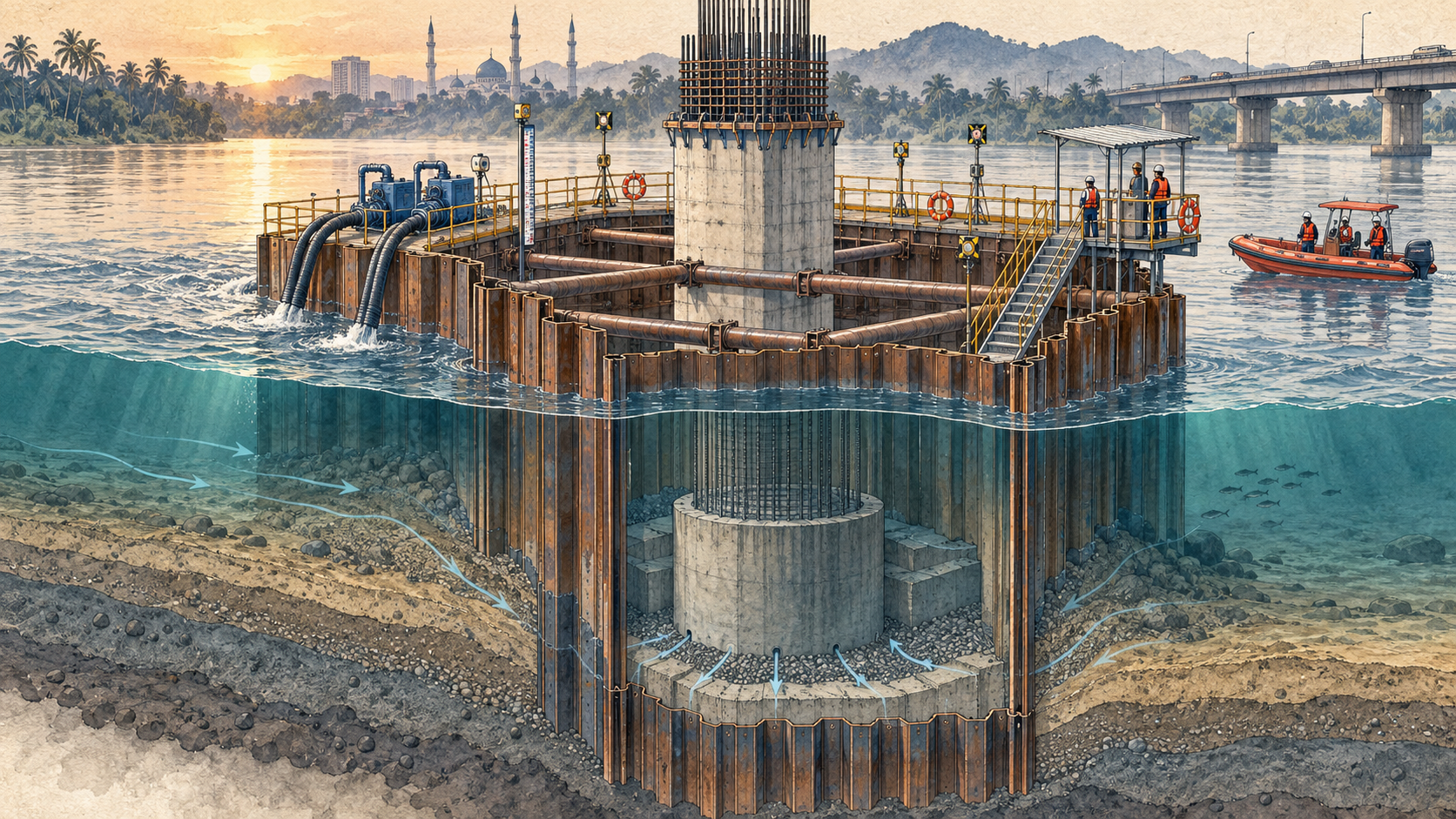
Empangan Kekotak dan Kaison: Reka Bentuk, Air dan Penyelamatan
Panduan Peraturan 25 untuk reka bentuk PEPC, pemantauan air, pam, akses, pemeriksaan dan penyelamatan.
Ir. Ts. Dr. Mohamad Syamir bin Senin.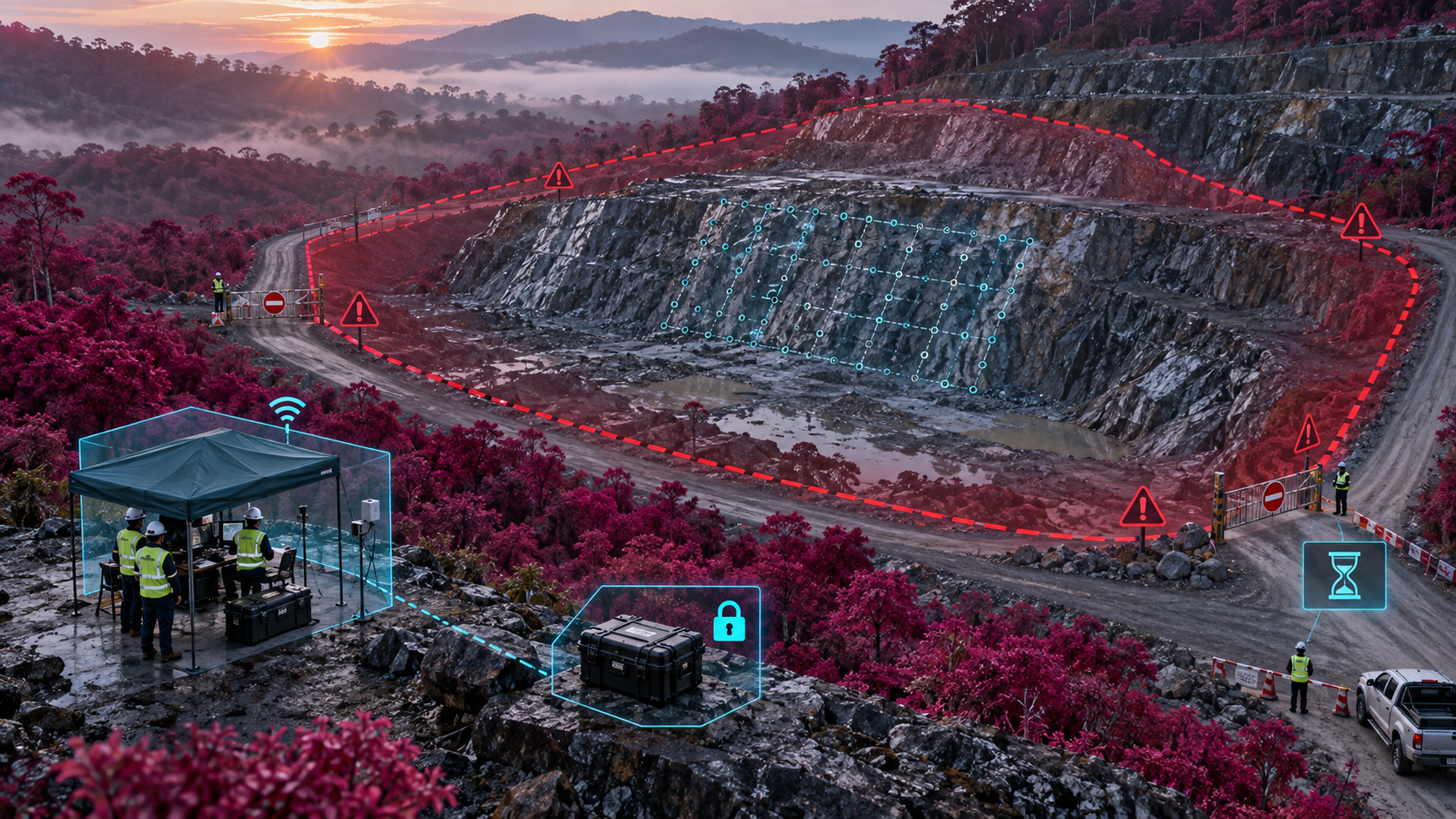
Garis Panduan CDM Edisi 2026
CDM 2026 · 31 of 52
Bahan Letupan: Kawalan Daripada Stor Hingga Misfire
Panduan Peraturan 23 untuk kuasa, inventori, pengangkutan, perimeter, firing, pelepasan dan misfire.
Ir. Ts. Dr. Mohamad Syamir bin Senin.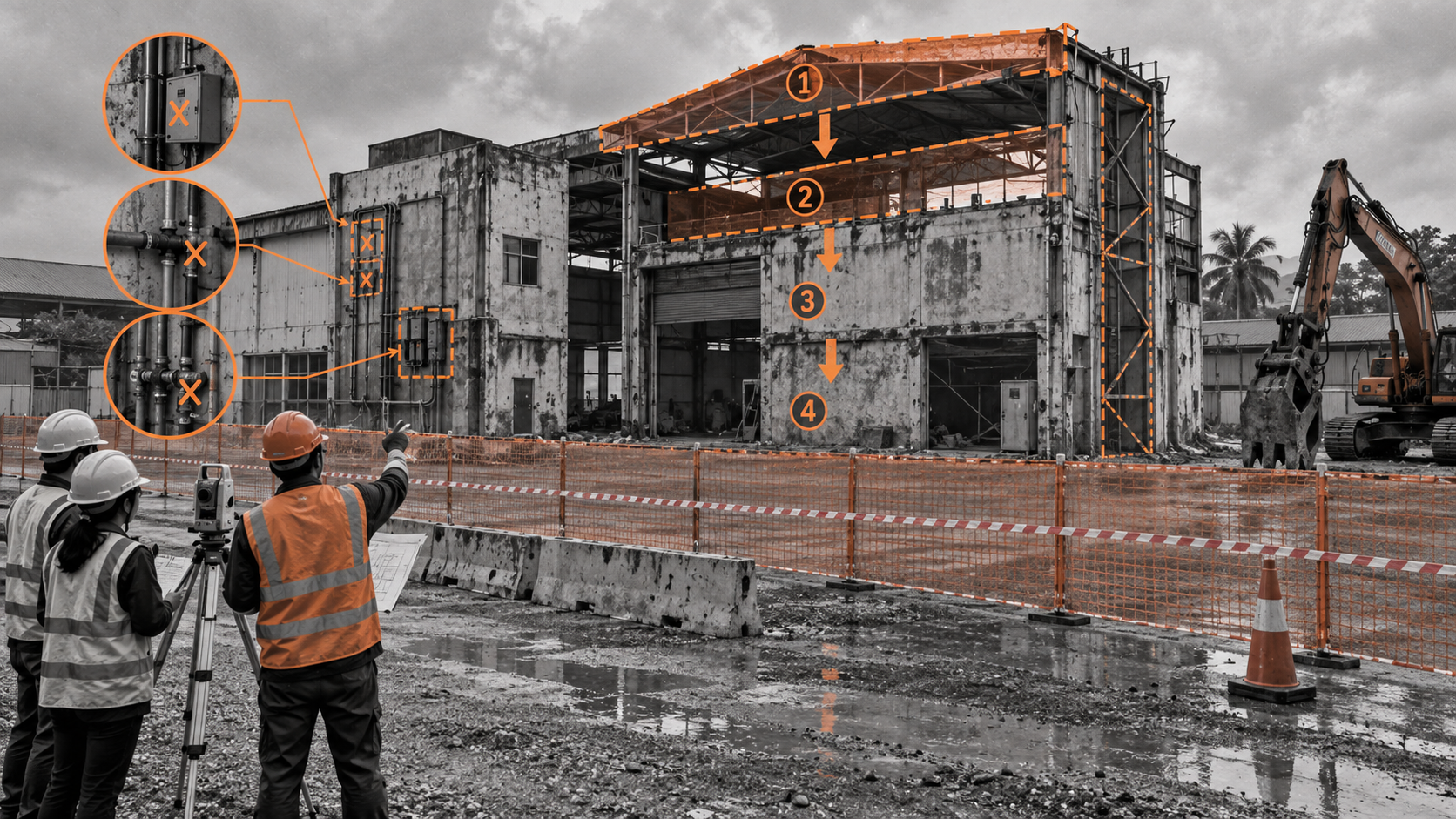
Garis Panduan CDM Edisi 2026
CDM 2026 · 30 of 52
Perobohan: Survei, Pengasingan dan Urutan Selamat
Panduan Peraturan 22 untuk survei, pengasingan utiliti, kestabilan, zon larangan dan perkiraan bertulis.
Ir. Ts. Dr. Mohamad Syamir bin Senin.